check

check

check

check

check

check
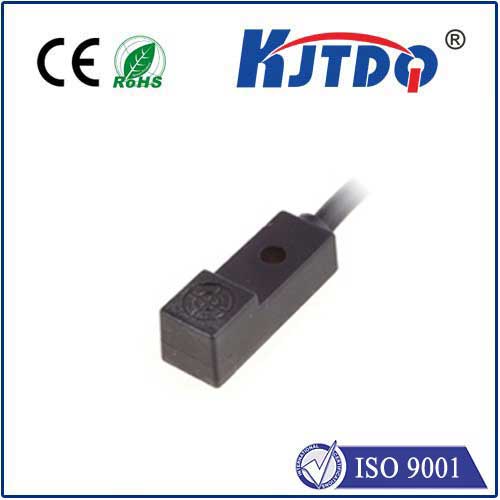
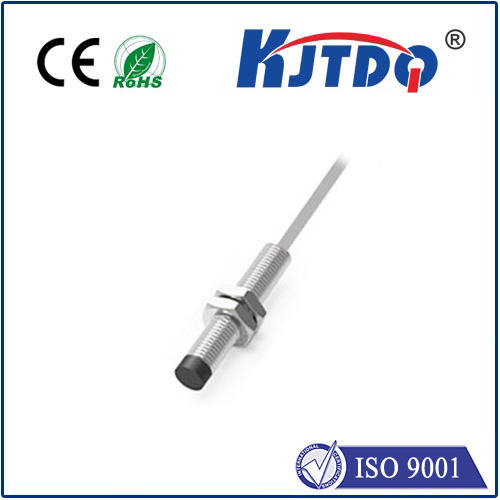
In the world of industrial automation, precision and reliability are non-negotiable. Among the myriad of components that keep production lines humming, the M18 inductive sensor stands out as a fundamental workhorse. This cylindrical, 18mm diameter device is a cornerstone for countless applications requiring non-contact detection of metallic objects. Its robust design and consistent performance make it an indispensable tool for engineers and technicians seeking to enhance efficiency and minimize downtime.
The core principle behind the M18 inductive sensor is electromagnetic induction. The sensor generates an oscillating electromagnetic field from its active face. When a metallic target, such as steel, aluminum, or brass, enters this field, eddy currents are induced within the target. This process dampens the oscillation within the sensor, triggering a solid-state switch that changes its output state. This entire process happens without any physical contact, eliminating mechanical wear and tear and enabling high-speed operation. The typical sensing range for a standard M18 sensor is up to 8mm, with shielded versions offering flush mounting capabilities and unshielded versions providing a slightly longer range.
One of the primary advantages of the M18 form factor is its versatility. Available in various housing materials like nickel-plated brass or stainless steel, these sensors can withstand harsh industrial environments, including exposure to coolants, oils, and metal chips. They come with different output configurations—namely NPN (sinking) and PNP (sourcing)—to seamlessly integrate with a wide range of programmable logic controllers (PLCs) and control systems. Furthermore, options include normally open (NO) and normally closed (NC) contacts, as well as analog outputs for distance measurement, providing flexibility for diverse control logic requirements.
The application spectrum for the M18 inductive proximity sensor is vast. Common uses include position sensing, such as detecting the presence of a metal part on a conveyor belt, confirming the end-of-travel of a pneumatic cylinder, or counting metallic objects. They are crucial in machine tools for tool breakage detection, in packaging machinery for cap or lid presence verification, and in automotive assembly lines for part positioning. Their immunity to ambient light, dust, and non-metallic materials makes them exceptionally reliable compared to optical alternatives in dirty conditions.
Selecting the right M18 sensor requires careful consideration of several parameters. The first is the target material; ferrous metals like iron and steel are detected at the rated sensing distance, while non-ferrous metals like aluminum or copper typically require a reduction factor. The operating voltage, usually between 10-30V DC, must match the control system's supply. Environmental factors such as temperature ratings and ingress protection (IP67 or IP69K) are critical for longevity in washdown or outdoor applications. Additionally, the switching frequency defines how quickly the sensor can detect objects passing by, a vital spec for high-speed production.
Installation and wiring are straightforward but demand attention to detail. Ensuring the correct gap between the sensor and the target is essential for reliable operation. For shielded sensors, they can be mounted flush with metal surfaces without affecting performance. Proper wiring according to the datasheet—connecting the brown wire (typically +V), blue wire (0V), and black wire (output signal)—is fundamental. A common pitfall is neglecting to install a flyback diode for DC inductive loads to protect the sensor's output transistor from voltage spikes.
Maintenance of these sensors is generally minimal due to their non-contact nature. However, periodic checks are recommended to ensure the sensing face is clean from metallic debris buildup, which could cause false triggering. Verifying the mounting integrity and cable condition can prevent unexpected failures. For troubleshooting, a simple diagnostic involves using a multimeter to check for the presence of supply voltage and a changing output signal when a metal target is presented.
In conclusion, the M18 inductive sensor is more than just a component; it is a critical enabler of modern industrial automation. Its robust construction, reliable non-contact operation, and adaptability make it a preferred choice for engineers worldwide. By understanding its operating principles, key selection criteria, and proper implementation practices, you can leverage this powerful tool to build more resilient, efficient, and intelligent automated systems. Whether you are upgrading an existing line or designing a new machine, incorporating the right M18 sensor is a step toward achieving unparalleled operational consistency and control.