check

check

check

check

check

check
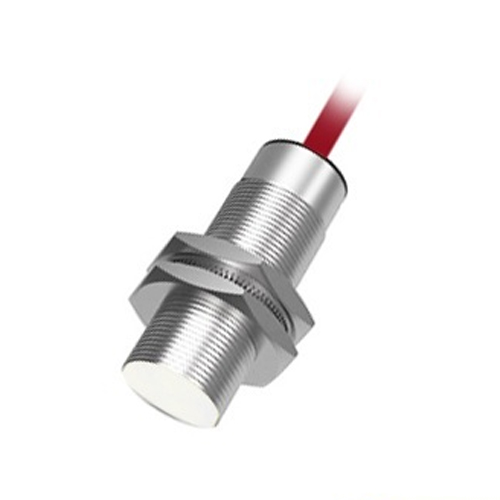
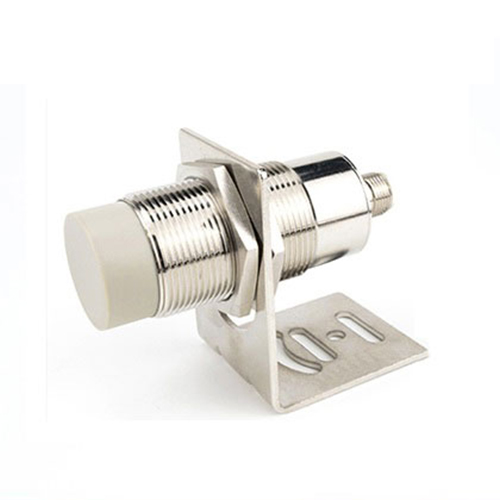
In the dynamic landscape of industrial automation, the demand for reliable, non-contact detection solutions is paramount. Among the array of sensing technologies, the AC Proximity Sensor stands out as a cornerstone for countless applications, from manufacturing assembly lines to complex machinery. This device operates on a fundamental principle: it generates an alternating electromagnetic field from its sensing face. When a metallic object enters this field, eddy currents are induced within the target, causing a change in the sensor's internal oscillation amplitude. This change is detected and converted into a clear electrical output signal, effectively switching the sensor's state without any physical contact.
The inherent advantages of AC Proximity Sensors are significant. Their non-contact nature eliminates mechanical wear and tear, leading to exceptional longevity and reduced maintenance costs. Unlike mechanical limit switches, they offer high-speed response, capable of detecting objects at remarkable frequencies, which is crucial for high-throughput production environments. Furthermore, they are largely immune to environmental factors like dust, oil, and moisture when properly housed, ensuring stable performance in harsh industrial settings. A key feature is their ability to detect only metallic objects, primarily ferrous metals like iron and steel, with high precision, making them ideal for position verification, counting, and end-of-travel detection in automated systems.
When discussing the AC Proximity Sensor KJTDQ series, it represents a refined category designed for specific operational parameters. These sensors are typically powered directly by alternating current, commonly in the 90-250V AC range, aligning seamlessly with standard industrial power supplies. This direct AC operation simplifies system integration by eliminating the need for additional DC power conversion units in many control panels. The output of an AC proximity sensor is usually in the form of a solid-state switch or a relay, compatible with standard AC control circuits, programmable logic controllers (PLCs), and other industrial actuators.
The application scope for AC Proximity Sensors is vast. In automotive manufacturing, they verify the presence of metal components on conveyor belts. In packaging machinery, they detect the position of metallic parts to control filling and sealing operations. They are indispensable in metalworking for tool positioning and in material handling for monitoring the position of crane hooks or metallic pallets. The robustness of the KJTDQ series, in particular, makes it suitable for heavy-industry applications where electrical noise and voltage fluctuations are common, providing a dependable sensing solution.
Selecting the right AC Proximity Sensor involves several considerations. The sensing distance, or nominal range, must be appropriate for the application to avoid false triggers or missed detections. The housing material, such as nickel-plated brass or stainless steel, should be chosen based on the environmental conditions to resist corrosion and physical damage. The electrical specifications, including voltage range and output current, must match the control system's requirements. Additionally, factors like temperature rating, connection type (pre-wired or connector), and mounting style (flush or non-flush) play a critical role in optimal performance and easy installation.
Installation and maintenance, while straightforward, require attention to detail. Sensors should be mounted securely to prevent vibration-induced errors. It is crucial to maintain the recommended clearance from surrounding metal objects to prevent interference with the electromagnetic field. Regular checks for accumulated debris on the sensing face and verification of electrical connections ensure continuous reliability. The durability of AC Proximity Sensors means maintenance is often minimal, primarily involving periodic inspection and cleaning.
Looking ahead, the evolution of proximity sensing continues. While AC variants like the KJTDQ remain essential for high-power, direct-AC applications, advancements are focusing on enhanced sensing ranges, improved immunity to electromagnetic interference (EMI), and the development of models capable of distinguishing between different metal types. Integration with Industrial Internet of Things (IIoT) platforms is also emerging, allowing for predictive maintenance and real-time monitoring of sensor health and process data.
In conclusion, the AC Proximity Sensor, exemplified by specialized series like the KJTDQ, is a vital, robust component in modern industrial control systems. Its ability to provide accurate, wear-free detection of metallic objects under challenging conditions directly contributes to increased safety, reduced downtime, and heightened operational efficiency. For engineers and system integrators, understanding its operating principles, key selection criteria, and application best practices is fundamental to designing resilient and productive automated processes. By leveraging this reliable technology, industries can build a safer, more efficient, and more intelligent manufacturing future.