check

check

check

check

check

check
In the intricate world of industrial automation, countless components work silently behind the scenes to ensure precision, safety, and efficiency. Among these unsung heroes, the inductive proximity detector stands out as a fundamental pillar. This robust, non-contact sensor has revolutionized how machines perceive their environment, enabling seamless operations in manufacturing, packaging, automotive assembly, and beyond. Unlike mechanical switches that wear out or optical sensors that can be fooled by environmental conditions, inductive proximity detectors offer unparalleled reliability in harsh settings.
The core principle of an inductive proximity detector is elegantly simple yet profoundly effective. It generates an oscillating electromagnetic field from its sensing face. When a metallic object—typically ferrous metals like steel or iron, though some models detect non-ferrous metals—enters this field, eddy currents are induced within the target. This process dampens the oscillation, triggering a solid-state switch inside the sensor. The entire detection occurs without any physical contact, eliminating mechanical wear and tear. This key feature translates directly into extended service life, reduced maintenance costs, and minimal downtime, which are critical metrics for any production facility.
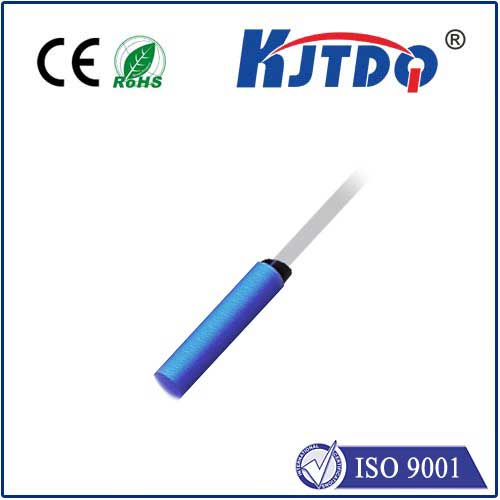
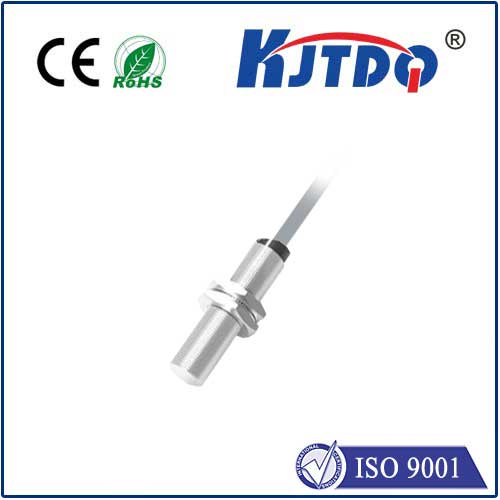
Modern inductive proximity sensors, such as the KJTDQ series, embody decades of engineering refinement. They are designed to excel in challenging industrial environments. With ingress protection (IP) ratings like IP67 or IP69K, they are immune to dust, moisture, and high-pressure washdowns. Their robust housing, often made of stainless steel or nickel-plated brass, withstands mechanical impacts and corrosive substances. Furthermore, advanced models incorporate temperature compensation circuits, ensuring stable performance despite fluctuations in ambient temperature, a common occurrence in foundries or welding shops.
The applications for these detectors are vast and varied. On a high-speed bottling line, an inductive sensor precisely counts aluminum caps as they stream by. In a robotic welding cell, it confirms the correct positioning of a metal chassis before the welding torch fires. Within the hydraulic system of an excavator, it monitors the position of the piston rod, providing essential feedback for control systems. The versatility extends to safety systems as well; they are often employed as part of interlock mechanisms on machine guards, ensuring a door is securely closed before dangerous machinery can activate.
Choosing the right inductive proximity detector involves several technical considerations. Sensing range, typically from 1 to 40 millimeters, must be matched to the application. The choice of housing shape—barrel, rectangular, or ring-shaped—depends on the installation constraints. Output configuration, whether NPN or PNP, sinking or sourcing, must be compatible with the connected programmable logic controller (PLC). Factors like switching frequency, which can reach tens of thousands of Hertz, are vital for high-speed counting tasks. The emergence of IO-Link enabled sensors adds a new layer of capability, allowing for remote parameter configuration, real-time diagnostics, and seamless integration into Industry 4.0 data networks for predictive maintenance.
The economic and operational advantages are clear. By preventing collisions, ensuring part presence, and enabling precise positioning, these detectors reduce product waste and machine damage. Their non-contact nature means no moving parts to lubricate or replace, slashing long-term ownership costs. The reliability of a well-specified sensor, like those in the KJTDQ family, contributes directly to overall equipment effectiveness (OEE), a key performance indicator for manufacturing productivity.
As automation trends move toward smarter, more connected factories, the role of the inductive proximity detector continues to evolve. It remains a critical data point provider in the Internet of Things (IoT) ecosystem. From its humble beginning as a simple metal detector, it has matured into a sophisticated, intelligent component that forms the sensory backbone of modern industry. Its silent, unwavering vigilance ensures that complex automated processes run smoothly, safely, and efficiently, proving that sometimes the most crucial components are those you never see.