check

check

check

check

check

check
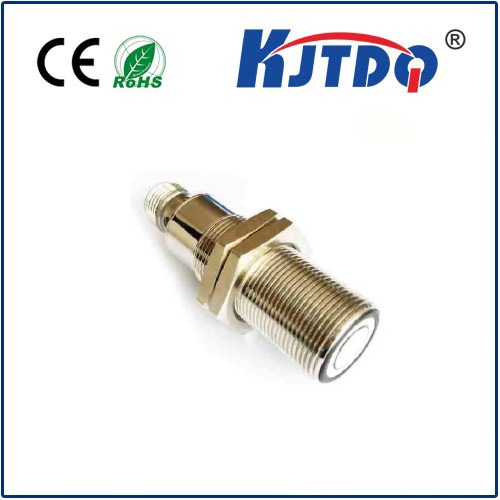
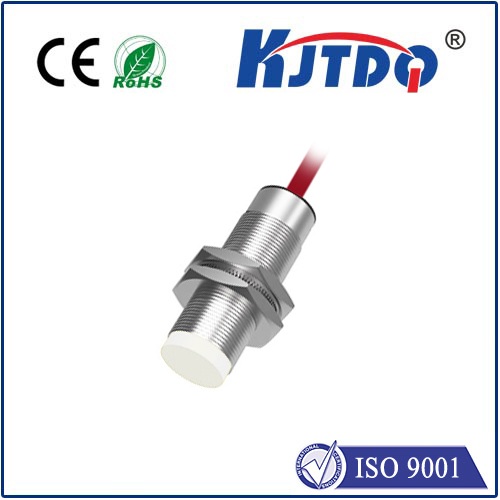
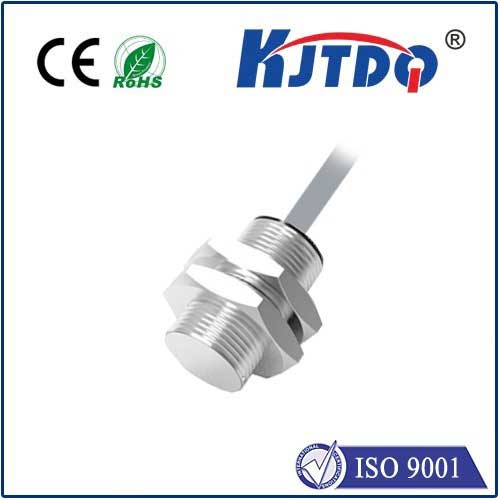
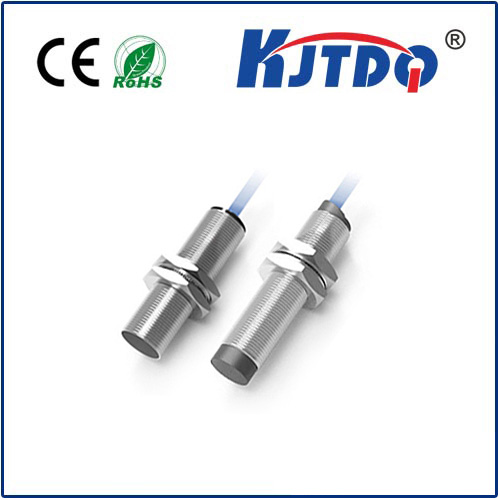
In modern industrial environments, the demand for reliable and precise detection solutions has never been greater. Among the various technologies available, the inductive sensor for metal stands out as a cornerstone of automation systems. These sensors operate on a fundamental principle: they generate an electromagnetic field from a coil energized by an alternating current. When a metallic object enters this field, eddy currents are induced within the metal, causing a change in the oscillation amplitude within the sensor's circuit. This change is detected and converted into a clear electrical signal, typically triggering a switch output. This non-contact method of detection offers significant advantages over mechanical limit switches or photoelectric sensors in many metal-sensing applications.
The core strength of inductive sensors lies in their robustness and immunity to environmental challenges. Designed to withstand harsh conditions, they are often housed in metal or rugged polymer casings with high Ingress Protection (IP) ratings. This makes them ideal for environments filled with dust, oil, coolant mist, or other contaminants that would obscure optical lenses or jam mechanical parts. Unlike capacitive sensors, which can react to non-metallic materials, or ultrasonic sensors, which might be affected by air turbulence, inductive sensors offer targeted detection specifically for ferrous and non-ferrous metals. This specificity drastically reduces false triggers, ensuring consistent and reliable operation in critical processes.
A key application driving their adoption is in assembly and machining lines. Here, inductive sensors perform essential tasks such as part presence verification, counting, and position detection. For instance, confirming a metal workpiece is correctly seated in a fixture before a machining operation begins prevents costly collisions and tool damage. They are also integral to robotic systems, where they provide end-of-arm tooling confirmation or detect the position of metal components for precise picking and placing. In material handling, these sensors monitor the flow of metal parts on conveyors, ensuring smooth logistics and preventing jams.
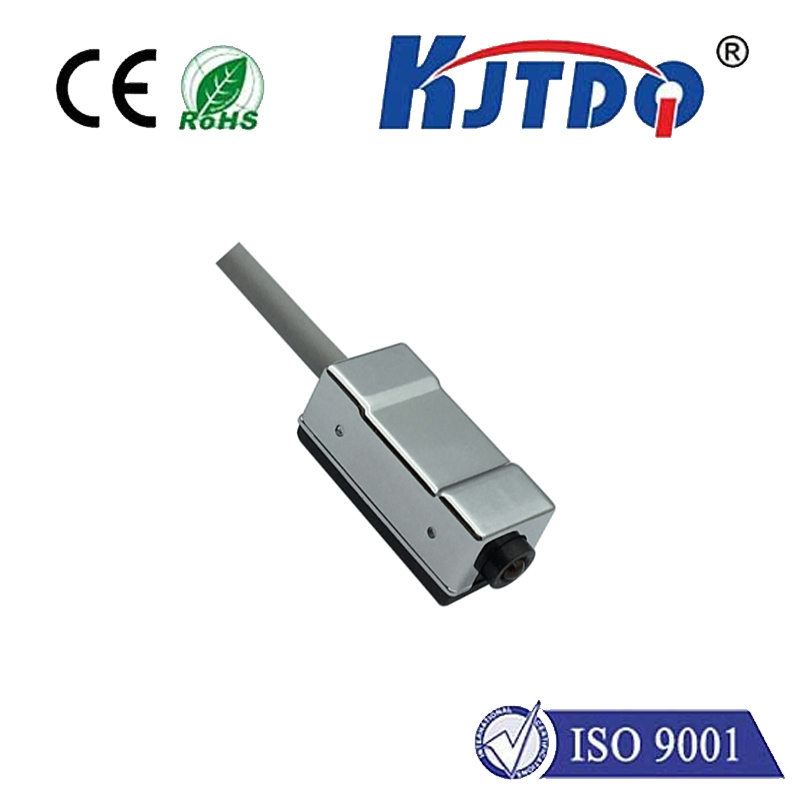
The evolution of inductive sensor technology has led to specialized variants that address specific industrial needs. Factor-1 cylindrical sensors are the standard, but flat or rectangular designs allow for installation in tight spaces. Analog output sensors provide continuous distance information relative to the target, useful for monitoring tolerances or wear. Furthermore, the development of all-metal sensing face models and weld-field immune sensors has expanded their usability. Weld-field immune sensors, in particular, can operate reliably in the intense magnetic fields generated by resistance welding equipment, a common challenge in automotive manufacturing.
When integrating an inductive sensor into a system, several technical parameters require careful consideration. The sensing range, or nominal distance, is specified for a standard mild steel target. It is crucial to note that this range reduces for non-ferrous metals like aluminum or copper, often requiring a correction factor. The switching frequency determines how quickly the sensor can detect objects passing by, a critical factor in high-speed production. Environmental factors such as ambient temperature and supply voltage compatibility must also align with the application's demands to ensure long-term stability.
Looking forward, the role of inductive sensors for metal is set to grow alongside Industry 4.0 trends. Their simple, reliable data output is a perfect fit for networked systems and predictive maintenance strategies. By providing real-time data on machine cycles or part flow, they contribute to overall equipment effectiveness (OEE) calculations. While newer technologies like vision systems offer complex data, the inductive sensor remains unmatched for its simplicity, cost-effectiveness, and unwavering reliability in the core task of detecting metal. Its continued innovation ensures it will remain a fundamental, indispensable component in the automated factories of today and tomorrow, silently enabling efficiency, safety, and precision.