check

check

check

check

check

check
In the high-stakes world of modern manufacturing, where micron-level precision and uninterrupted operation are non-negotiable, the choice of components can make or break productivity. Among these critical components, the inductive sensor stands out as a fundamental element in Computer Numerical Control (CNC) machinery. This non-contact sensing technology has become indispensable for ensuring accuracy, reliability, and efficiency on the shop floor.
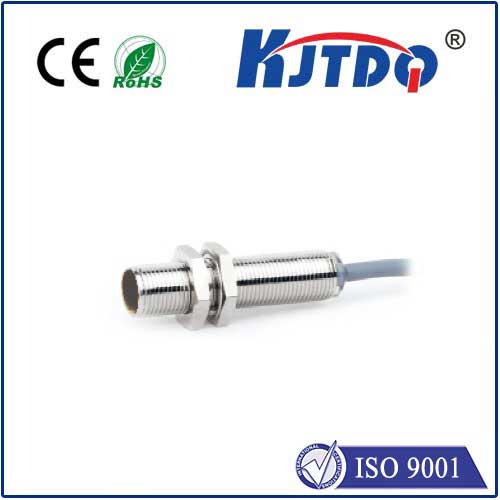
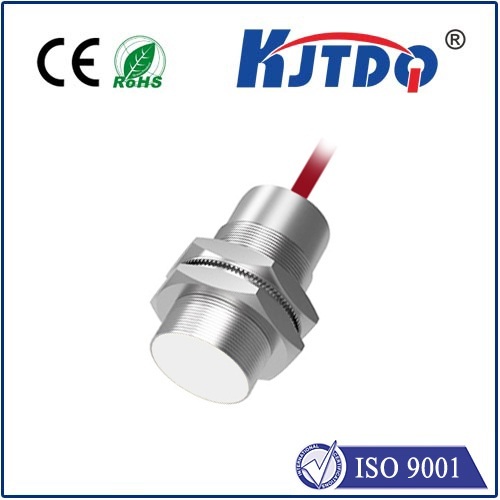
Unlike mechanical limit switches or optical sensors, inductive sensors operate on a simple yet brilliant principle: they generate an electromagnetic field. When a metallic target—such as a tool holder, machine slide, or part—enters this field, it induces eddy currents within the target. The sensor detects the change in the oscillation amplitude of its internal circuit, triggering a solid-state switching signal without any physical contact. This core mechanism offers profound advantages for the harsh CNC environment, which is often filled with coolant mist, metal chips, oil, and vibration.
The primary role of an inductive sensor in a CNC machine is position detection. They are strategically mounted to provide precise feedback on the location of moving parts. For instance, they define the home position for axes, confirm the open or closed status of automatic tool changer doors, detect the presence of a tool in the spindle, or signal the end of a linear slide's travel. This real-time positional data is fed back to the CNC controller, forming a closed-loop system that ensures movements are executed exactly as programmed. Without this reliable verification, the risk of crashes, tool damage, and scrap parts increases exponentially.
Durability is another cornerstone of their value proposition. With no moving parts to wear out and a housing typically rated at IP67 or higher, inductive sensors are virtually immune to contamination. They continue to function flawlessly amidst the grime that would quickly foul optical sensors or cause mechanical switches to fail. This ruggedness translates directly into reduced machine downtime and lower maintenance costs, as these sensors can often outlast the machine tools they are installed on.
Modern inductive sensors designed for CNC applications offer enhanced features that push the boundaries of performance. Miniaturization allows them to be installed in extremely tight spaces within tool changers or on compact machining centers. Factor-1 sensors, which can detect all metals (ferrous and non-ferrous) at the same range, simplify installation and inventory. Advanced models also incorporate robust shielding, preventing them from interfering with or being affected by adjacent sensors or metal structures—a critical feature in the densely packed electrical cabinets of CNC systems.
Furthermore, the integration of IO-Link communication protocol in newer inductive sensor models is a game-changer for Industry 4.0 initiatives. IO-Link transforms a simple binary switch into an intelligent device capable of transmitting detailed diagnostic data. Operators can monitor parameters like operating temperature, switch cycle counts, and signal strength remotely. This enables predictive maintenance, where a sensor can warn of potential failure before it occurs, and allows for quick, parameterized replacement without manual recalibration.
Selecting the right inductive sensor requires careful consideration of several factors. The sensing distance, or nominal range, must be appropriate for the application, with a safety margin to account for mechanical tolerances and thermal expansion. The housing material, typically stainless steel or nickel-plated brass, must withstand chemical exposure. The electrical output (PNP/NPN) and connection type (pre-wired cable or quick-disconnect) must match the machine's control system. Ultimately, partnering with a reputable supplier known for quality and technical support is as crucial as the technical specifications.
In conclusion, the inductive sensor is far more than a simple switch in a CNC machine. It is a sophisticated, reliable sentinel that safeguards precision, protects valuable equipment, and ensures the smooth flow of automated production. As CNC technology evolves towards greater autonomy and connectivity, the humble inductive sensor, with its proven physics and growing intelligence, will remain a foundational pillar of manufacturing reliability and precision, driving quality and productivity in workshops around the globe.