check

check

check

check

check

check
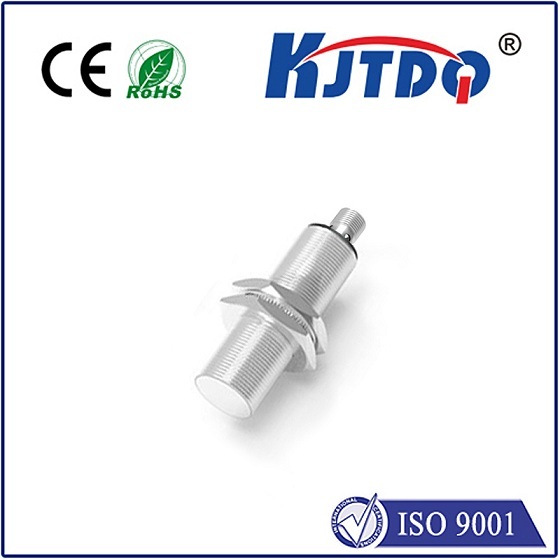
In the intricate world of industrial automation, precision and reliability are not just advantages; they are absolute necessities. For engineers and system integrators tasked with monitoring materials without physical contact, the choice of sensor technology is critical. Among the various options, the M30 capacitive sensor stands out as a versatile and robust workhorse, offering unparalleled performance in detecting a wide range of substances, from conductive liquids to granular solids and even through non-metallic container walls.
Unlike its inductive counterpart, which is limited to sensing metals, the capacitive sensor operates on a different principle. It generates an electrostatic field. When a target material enters this field, it causes a detectable change in capacitance. This fundamental characteristic is what grants the M30 capacitive sensor its remarkable flexibility. Whether it's monitoring the water level in a plastic tank, detecting the presence of glue or adhesive in a packaging line, or ensuring the correct fill level of powder in a hopper, this sensor handles it with consistent accuracy. Its ability to "see through" materials like glass, plastic, or wood makes it indispensable for applications where the sensor must be mounted externally for easy maintenance or to avoid contamination.
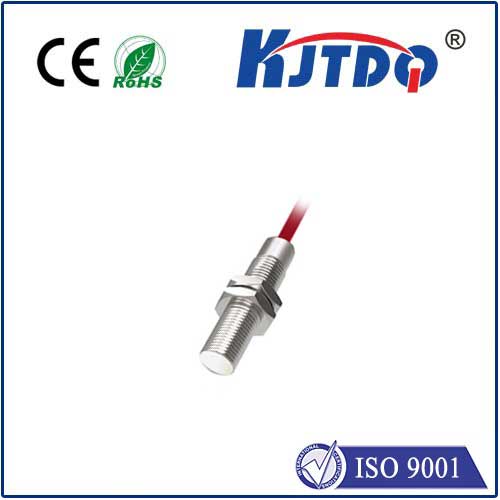
The "M30" designation refers to its standardized 30mm diameter cylindrical housing, a common form factor that ensures easy integration into existing machine designs and mounting systems. This robust housing is typically rated IP67 or higher, making it resistant to dust ingress and capable of withstanding temporary immersion in water. This durability is essential for harsh industrial environments found in food and beverage processing, chemical plants, pharmaceutical manufacturing, and woodworking facilities. Engineers value this ruggedness as it translates directly to reduced downtime and lower maintenance costs.
A key feature that sets high-performance M30 capacitive sensors apart is their adjustable sensitivity. This is often achieved via a potentiometer or through teach-in functionality. This adjustability allows technicians to fine-tune the sensor's detection range and ignore the container wall itself, focusing solely on the target material inside. This prevents false triggers and ensures stable operation even when conditions, such as material density or environmental humidity, vary slightly. Modern versions may also offer IO-Link connectivity, providing digital communication for parameter setting, diagnostics, and process data integration into higher-level control systems, paving the way for Industry 4.0 smart factory concepts.
Consider a typical application in a bottling plant. An M30 capacitive sensor can be mounted on the outside of a transparent PVC pipe to detect the presence or absence of a liquid flow. It provides a reliable signal without ever contacting the liquid, eliminating risks of corrosion or clogging. In a different setting, such as a silo storing plastic pellets, the same sensor type can be used to indicate high or low levels, preventing overfills or production stoppages. Its non-contact nature also makes it ideal for detecting non-metallic objects on conveyor belts, such as cardboard boxes, bottles, or wood panels.
When selecting an M30 capacitive sensor for a specific task, several factors must be evaluated. The dielectric constant of the target material is paramount; materials with higher constants (like water) are easier to detect than those with lower ones (like certain plastics). The sensing distance, which is typically shorter than for inductive sensors, must be suitable for the application. The construction material of the sensing face is also crucial; PTFE-coated versions are available for applications involving sticky materials to prevent buildup. Ultimately, the M30 capacitive sensor is not a one-size-fits-all component but a highly configurable tool. Its correct selection and setup are the final steps in unlocking its full potential, ensuring a seamless and reliable detection solution that enhances overall system efficiency and intelligence.