check

check

check

check

check

check
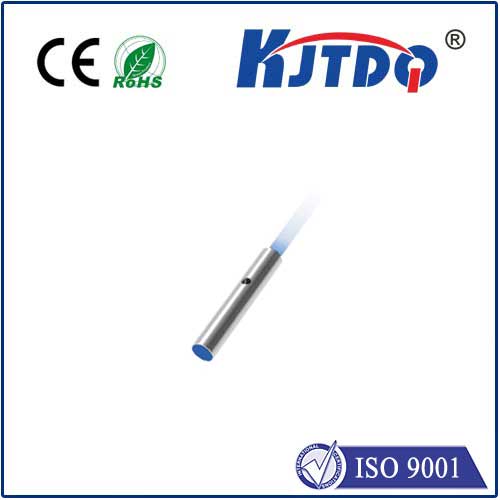
In the world of industrial automation, precision and reliability are non-negotiable. When it comes to detecting metallic objects in challenging conditions, one component stands out for its robustness and versatility: the non-flush inductive sensor. This technology, often designated with identifiers like KJTDQ, has become a cornerstone in modern manufacturing, packaging, and material handling systems. Unlike its flush-mounted counterpart, the non-flush inductive sensor features a sensing face that protrudes from its housing. This simple yet critical design difference unlocks a significantly larger sensing range, allowing it to detect objects from a greater distance. This capability is invaluable in applications where the target object may not pass directly in front of the sensor or where mounting space constraints prevent a perfectly aligned installation.
The operational principle remains elegantly simple. The sensor generates an electromagnetic field from its active face. When a metallic object enters this field, eddy currents are induced within the metal, causing a change in the oscillation amplitude within the sensor's internal circuit. This change is detected and converted into a clean, solid-state output signal, typically switching a load on or off. The "non-flush" design means this electromagnetic field extends further into the surrounding area, creating a larger detection bubble. This makes the sensor exceptionally tolerant to mounting misalignments and variations in the target's approach path. For engineers and maintenance technicians, this translates to easier installation, reduced setup time, and fewer false-negative readings that can halt a production line.
The true value of a high-quality non-flush inductive sensor, such as those in the KJTDQ series, is demonstrated in harsh industrial environments. These sensors are engineered to withstand common adversaries like dust, chips, coolants, and vibrations. Their housings are typically constructed from robust materials like nickel-plated brass or stainless steel, offering high resistance to physical impact and corrosion. Many models feature IP67 or higher ingress protection ratings, meaning they are completely protected against dust and can withstand temporary immersion in water. This durability ensures continuous operation in settings like machine tools, welding stations, or outdoor conveyor systems, where contaminants are ever-present. The reliability of the output signal is paramount, and these sensors provide consistent performance despite electrical noise from nearby motors or frequency converters, thanks to advanced shielding and circuit design.
Selecting the right sensor involves considering several key parameters. The sensing range, usually specified for a standard mild steel target, is the primary factor. For non-flush models, this range is notably longer than for flush sensors of the same diameter. The size of the sensor body is also crucial, as it must fit into the available mounting space. Furthermore, the type of output required—PNP (sourcing) or NPN (sinking)—must match the control system's input card. Connection methods, such as pre-wired cables or quick-disconnect plugs, affect maintenance and replacement ease. For specialized applications, factors like the target material (stainless steel, aluminum, copper) must be considered, as different metals affect the effective sensing distance. A sensor from a reputable series like KJTDQ will have clear documentation outlining these specifications, enabling a perfect match for the application.
From automotive assembly lines detecting engine blocks on a pallet to food packaging machines sensing metal lids on fast-moving conveyors, the applications are vast. They are indispensable for position verification, part counting, and end-of-travel limit sensing. Their ability to operate without physical contact eliminates wear and tear, granting them a virtually unlimited mechanical lifespan. This non-contact nature also allows them to detect objects through non-metallic barriers like thin plastic or glass walls, opening up even more innovative uses. When integrated into a control system, they provide the essential data that drives efficiency, safety, and quality control.
In conclusion, the non-flush inductive sensor represents a perfect blend of simple physics and sophisticated engineering. Its extended range and rugged construction make it a fundamentally reliable workhorse for industrial detection tasks. For system designers and plant engineers seeking a durable, high-performance solution to ensure seamless automation, specifying a proven series such as KJTDQ is a strategic decision that pays dividends in uptime and operational consistency. By understanding its advantages and proper application guidelines, businesses can leverage this technology to build more resilient and productive automated systems.