check

check

check

check

check

check
In the world of industrial automation and machinery, the ability to detect the presence or absence of metal objects with unwavering accuracy is paramount. This is where the inductive sensor for metal stands as a cornerstone technology. Unlike optical or capacitive sensors, inductive proximity sensors operate on a fundamental electromagnetic principle, making them exceptionally reliable for metallic target detection in challenging environments filled with dust, oil, or coolant fluids.
The core of an inductive sensor is a coil wound around a ferrite core, connected to an oscillator. When an alternating current flows through this coil, it generates a high-frequency electromagnetic field around the active face of the sensor. When a conductive metal object enters this field, eddy currents are induced on the surface of the metal. These eddy currents draw energy from the sensor's oscillator circuit, causing a change in its amplitude. This change is detected by the sensor's evaluation circuit, which then triggers a solid-state switch to change the output state, signaling the presence of the metal target.
The advantages of using an inductive sensor for metal detection are numerous. Their robustness is a key benefit. With no moving parts and typically housed in solid stainless steel or nickel-plated brass bodies, they are immune to wear and tear, offering a long operational life. They are completely sealed, providing high ingress protection (IP) ratings like IP67 or IP69K, making them ideal for washdown areas in food processing or harsh machining lines. Furthermore, they are insensitive to non-metallic materials like wood, plastic, or liquids, ensuring they only react to the intended metal targets, which drastically reduces false triggers.
When selecting an inductive sensor, several critical specifications must be considered. The sensing distance, or nominal range, is crucial and varies by sensor model and target material. For instance, a sensor might have a 5mm range for mild steel but a reduced range for aluminum or copper due to differences in conductivity. The target size and shape also matter; a standard sensor requires the target to be at least equivalent to its sensing face diameter. Factor 1 (Fe, steel) is the reference, while other metals like stainless steel (factor ~0.7), brass (factor ~0.5), or aluminum (factor ~0.4) have reduction factors that decrease the effective sensing range.
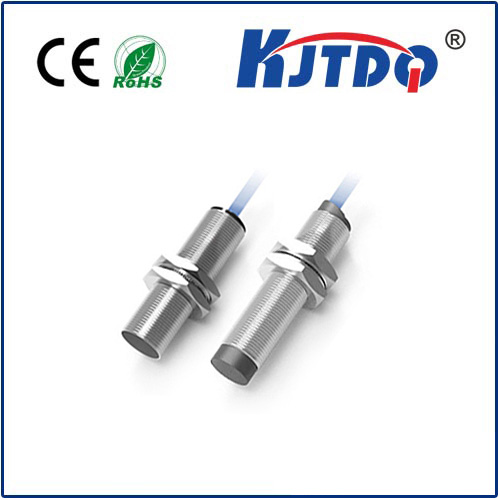
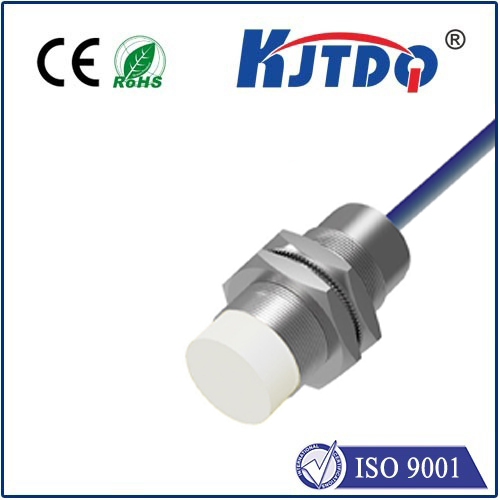
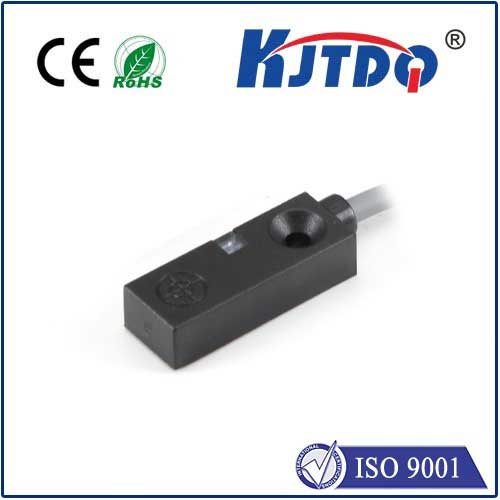
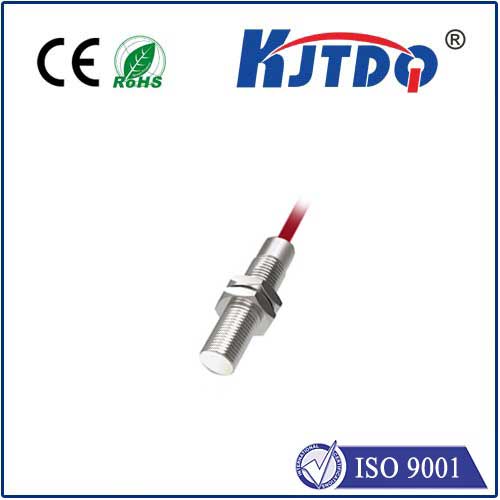
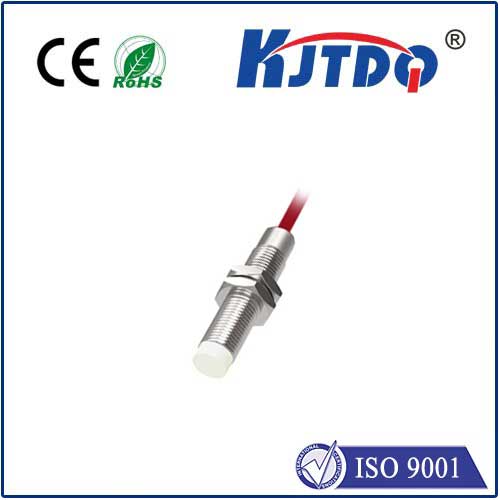
Output types are another vital choice. Two-wire DC sensors are simple to wire but have a residual current. Three-wire DC sensors (PNP or NPN) are the most common, offering clear sourcing or sinking outputs. Four-wire sensors provide both a normally open (NO) and normally closed (NC) contact in one device. AC versions are also available for specific applications. The housing shape—tubular (e.g., M8, M12, M18, M30 barrels), rectangular, or slot-style—is selected based on mounting constraints and the detection task.
Modern advancements have pushed the capabilities of inductive sensors even further. Analog output sensors provide a continuous signal proportional to the distance to the target, useful for measuring position or thickness. Factor 1 sensors are now standard, offering full rated range for all metals including aluminum and copper. High-temperature sensors can withstand ambient temperatures up to 150°C or more for foundry applications. Wear-resistant face materials like PTFE or ceramic coatings are used in applications involving abrasive metal chips or welding spatter.
In practical applications, inductive sensors for metal are ubiquitous. They are used for simple tasks like counting metal bottles on a conveyor, detecting the end position of a cylinder rod, or confirming a metal part is present before a machining operation. In robotics, they ensure grippers have correctly picked up a metal component. In automotive assembly, they verify the presence of nuts, bolts, and engine blocks. Their speed, with switching frequencies often in the kilohertz range, allows them to keep pace with high-speed production lines.
Proper installation and maintenance are straightforward but essential. Ensuring the correct voltage supply, avoiding short circuits, and maintaining the recommended mounting distances from metal surroundings (to prevent side-effects) will guarantee optimal performance. Regular cleaning of the sensing face from accumulated metallic dust or debris is also recommended to maintain the nominal sensing range.
In conclusion, the inductive sensor for metal remains an indispensable, reliable, and versatile workhorse in factory automation. Its principle of operation, while elegantly simple, delivers the ruggedness and precision required for the most demanding industrial environments. From basic presence detection to complex positioning tasks, choosing the right inductive sensor—considering range, target material, output, and housing—is a critical step in building efficient, fault-resistant automated systems that drive modern manufacturing forward.