check

check

check

check

check

check
In the dynamic landscape of industrial automation, precision, reliability, and safety are non-negotiable. The 24V proximity sensor stands as a cornerstone technology, enabling seamless non-contact detection critical for modern manufacturing, packaging, and assembly lines. Operating on a standard 24V DC power supply, commonly found in industrial control panels, these sensors offer robust performance with excellent compatibility across a wide range of machinery and Programmable Logic Controllers (PLCs).
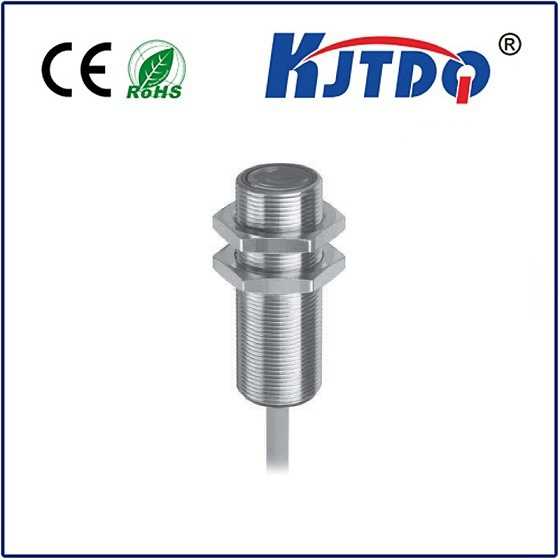
The fundamental principle behind an inductive 24V proximity sensor involves generating an electromagnetic field. When a metallic target enters this field, it induces eddy currents, causing a change in the sensor's oscillation amplitude. This change is detected by the internal circuitry, triggering a solid-state output switch. This non-contact operation eliminates mechanical wear and tear associated with limit switches, leading to significantly longer service life and reduced maintenance downtime. For detecting non-metallic objects, capacitive versions are available, which sense changes in capacitance caused by the target's presence.
Key advantages of integrating 24V proximity sensors into industrial systems are manifold. Their high switching frequency allows for the detection of very fast-moving objects on high-speed production lines, ensuring no detail is missed. They are inherently resilient, featuring rugged housings typically rated IP67 or higher, making them resistant to dust, coolants, oils, and temporary immersion. This durability ensures consistent operation in harsh industrial environments. Furthermore, their simple two-wire or three-wire connection schemes facilitate easy installation and integration into existing control systems.
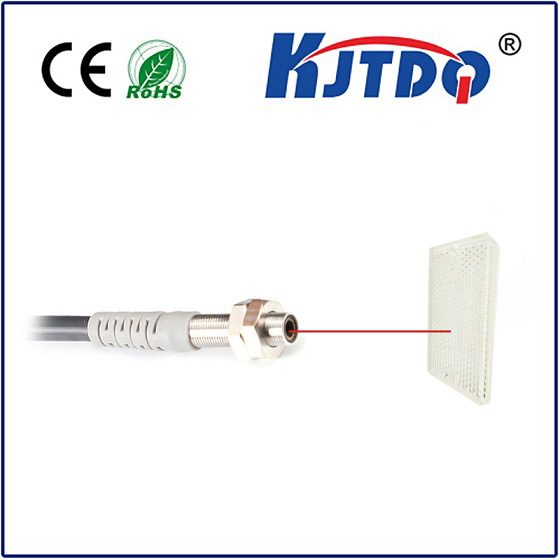
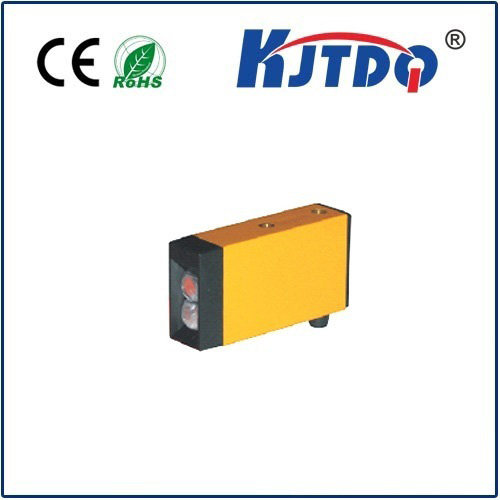
A specific model series, often identified as KJTDQ, exemplifies the evolution of this technology. These units frequently incorporate advanced features such as short-circuit and reverse polarity protection, safeguarding both the sensor and the connected control system from wiring errors. Enhanced noise immunity is another critical feature, ensuring stable signal output even in electrically noisy environments near motors and frequency drives. Some variants offer precise sensing distance adjustment or built-in LED status indicators for immediate visual feedback on operational state, simplifying troubleshooting.
The application scope for 24V proximity sensors is vast. They are indispensable for precise position sensing of robotic arms, end effectors, and automated guided vehicles (AGVs). In conveyor systems, they reliably detect the presence, passage, or count of products, boxes, or components. They serve as vital safety components in machinery, confirming the correct positioning of guards, doors, or tools before a process cycle begins. In automated storage and retrieval systems (AS/RS), they ensure accurate pallet positioning.
Selecting the right 24V sensor requires careful consideration of several parameters. The sensing distance, both nominal and effective, must suit the application. The housing material and shape (cylindrical, rectangular, or ring-shaped) should be chosen based on available mounting space and environmental conditions. The output type—typically NPN (sinking) or PNP (sourcing)—must match the input requirements of the controller. Temperature range specifications ensure the sensor will perform reliably in the intended operational climate.
Installation and maintenance, while straightforward, demand attention to detail. Sensors should be mounted securely to prevent vibration-induced misalignment. A minimum clearance between sensors and between the sensor and metal mounting surfaces must be maintained to prevent mutual interference. Regular cleaning of the sensing face from accumulated debris is recommended to maintain optimal performance. Periodic functional checks should be part of routine preventive maintenance schedules.
The integration of 24V proximity sensors, including advanced series like KJTDQ, directly contributes to lean manufacturing goals. By providing accurate, real-time data on machine and product status, they minimize errors, reduce waste from misprocessed parts, and prevent costly machine jams or collisions. Their reliability underpins overall equipment effectiveness (OEE), maximizing production uptime. As Industry 4.0 and the Industrial Internet of Things (IIoT) advance, these sensors form a fundamental data acquisition point, feeding information into networked systems for analytics and predictive maintenance.
In conclusion, the 24V proximity sensor is far more than a simple switch. It is a sophisticated, durable, and intelligent component that forms the sensory backbone of automated industrial systems. Its evolution continues, with trends pointing towards miniaturization, increased intelligence with IO-Link communication for parameterization and diagnostics, and even greater robustness. For engineers and system integrators aiming to build efficient, reliable, and future-proof automation solutions, a deep understanding and strategic deployment of 24V proximity sensor technology remains essential.