check

check

check

check

check

check
In the heart of a bustling automotive assembly line or deep within a high-speed packaging machine, a silent sentinel works tirelessly. This component, the industrial inductive proximity sensor, is a cornerstone of modern automation, yet its operation often goes unnoticed. Its primary function is deceptively simple: to detect the presence or absence of metallic objects without any physical contact. This non-contact detection is the key to its reliability and longevity, making it an indispensable tool in environments where mechanical wear, dirt, and harsh conditions would quickly disable other sensing methods.
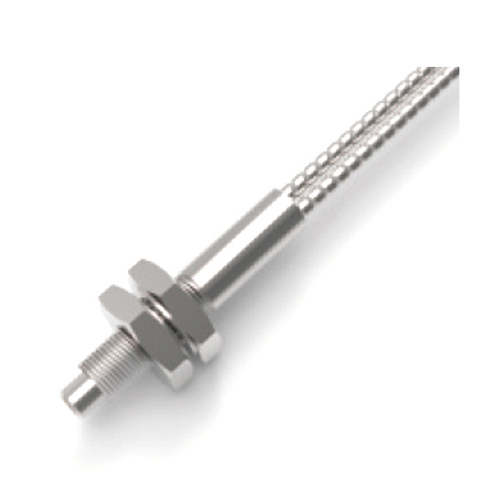
The working principle of an inductive proximity sensor is rooted in electromagnetic induction. Inside its robust housing, typically made of nickel-plated brass or stainless steel, lies a coil wound around a ferrite core. When an alternating current flows through this coil, it generates an oscillating electromagnetic field at the sensor's active face. When a conductive metal target enters this field, eddy currents are induced on the target's surface. These eddy currents draw energy from the sensor's oscillator, causing a change in the oscillation amplitude. The sensor's internal circuitry detects this change and triggers a solid-state switch, sending a clear signal to the programmable logic controller (PLC). The entire process is instantaneous, precise, and immune to environmental contaminants like dust, oil, or coolant mist.
The applications for these sensors are vast and critical. They are used for precise position detection, such as confirming a robotic arm has reached its endpoint or a cylinder is fully extended. They perform vital counting tasks on production lines, tallying every bottle, can, or component that passes by. In safety systems, they act as interlock guards, ensuring a protective door is securely closed before a machine can start. Their ability to function in extreme temperatures, resist vibration, and withstand washdowns makes them ideal for food processing, metalworking, and heavy machinery.
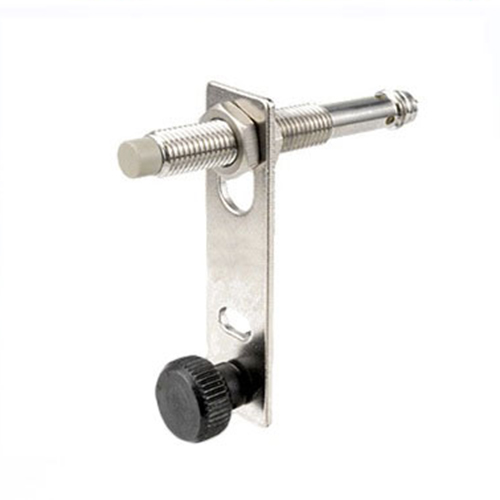
Selecting the right inductive sensor requires careful consideration of several factors. The sensing distance, or nominal range, is specified for a standard mild steel target. Different metals have different correction factors; for instance, stainless steel may reduce the effective range, while aluminum reduces it even more dramatically. The housing style is another crucial choice; cylindrical sensors in M8, M12, M18, or M30 threaded barrels are common, while rectangular or slot-style housings suit specific mounting needs. Engineers must also decide between shielded (flush-mountable) and unshielded models, output type (NPN sinking or PNP sourcing), and connection method (pre-wired cable or quick-disconnect).
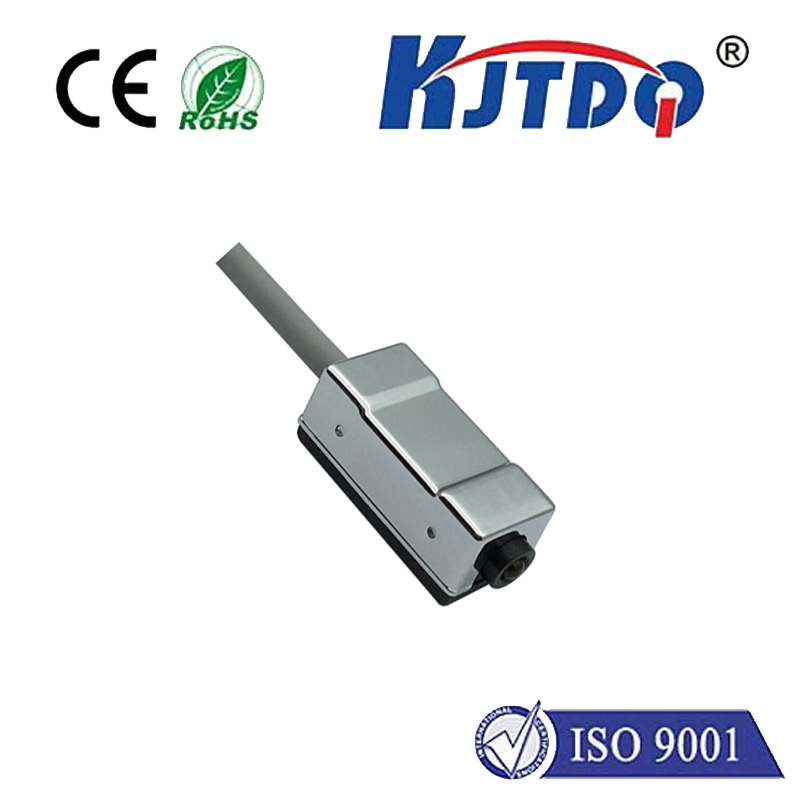
The integration of the KJTDQ series into this landscape represents a focus on enhanced performance and durability. Models within such series often feature advanced designs that offer extended sensing ranges, superior resistance to electromagnetic interference (EMI), and improved temperature stability. They are engineered to deliver consistent performance even when installed adjacent to other sensors or near large motors and inverters, a common challenge in crowded control panels. The robust construction ensures reliable operation over millions of cycles, minimizing downtime and maintenance costs.
Beyond basic detection, modern inductive sensors are evolving. Some variants incorporate analog outputs (4-20mA or 0-10V) to provide continuous distance measurement, not just an on/off signal. Others feature IO-Link digital communication, transforming them into smart devices that can report diagnostic data like operating temperature, signal strength, and even predictive maintenance alerts directly to the control system. This intelligence layer is pivotal for Industry 4.0 initiatives, enabling deeper process monitoring and optimization.
Ultimately, the industrial inductive proximity sensor is more than just a switch. It is a fundamental data point generator for automated systems. Its unwavering accuracy and ruggedness form the sensory foundation upon which efficiency, quality, and safety are built. From ensuring a weld robot is perfectly positioned to verifying a pallet is present before a forklift retrieves it, these devices provide the critical feedback that keeps industrial processes flowing smoothly, safely, and profitably. Their silent, reliable operation is a testament to engineering that focuses on solving real-world problems with elegant, robust solutions.