check

check

check

check

check

check
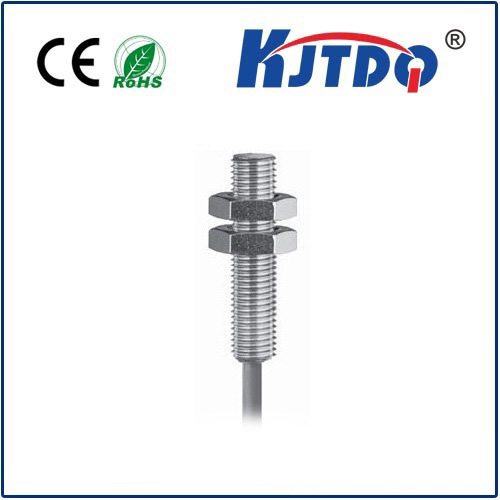
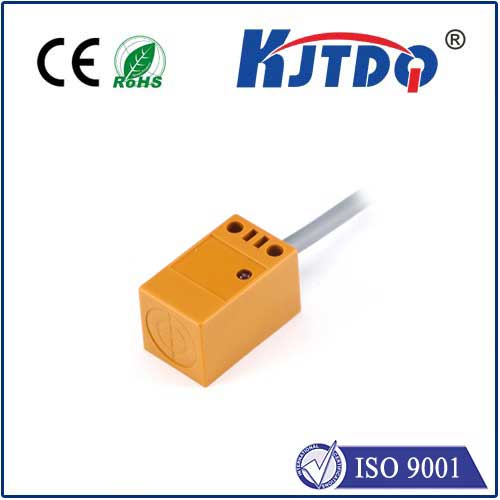
In the demanding world of industrial automation, reliability is not a luxury; it's a necessity. Equipment must perform consistently under conditions that would cripple lesser components. This is where the IP67 Inductive Sensor, a cornerstone of modern sensing technology, proves its indispensable value. Engineered for resilience, these sensors provide unwavering performance where dust, moisture, and mechanical stress are part of the daily routine.
An inductive sensor operates on a fundamental principle: it generates an oscillating electromagnetic field from its active face. When a metallic object enters this detection field, it induces eddy currents within the target, causing a change in the oscillation amplitude. The sensor's internal circuitry detects this change and triggers a solid-state switching signal. This non-contact method of detection eliminates mechanical wear, ensuring a remarkably long operational life compared to mechanical limit switches. The primary targets are ferrous metals like steel and iron, though many modern sensors can also detect non-ferrous metals like aluminum, copper, and brass, albeit at a reduced sensing range.
The designation "IP67" is the key to understanding its ruggedness. The IP (Ingress Protection) rating is an international standard defining the levels of sealing effectiveness against foreign bodies and moisture. The first digit, '6', signifies complete protection against dust ingress. No harmful dust can penetrate the housing, making it ideal for environments like woodshops, foundries, and grain handling facilities. The second digit, '7', indicates protection against the effects of temporary immersion in water. The sensor can withstand immersion in up to 1 meter of water for 30 minutes. This makes it perfectly suited for applications exposed to washdown procedures, heavy rain, or occasional splashing in coolant systems. This dual protection ensures the sensor's internal electronics remain completely isolated from environmental contaminants.
The application spectrum for IP67-rated inductive sensors is vast and critical. On automated production lines, they are used for precise position detection of metal parts, robotic arm end-effector positioning, and verifying the presence of components. In material handling, they monitor conveyor systems, detect pallet positions, and count metallic items. Within heavy machinery, these sensors provide vital feedback for cylinder piston positioning, rotational speed monitoring, and gear tooth counting. Their robustness is particularly valued in the automotive industry for assembly and painting robots, in food and beverage processing for equipment that undergoes frequent high-pressure cleaning, and in outdoor applications like gate control and agricultural machinery.
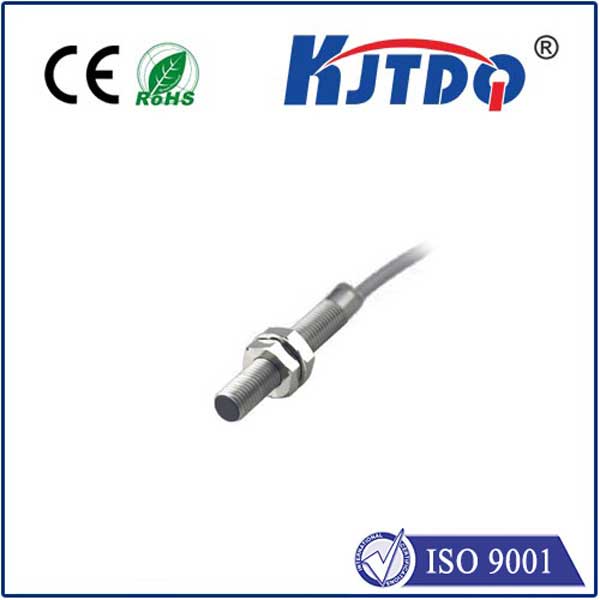
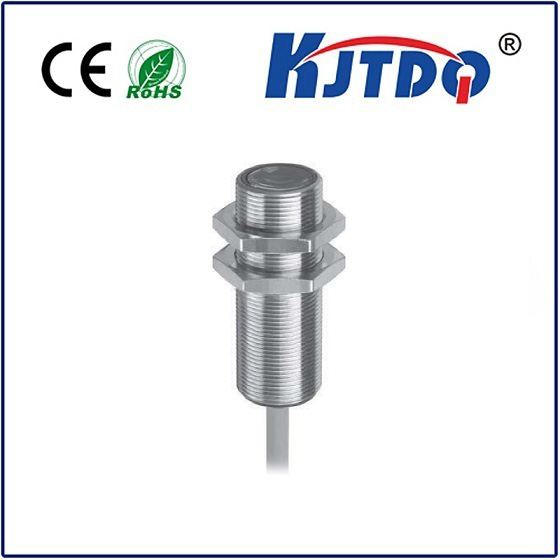
Selecting the right IP67 inductive sensor involves several key considerations. The sensing range, typically from 1 to 15 millimeters for standard cylindrical models, must be appropriate for the application to ensure reliable detection without physical contact. The housing material, often stainless steel (particularly V4A/AISI 316L for highly corrosive environments) or nickel-plated brass, must be chosen based on chemical exposure. The electrical output (e.g., NPN or PNP, NO or NC) must be compatible with the connected controller (PLC). Other factors include the operating voltage, switching frequency for high-speed applications, and the presence of built-in diagnostics like LED status indicators.
Beyond the basic IP67 rating, many advanced models incorporate features that enhance performance and longevity. Temperature compensation circuits maintain accuracy across a wide operating range. Short-circuit and overload protection safeguard both the sensor and the connected control system from wiring errors or faults. Some sensors offer increased noise immunity for use in areas with strong electromagnetic interference from motors or welding equipment.
Installation and maintenance, while straightforward, require attention to detail. Mounting must be secure to prevent vibration from loosening the unit. It is crucial to maintain the recommended clearance around the sensor face to prevent interference from adjacent metal structures, known as the "non-flush mountable" requirement for certain models. For flush-mountable sensors, this concern is minimized. Routine maintenance primarily involves keeping the sensing face clean from buildup of non-metallic debris like mud or paint, which, while not damaging, can slightly reduce the effective sensing distance.
In conclusion, the IP67 Inductive Sensor is far more than just a component; it is a reliable sentinel in the industrial landscape. Its ability to deliver precise, non-contact detection while withstanding severe environmental punishment translates directly into increased machine uptime, reduced maintenance costs, and enhanced process reliability. For engineers and system integrators designing equipment for challenging conditions, specifying an IP67-rated inductive sensor is a strategic decision for building a foundation of durability and precision. It represents a commitment to operational continuity, ensuring that sensing functions perform flawlessly, shift after shift, in the heart of the most demanding industrial applications.