check

check

check

check

check

check
In the rapidly evolving landscape of modern industry, the demand for accuracy, reliability, and operational efficiency has never been greater. At the heart of this transformation lies a critical component: the industrial detection sensor. These sophisticated devices serve as the eyes and ears of automated systems, providing essential data that drives decision-making, ensures quality control, and safeguards both personnel and machinery. The integration of advanced sensor technology, such as the KJTDQ series, is fundamentally reshaping production floors, leading to smarter, more responsive, and highly optimized manufacturing environments.
Industrial detection sensors are designed to identify, measure, and monitor various physical parameters. These include proximity, position, level, temperature, pressure, flow, and vibration. Unlike standard sensors, industrial-grade variants are built to withstand harsh conditions—extreme temperatures, dust, moisture, and electromagnetic interference—common in factories, chemical plants, and outdoor installations. Their robustness ensures continuous operation with minimal downtime, a non-negotiable requirement in 24/7 production cycles. The core function is to convert a physical phenomenon into an electrical signal that can be interpreted by a control system, such as a PLC (Programmable Logic Controller) or an industrial PC, triggering predefined actions.
The application spectrum of these sensors is vast. In automotive assembly lines, precise proximity sensors ensure robotic arms place components correctly, while vision sensors inspect for defects in real-time. In the food and beverage sector, level sensors monitor ingredient silos to prevent shortages, and temperature sensors maintain strict hygiene and safety standards during processing. Within logistics and packaging, photoelectric sensors count items on high-speed conveyor belts, ensuring accurate packaging and inventory management. In heavy industries like mining or metal fabrication, vibration and acoustic emission sensors predict equipment failure, enabling proactive maintenance that prevents catastrophic breakdowns and costly unplanned stoppages.
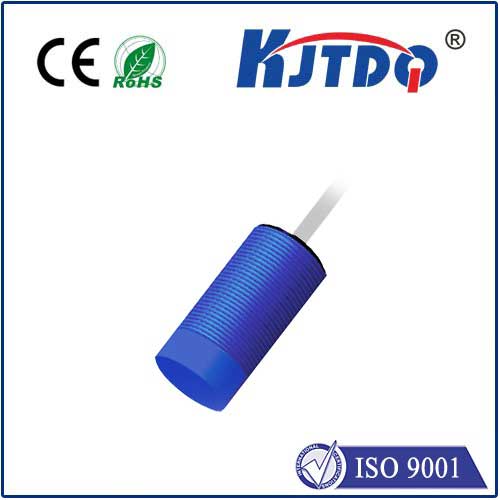
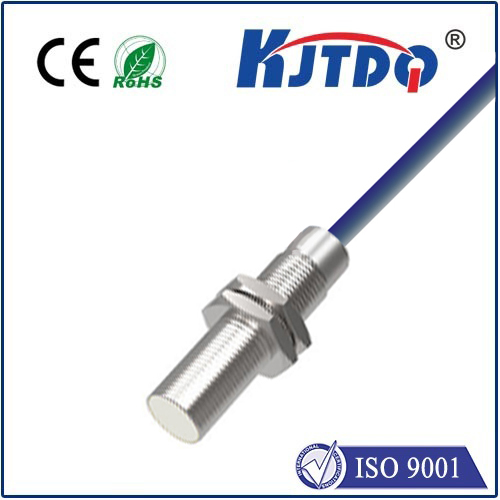
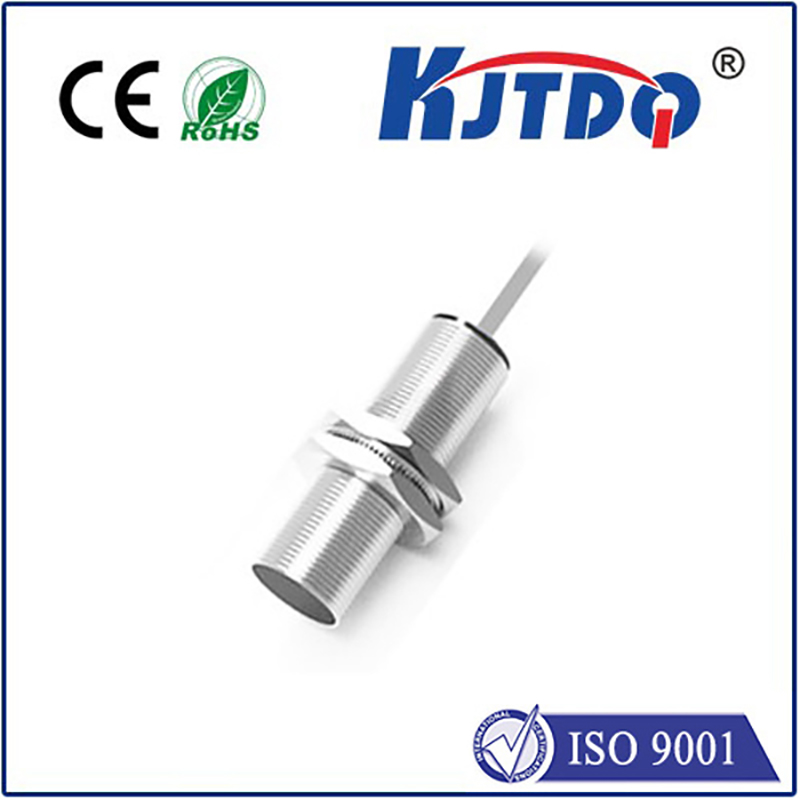
The emergence of the Industrial Internet of Things (IIoT) and Industry 4.0 has exponentially increased the value proposition of industrial detection sensors. Modern sensors are no longer isolated data points; they are intelligent nodes in a connected network. The KJTDQ series, for instance, exemplifies this shift. These sensors often come equipped with embedded intelligence, such as self-diagnostic capabilities, digital communication protocols (like IO-Link, PROFINET, or EtherNet/IP), and the ability to pre-process data locally. This connectivity allows for the seamless flow of information from the sensor to cloud-based analytics platforms. Plant managers can now access real-time dashboards that display performance metrics, track efficiency trends, and generate predictive insights, transforming raw data into actionable intelligence.
The benefits of deploying high-performance industrial detection sensors like the KJTDQ are multifaceted. Firstly, they dramatically enhance product quality. Continuous monitoring at every production stage minimizes human error and ensures every item meets stringent specifications, reducing waste and rework. Secondly, they boost overall equipment effectiveness (OEE) by maximizing uptime. Predictive maintenance, enabled by sensor data, allows repairs to be scheduled during planned outages, avoiding disruptive failures. Thirdly, they contribute significantly to workplace safety. Sensors can detect hazardous gas leaks, monitor machine guarding, and ensure safe distances are maintained between workers and moving robotic equipment, creating a safer environment for personnel.
Furthermore, the data collected by these sensors is a goldmine for process optimization. By analyzing trends over time, engineers can identify bottlenecks, fine-tune machine parameters, and streamline workflows for greater throughput and energy efficiency. This data-driven approach supports lean manufacturing principles and helps companies reduce their operational costs and carbon footprint simultaneously. In an era of global competition and tight margins, such efficiencies are crucial for maintaining a competitive edge.
Selecting the right industrial detection sensor requires careful consideration of the application's specific needs. Factors such as the sensing range, required accuracy, response time, environmental protection rating (IP or NEMA), output type (analog or digital), and compatibility with existing control architecture are paramount. The KJTDQ series is engineered to offer a versatile and reliable solution across many of these demanding scenarios, providing a balance of precision, durability, and connectivity that modern smart factories demand.
Looking ahead, the future of industrial detection sensors is intertwined with advancements in artificial intelligence and edge computing. Sensors will become even more autonomous, capable of making localized decisions and learning from the data they collect to improve their own performance. The integration of AI algorithms will enable more sophisticated pattern recognition for quality inspection and anomaly detection, pushing the boundaries of automation further.
In conclusion, the industrial detection sensor is an indispensable pillar of contemporary manufacturing and automation. As exemplified by technologies like the KJTDQ series, these devices are evolving from simple switches into intelligent, connected systems that provide the foundational data for the digital factory. Their role in enhancing precision, ensuring safety, driving efficiency, and enabling predictive analytics is central to the success of industries striving for excellence in an increasingly automated world. Investing in the right sensor technology is not merely an operational upgrade; it is a strategic move towards building a more resilient, agile, and intelligent enterprise.