check

check

check

check

check

check
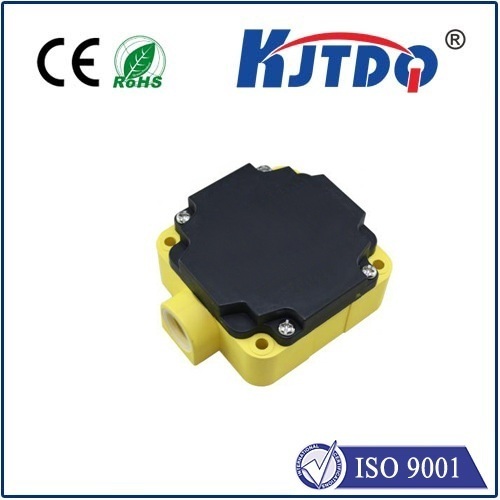
In the dynamic landscape of industrial automation, the quest for precision, reliability, and efficiency is unending. At the heart of countless automated systems lies a critical component often overlooked yet indispensable: the inductive sensor for machine applications. This technology serves as the silent sentinel, enabling machines to perceive their environment without physical contact, thereby driving seamless operations across manufacturing floors, packaging lines, and robotic assemblies.
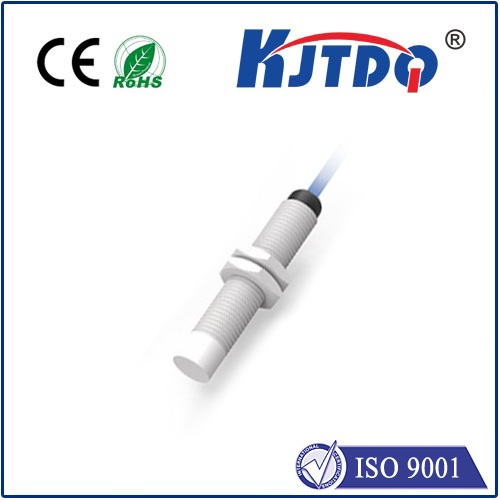
Inductive sensors operate on a fundamental principle of electromagnetism. They generate an oscillating electromagnetic field from a coil. When a metallic object enters this field, eddy currents are induced within the object, which in turn dampens the oscillation of the sensor's field. This change is detected by the sensor's circuitry, triggering a solid-state output signal. This non-contact method of detection is its cornerstone advantage, eliminating mechanical wear and tear associated with limit switches and ensuring a remarkably long operational lifespan even in the harshest industrial environments.
The application of inductive sensors in machinery is vast and varied. They are primarily used for precise position detection. For instance, in a CNC machining center, these sensors verify the presence of a metal tool in the spindle or confirm the precise position of a sliding carriage. They act as end-of-travel limit switches, preventing mechanical overrun and potential damage. In automated assembly lines, they detect the presence of metal components on conveyor belts, ensuring parts are correctly positioned for robotic arms to pick and place. Within hydraulic or pneumatic cylinders, embedded inductive sensors provide exact feedback on piston rod position, enabling precise control of linear motion.
Another crucial role is in speed and rotation monitoring. By detecting the teeth of a metal gear or slots on a rotating shaft, inductive sensors can accurately calculate rotational speed or count revolutions, which is vital for process control in motors, turbines, and drive systems. Their robustness makes them ideal for this task, as they are unaffected by oil, dust, or coolant splashes—common adversaries in machine shops.
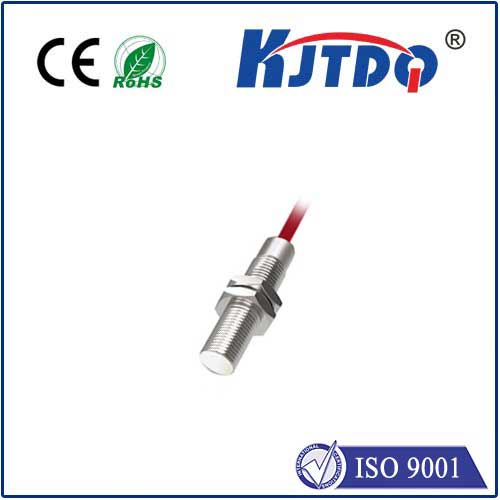
The selection of the right inductive sensor for a specific machine task depends on several technical factors. The sensing distance, or nominal range, is paramount and varies based on the sensor's size and the target metal type. Factors like switching frequency determine how fast the sensor can detect objects, critical for high-speed production lines. Housing material is another consideration; sensors with stainless steel or nickel-plated brass housings offer superior resistance to mechanical impact and corrosive chemicals. Furthermore, modern inductive sensors come with diverse output configurations (e.g., PNP, NPN, analog, IO-Link) and connection types (pre-wired cables or quick-disconnect plugs) to integrate seamlessly into different control systems, from simple PLCs to sophisticated networked architectures.
The integration of advanced features has further elevated their utility. Some models incorporate teach-in functionality, allowing for easy adjustment of the sensing range on-site. Others with IO-Link capability provide not just a simple on/off signal but a wealth of diagnostic data, such as operating temperature, signal strength, and device health, facilitating predictive maintenance and reducing unplanned downtime. This shift towards smart sensors aligns perfectly with the Industry 4.0 paradigm, where data-driven insights optimize entire production ecosystems.
The benefits of deploying high-quality inductive sensors are tangible. They significantly enhance machine safety by providing reliable feedback for safety interlocks. Their non-contact nature ensures maintenance-free operation, reducing total cost of ownership. By enabling precise and repeatable detection, they directly contribute to improved product quality and manufacturing consistency. Ultimately, they form a reliable foundation for automation, ensuring that machines operate as intended, cycle after cycle, in demanding 24/7 production environments.
From detecting a tiny screw on a fast-moving feeder to monitoring the position of a massive press ram, the inductive sensor for machine applications is a testament to elegant engineering solving practical industrial challenges. Its evolution continues, pushing the boundaries of sensing distance, miniaturization, and intelligence. For engineers and system integrators aiming to build resilient, efficient, and smart automated machinery, understanding and leveraging the capabilities of modern inductive sensors is not just an option—it is a fundamental requirement for success in today's competitive industrial arena.