check

check

check

check

check

check
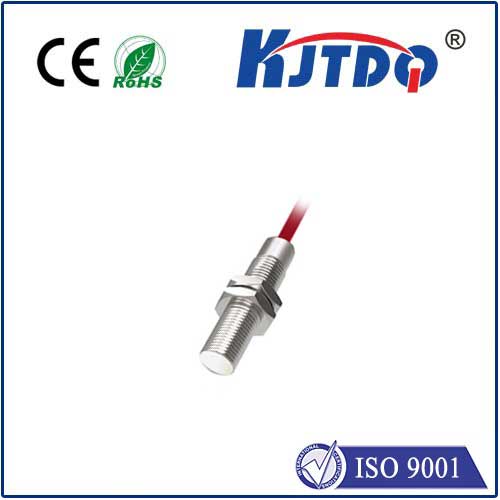
In the demanding world of industrial automation, reliability is non-negotiable. Equipment must perform flawlessly under extreme pressure, constant exposure to contaminants, and relentless physical stress. This is where the Stainless Steel Inductive Sensor, particularly models like the KJTDQ series, transitions from a simple component to a critical asset. Unlike standard sensors housed in plastic or mild steel, these robust devices are engineered from the ground up to conquer environments where others fail.
The primary advantage of a stainless steel inductive sensor lies in its formidable construction. The housing, typically made from high-grade 304 or 316 stainless steel, provides exceptional resistance to corrosion. This makes it impervious to oils, coolants, aggressive cleaning chemicals, and salty atmospheres common in food processing, marine applications, chemical plants, and metalworking facilities. The sealed design ensures an high Ingress Protection (IP) rating, often reaching IP67, IP68, or IP69K, safeguarding the internal electronics from dust, steam, and high-pressure washdowns. This durability translates directly into reduced downtime and lower maintenance costs, as the sensor can withstand the rigors of daily operation without degradation.
Beyond the rugged exterior, the sensing technology itself is a marvel of precision. Inductive sensors operate on a non-contact principle, detecting the presence of metallic objects—ferrous metals like iron and steel, and often non-ferrous metals like aluminum or copper depending on the model. When a metal target enters the sensor's electromagnetic field, it induces eddy currents that cause the oscillation amplitude to change. This change is detected by the sensor's circuitry, triggering a solid-state output signal. The KJTDQ series exemplifies this with consistent switching points, high repeat accuracy, and immunity to environmental factors like ambient light or acoustic noise that plague optical or ultrasonic sensors.
The application scope for stainless steel inductive sensors is vast. They are indispensable in machine tools for precise tool positioning and part detection on CNC lathes. In automated packaging lines, they reliably count metallic items or verify the position of foil lids. Within the automotive industry, they monitor robotic weld gun positions and detect pistons or gears on assembly lines. Their washdown capability makes them perfect for bottling plants and dairy processing equipment, where hygiene is paramount. Even in heavy industries like mining or forestry, they serve as limit switches on rugged machinery, providing reliable feedback on cylinder position or door status.
Selecting the right sensor involves several key specifications. The sensing distance, or nominal range (Sn), is crucial and must be chosen with a safety margin, as factors like target material, size, and temperature can affect performance. The housing style—tubular, rectangular, or ring-shaped—must suit the mounting constraints. Output type (PNP/NPN, NO/NC) must be compatible with the control system, be it a PLC, relay, or other controller. Operating voltage range and connection method (pre-wired cable or quick-disconnect) are also vital considerations. The KJTDQ series typically offers a range of these configurations, allowing for precise matching to application needs.
Installation and maintenance, while minimal, require attention to detail. Ensuring a clean mounting surface, maintaining the recommended lateral and axial distance between multiple sensors to prevent mutual interference, and using the correct mounting hardware are essential for optimal function. While these sensors are virtually wear-free due to their non-contact nature, periodic checks for physical damage, buildup of metallic swarf, or corrosion on the connector are recommended to guarantee long-term reliability.
In conclusion, the stainless steel inductive sensor represents a fusion of ruggedness and precision engineering. For system integrators and plant engineers, opting for a proven series like the KJTDQ is an investment in operational continuity. It eliminates a common point of failure in harsh conditions, ensuring that detection and positioning tasks are performed with unwavering accuracy. By choosing this durable sensing solution, industries can build more resilient, efficient, and cost-effective automated systems, ready to meet the challenges of modern manufacturing head-on.