check

check

check

check

check

check
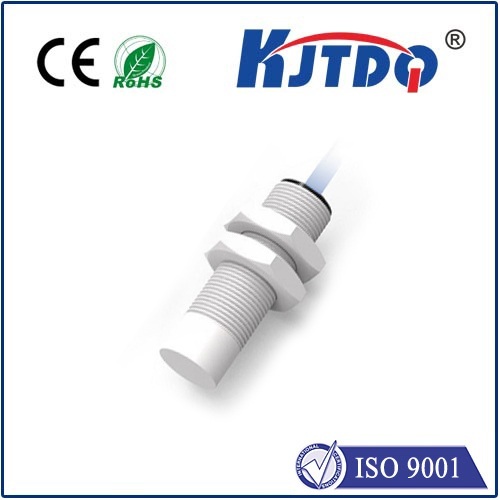
In the intricate world of industrial automation, where precision and reliability are non-negotiable, the compact inductive sensor stands as a silent sentinel. This unassuming device, often no larger than a fingertip, is a cornerstone of modern manufacturing, robotics, and process control. Unlike its bulkier predecessors, today's compact inductive sensor embodies a perfect fusion of miniaturized design and robust performance, enabling engineers to solve spatial challenges without compromising on detection accuracy.
The core principle of an inductive sensor is elegantly straightforward. It generates an oscillating electromagnetic field from its active face. When a metallic target—be it steel, aluminum, copper, or brass—enters this field, eddy currents are induced within the metal. This process dampens the oscillation, which the sensor's internal circuitry detects and converts into a clear, binary output signal. This contactless, wear-free detection method is what makes it exceptionally durable and ideal for harsh environments filled with dust, oil, and coolant.
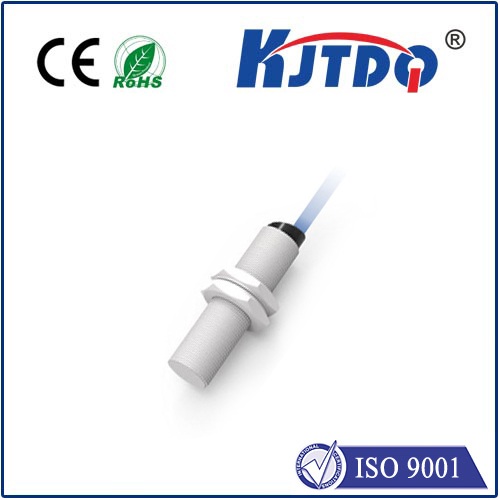
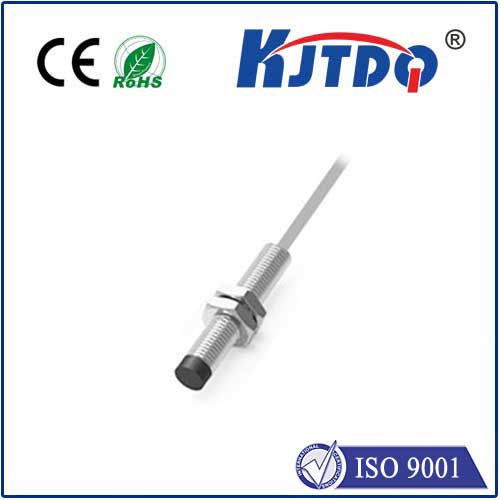
The evolution towards compactness has been a game-changer. The KJTDQ series and similar advanced models offer full sensing capabilities in housings as small as M5, M8, or M12. This miniaturization unlocks possibilities in tightly packed assembly lines, small robotic grippers, and intricate machinery where every millimeter counts. Despite their size, these sensors do not sacrifice key specifications. They maintain impressive sensing ranges, often several millimeters, and provide reliable switching frequencies capable of keeping up with high-speed production cycles.
A critical advantage of the modern compact inductive sensor is its embedded intelligence and resilience. Many models now feature advanced functionalities like weld-field immunity (resistance to strong electromagnetic interference from welding equipment), short-circuit protection, and temperature stability. They can distinguish between different metals through factor-1 adjustments or teach-in functions, allowing for precise tuning to specific applications. This intelligence ensures consistent operation, reducing false triggers and costly downtime.
The application spectrum is vast. In automotive manufacturing, these sensors verify the presence of pistons or gear teeth. In packaging machinery, they count metallic items on a conveyor. In robotics, they provide end-position feedback for arms and confirm gripper closure. Their sealed, robust construction (often meeting IP67 or IP69K ratings) makes them impervious to washdowns in food and beverage plants. The versatility extends to their output configurations, including PNP, NPN, analog, and IO-Link versions, facilitating seamless integration into any control system, from simple relays to sophisticated PLCs.
Selecting the right compact inductive sensor requires careful consideration. Key parameters include the target material and size, the required sensing distance, the operating voltage, and the environmental conditions. The mounting style—flush, non-flush, or threaded—also significantly impacts the effective sensing range and installation flexibility. Engineers must balance these factors to achieve optimal performance.
Looking ahead, the trajectory for compact inductive sensors points toward even greater integration and connectivity. The incorporation of IO-Link communication is transforming them from simple switches into smart data points on the Industrial Internet of Things (IIoT) network. They can now transmit not just a switch status but also diagnostic data like operating temperature, signal strength, and device health, enabling predictive maintenance and deeper process insights.
In conclusion, the compact inductive sensor is far more than just a proximity switch. It is a precision-engineered component that delivers unwavering reliability in the most demanding spaces. For system designers and plant managers aiming to enhance efficiency, ensure quality, and future-proof their operations, investing in high-performance compact inductive sensors like the KJTDQ series is a strategic decision. By enabling smarter, denser, and more resilient automation systems, these tiny powerhouses continue to drive innovation and productivity across global industries.