check

check

check

check

check

check
In the world of industrial automation and machinery, precision, reliability, and durability are non-negotiable. This is where the inductive proximity switch, a cornerstone of modern sensing technology, proves its indispensable value. Unlike mechanical switches that require physical contact, an inductive proximity switch operates on a non-contact principle, detecting the presence or absence of metallic objects without ever touching them. This fundamental characteristic eliminates wear and tear, dramatically extending operational life and reducing maintenance costs.
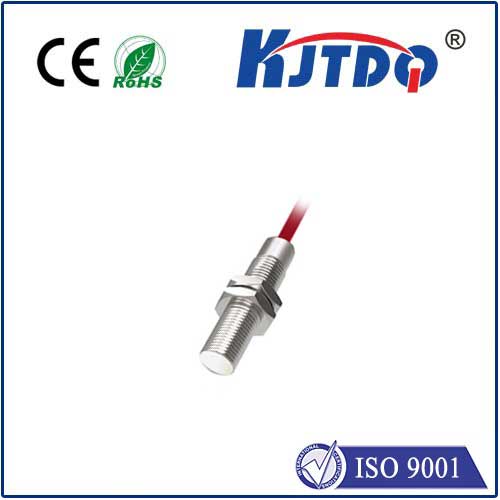
The core technology behind an inductive proximity switch is elegantly simple yet highly effective. The key component is a coil wound around a ferrite core, which forms part of an oscillator circuit. When an alternating current flows through this coil, it generates a high-frequency electromagnetic field at the active face of the sensor. In the absence of a target, this field remains stable. However, when a conductive metal object, such as steel, aluminum, or brass, enters this field, eddy currents are induced on the surface of the object. These eddy currents draw energy from the oscillator, causing its amplitude to decrease. The sensor's internal circuitry monitors this change. Once the amplitude drop reaches a predetermined threshold, the switch triggers a solid-state output signal, indicating the object's detection.
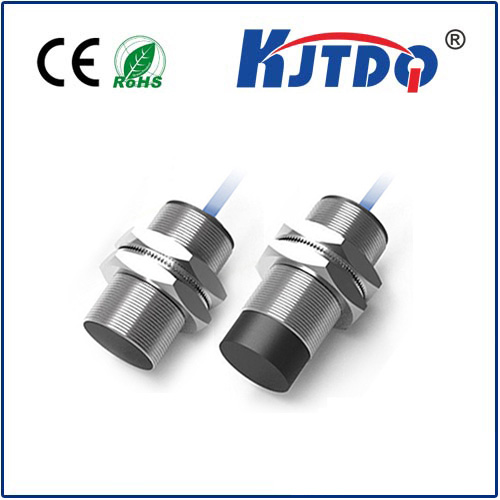
This operating principle grants the inductive proximity switch its remarkable robustness. Sealed in a rugged housing, often made of nickel-plated brass, stainless steel, or PBT plastic, these switches are immune to common industrial hazards. Dust, dirt, oil, coolant, and other non-metallic substances do not affect the sensing field, making them perfect for harsh environments in manufacturing, packaging, material handling, and automotive assembly lines. They are not fooled by grime, only by metal.
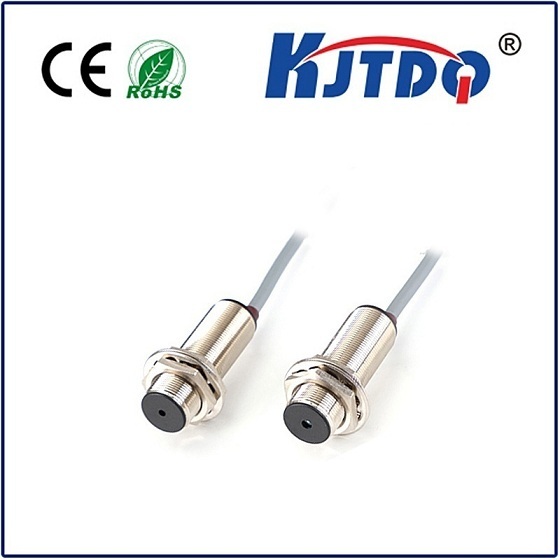
When selecting an inductive proximity switch for an application, several critical specifications must be considered. Sensing range, typically from 1 to 60 millimeters, is paramount and is usually rated for standard mild steel. For other metals like aluminum or copper, a correction factor must be applied, as these materials induce weaker eddy currents, resulting in a reduced effective sensing distance. The housing shape is another key choice: cylindrical barrels (e.g., M8, M12, M18, M30 threaded models) are common for easy installation, while rectangular or block-style housings offer unique mounting advantages. Output configuration is equally important; switches come with NPN (sinking) or PNP (sourcing) transistor outputs, alongside normally open (NO) or normally closed (NC) logic, to interface seamlessly with Programmable Logic Controllers (PLCs) and other control systems.
The advantages of implementing inductive proximity switches are extensive. Their non-contact nature ensures millions of reliable switching cycles with no mechanical fatigue. They offer high switching speeds, capable of detecting objects moving at high velocities, which is crucial for counting and positioning tasks. Their insensitivity to environmental contaminants translates to fewer false triggers and higher system uptime. Furthermore, modern designs incorporate advanced features like short-circuit protection, overload protection, and immunity to electrical interference, ensuring stable performance even in electrically noisy plants.
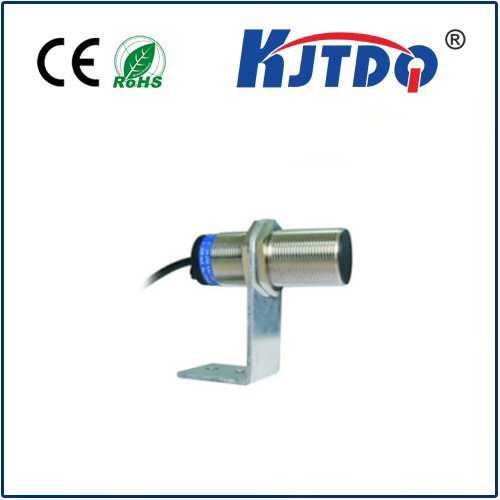
Consider a typical application on a conveyor line. An inductive proximity switch, such as the KJTDQ series, can be positioned to detect metal components on a pallet. Each detection pulse is sent to the PLC, which tracks production counts, initiates a robotic arm for pick-and-place, or verifies part presence before a machining operation. In metal stamping presses, these switches provide critical safety interlocking by confirming the correct position of the die or the absence of a misfed metal sheet. Their versatility makes them the silent, reliable workhorses behind automated efficiency.
In conclusion, the inductive proximity switch is more than just a component; it is a fundamental enabler of automation reliability. By providing accurate, wear-free detection of metallic objects, it forms the sensory backbone of countless industrial systems. For engineers and maintenance professionals seeking to enhance machine performance and minimize downtime, understanding and specifying the right inductive proximity switch—paying close attention to range, material, housing, and output—is a critical step. The result is a smarter, more resilient, and more productive operation, where the humble proximity switch plays a starring role in keeping everything running smoothly.