check

check

check

check

check

check
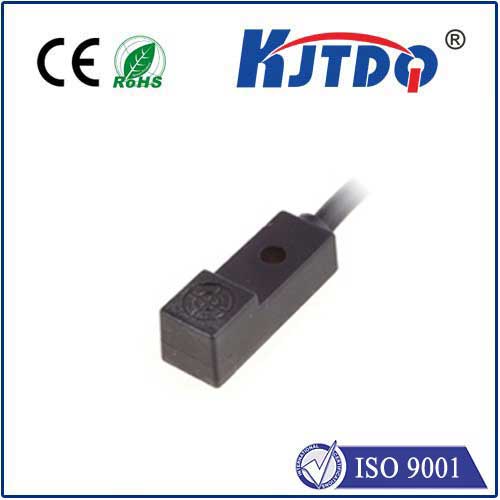
In the rapidly evolving landscape of industrial automation, the quest for reliability, precision, and durability in sensing technology is paramount. Among the various solutions available, the inductive sensor stands out as a cornerstone for countless applications. This non-contact device operates on a fundamental principle: it generates an electromagnetic field to detect the presence or absence of metallic objects without any physical contact. The core component is a coil through which an alternating current passes, creating an oscillating magnetic field. When a metallic target enters this field, eddy currents are induced within the object, causing a change in the oscillation amplitude or frequency. This change is detected by the sensor's circuitry, triggering a solid-state output signal.
The inherent advantages of inductive sensors make them indispensable in automated environments. Their rugged construction allows them to withstand harsh conditions, including exposure to dust, moisture, oil, and extreme temperatures. Unlike mechanical limit switches, they have no moving parts that can wear out, leading to significantly longer service life and reduced maintenance costs. This robustness translates directly into increased machine uptime and overall equipment effectiveness (OEE). Furthermore, their high switching frequency enables them to detect objects at incredibly fast speeds, which is crucial for high-throughput production lines, packaging machinery, and robotic assembly cells.
A key application area is in position sensing on production lines. Inductive sensors are used to verify the presence of components, count items on a conveyor belt, and monitor the end positions of cylinders and actuators. In material handling, they ensure pallets are correctly positioned and guide automated guided vehicles (AGVs). Within robotic systems, these sensors provide critical feedback for arm positioning and gripper operation, ensuring precise and repeatable movements. Another vital use is in machine safety, where they can function as part of interlock systems to confirm that safety guards are closed before a machine cycle can begin.
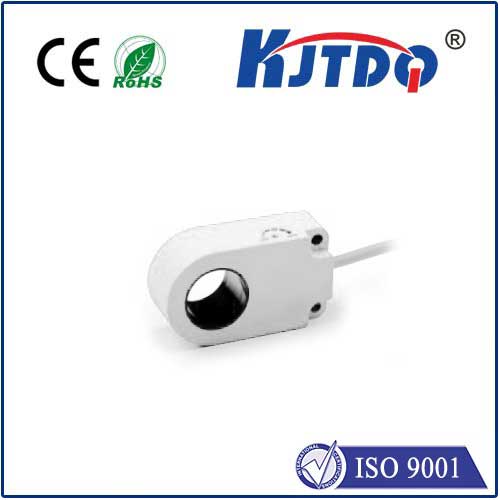
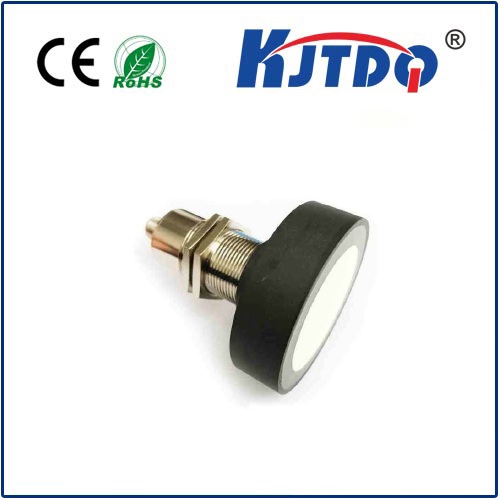
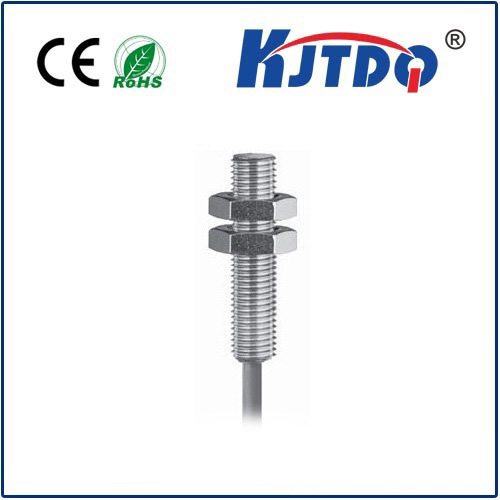
When selecting an inductive sensor for a specific automation task, several technical parameters must be considered. The sensing range, typically a few millimeters for standard models, defines the maximum distance at which a target can be reliably detected. The target material is also critical; while ferrous metals like steel provide the longest sensing ranges, non-ferrous metals such as aluminum, copper, and brass can also be detected, often with a reduced range. The sensor's housing style—tubular, rectangular, or ring-shaped—must suit the mechanical installation constraints. Output configuration, whether NPN or PNP, sinking or sourcing, must be compatible with the programmable logic controller (PLC) or other control system input card.
Modern advancements continue to push the boundaries of inductive sensing technology. Miniaturization has led to sensors small enough to be integrated into tight spaces on compact machinery. Factor 1 cylindrical sensors, for instance, offer full performance in an extremely small package. Enhanced immunity to electromagnetic interference (EMIO) ensures stable operation in electrically noisy plant environments. Some advanced models now incorporate IO-Link communication, a point-to-point serial connection that goes beyond simple switching to provide detailed diagnostic data, parameterization capabilities, and identification information, paving the way for Industry 4.0 and predictive maintenance strategies.
The integration of these sensors into a broader Industrial Internet of Things (IIoT) framework is a significant trend. By providing not just a binary signal but also data on operating temperature, signal strength, and switch cycle counts, intelligent inductive sensors contribute to a data-driven ecosystem. This allows plant managers to move from reactive maintenance to a condition-based approach, scheduling service only when needed and preventing unexpected downtime. The result is a smarter, more responsive, and more efficient manufacturing operation.
Ultimately, the inductive sensor is more than just a simple switch; it is a fundamental enabler of automation. Its ability to provide consistent, contactless detection of metals under demanding conditions forms the sensory foundation upon which modern automated systems are built. From automotive assembly to food and beverage processing, the reliable "click" of an inductive sensor confirming a part's position is a sound that signifies precision, efficiency, and progress in the industrial world. By understanding their operating principles, applications, and selection criteria, engineers and system integrators can leverage this robust technology to build more resilient and productive automated solutions.