check

check

check

check

check

check
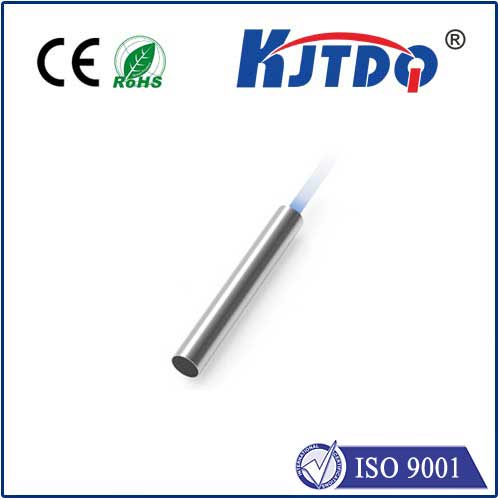
In the intricate world of industrial automation and smart technology, the demand for accuracy, reliability, and efficiency has never been higher. At the heart of countless advanced systems lies a critical component often overlooked: the high precision proximity sensor. This sophisticated device is far more than a simple switch; it is the silent sentinel enabling machines to perceive their environment with remarkable fidelity, driving innovation across manufacturing, robotics, automotive, and beyond.
Unlike standard sensors, a high precision proximity sensor is engineered to detect the presence, absence, or position of an object with exceptional accuracy and repeatability, often at micron-level tolerances. It operates without physical contact, using electromagnetic fields, light, or sound to gather data. This non-contact nature is paramount, eliminating mechanical wear, reducing maintenance, and allowing for detection of delicate or fast-moving objects that could be damaged by touch. The core value proposition is its ability to provide consistent, reliable feedback in challenging conditions—whether dealing with extreme temperatures, vibration, dust, or moisture—ensuring process stability and product quality.
The applications are vast and transformative. In automated assembly lines, these sensors ensure components are perfectly aligned before robotic arms execute precise welding or placement, minimizing errors and waste. In semiconductor fabrication, where contamination is catastrophic, they monitor wafer position with nanometer-level precision in cleanroom environments. The automotive industry relies on them for critical tasks like gear position sensing in transmissions and brake pedal monitoring in advanced driver-assistance systems (ADAS). Even in consumer electronics, they enable features like automatic screen dimming when a phone is held to the ear.
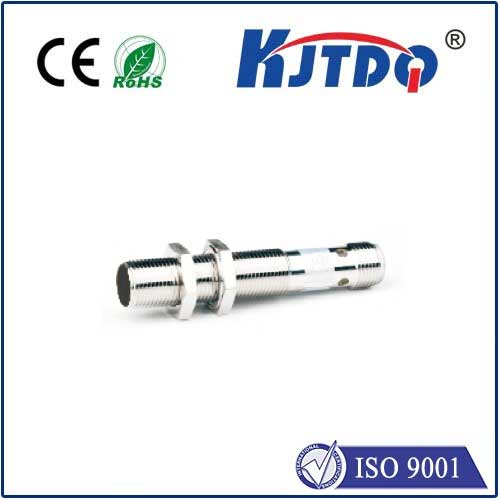
Several key technologies underpin high precision sensing. Inductive sensors excel at detecting metals with high speed and resilience to environmental factors. Capacitive sensors can detect both metallic and non-metallic materials, such as plastics, liquids, or glass, making them versatile for packaging and material handling. Ultrasonic sensors use sound waves to measure distance and are effective in applications requiring longer ranges or dealing with transparent objects. Photoelectric sensors, utilizing light beams, offer very high precision for color recognition, small part detection, and complex object profiling.
Selecting the right high precision proximity sensor requires careful consideration of several parameters. The sensing range, response time, repeatability (the consistency of measurements), and environmental IP (Ingress Protection) rating are crucial. The target material's properties—its size, shape, and composition—directly influence the choice of technology. Furthermore, output type (digital or analog) and the electrical interface must be compatible with the broader control system, such as a PLC (Programmable Logic Controller).
The integration of these sensors with Industrial Internet of Things (IIoT) platforms represents the next frontier. Modern high precision sensors are increasingly "smart," equipped with digital interfaces like IO-Link. This connectivity allows for real-time monitoring of sensor health, predictive maintenance alerts, and remote calibration. Data on operational cycles, temperature fluctuations, and detection events can be streamed to central dashboards, providing unprecedented visibility into production processes and enabling data-driven optimization for overall equipment effectiveness (OEE).
Looking ahead, the evolution of high precision proximity sensors is intertwined with trends like miniaturization and increased intelligence. Sensors are becoming smaller yet more powerful, allowing them to be embedded into tighter spaces within compact machinery. Enhanced onboard diagnostics and self-learning capabilities will further reduce downtime. As collaborative robots (cobots) work alongside humans, the need for sensors that ensure safe and precise interaction will grow exponentially.
In conclusion, the high precision proximity sensor is a foundational technology for modern automation. It provides the essential "sense of touch" for machines, translating physical presence into actionable digital data with unwavering accuracy. For engineers and system integrators aiming to build resilient, efficient, and intelligent systems, understanding and leveraging the capabilities of these sensors is not just an option—it is a strategic imperative. By choosing the appropriate high precision sensing solution, businesses can achieve new levels of quality control, operational safety, and productivity, solidifying their competitive edge in an increasingly automated world.