check

check

check
check
check
check
check
check

check

check
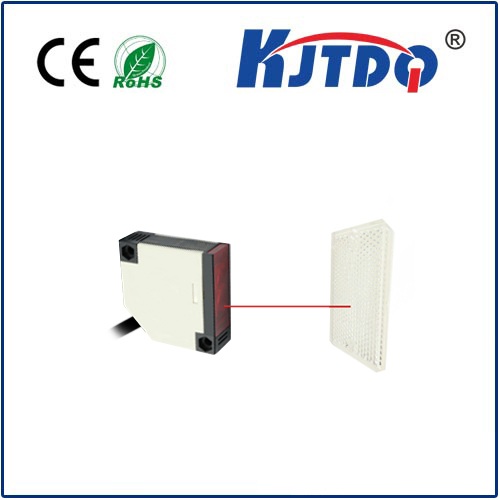
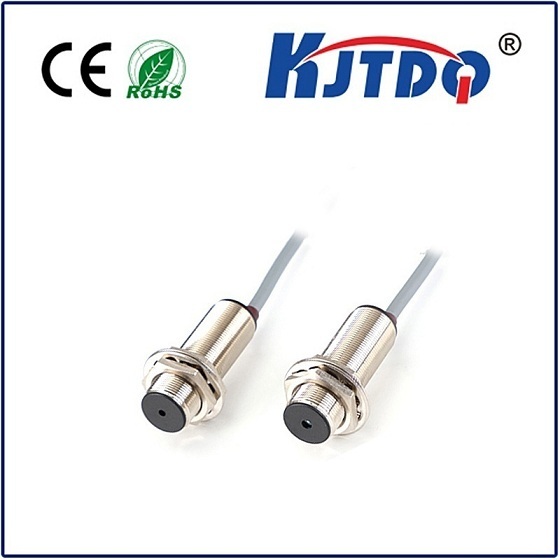
In the rapidly evolving landscape of industrial automation, precision, reliability, and long-distance detection capabilities are paramount. The Long-range Photoelectric Reflective Switch, often abbreviated in industry contexts with identifiers like KJTDQ, stands as a critical component in modern sensing technology. Unlike standard proximity sensors, this advanced device operates on the principle of emitting a focused beam of light—typically infrared or laser—and detecting its reflection from a target object. Its "long-range" designation signifies its ability to accurately sense objects from several meters away, even in challenging environmental conditions, making it indispensable for applications where contact or close proximity is impractical or unsafe.
The core functionality hinges on a transmitter and receiver housed within a single unit. The transmitter projects a modulated light beam towards a potential target. When this beam strikes an object within its effective range, it is reflected back to the integrated receiver. The switch's circuitry then processes this signal, triggering a precise output state change. This non-contact method of detection eliminates mechanical wear and tear, ensuring a significantly longer operational lifespan compared to mechanical switches. The "reflective" design simplifies installation, as it only requires a single point of mounting, unlike through-beam sensors that need separate emitter and receiver units aligned on opposite sides.
The advantages of integrating a Long-range Photoelectric Reflective Switch like the KJTDQ series into automated systems are multifaceted. First and foremost is its exceptional range. Capable of detecting objects from distances of up to 10 meters or more, depending on the model and target reflectivity, it solves detection problems in large-scale material handling, warehouse logistics, and automated guided vehicle (AGV) systems. Secondly, its immunity to electrical noise and resistance to environmental factors such as dust, light interference (through modulated light technology), and mild vibrations contribute to consistent, fail-safe operation. This reliability is crucial for maintaining uninterrupted production lines and ensuring safety in hazardous areas.
Practical applications are vast and varied. In packaging and bottling plants, these switches accurately count products on high-speed conveyors from a distance, ensuring precise inventory control. In the automotive industry, they are used for vehicle positioning and robotic arm guidance in assembly lines. For security and access control, they can detect personnel or vehicles at gate entries. Furthermore, in forestry and agricultural machinery, long-range sensors assist in obstacle detection and equipment positioning. The versatility of the KJTDQ-type switches allows for customization with different sensing ranges, output types (PNP/NPN, analog, relay), and housing materials (often IP67-rated for dust and water resistance) to suit specific industrial needs.
When selecting a Long-range Photoelectric Reflective Switch, several technical specifications demand attention. The sensing range, often specified for a standard white target, is primary. The response time, or how quickly the switch can detect a change and alter its output, is vital for high-speed applications. The type of light source (infrared for cost-effectiveness, laser for precision and longer range) and the presence of a visible alignment beam for easier setup are practical considerations. Additionally, features like background suppression, which allows the sensor to ignore objects beyond a set distance, or foreground suppression, enhance its ability to detect only the relevant target, reducing false triggers.
Installation and maintenance, while straightforward, require careful planning. Ensuring a stable mount, aligning the sensor correctly to the expected target path, and avoiding highly reflective or absorbent background surfaces are key to optimal performance. Regular cleaning of the lens is recommended to prevent dust or grime from attenuating the light beam. Modern switches often come with built-in diagnostic LEDs that indicate power status and output activation, simplifying troubleshooting.
In conclusion, the Long-range Photoelectric Reflective Switch, exemplified by robust product families like KJTDQ, is more than just a sensor; it is an enabler of smarter, safer, and more efficient industrial automation. By providing reliable, non-contact detection over considerable distances, it addresses core challenges in material flow, machine safety, and process control. As industries continue to push towards greater automation and the Industrial Internet of Things (IIoT), the role of such precise and adaptable sensing technology will only become more central, forming the essential "eyes" of automated systems that demand both reach and reliability.