check

check

check

check
check
check
check
check

check

check
The vast, mysterious world beneath the ocean's surface has long presented formidable challenges for exploration and industrial operations. Traditional acoustic and sonar-based methods, while useful, often fall short in providing the high-resolution, precise data required for complex tasks. Enter underwater laser sensor ranging, a cutting-edge technology that is fundamentally changing how we perceive and interact with the subsea environment. By emitting focused laser beams and measuring their return time or phase shift, these advanced sensors deliver unparalleled accuracy in distance measurement, even in the often turbid and demanding conditions of underwater settings.
The core principle of underwater laser ranging, or LiDAR (Light Detection and Ranging) for subsea applications, involves penetrating the water column with laser pulses. Sophisticated detectors then capture the reflected light from targets such as seabed formations, pipelines, marine structures, or biological features. Advanced algorithms filter out backscatter from particles in the water to calculate precise distances and generate detailed three-dimensional point clouds. This capability is a game-changer for high-precision seabed mapping, offering centimeter-level accuracy that reveals geological details, archaeological sites, and infrastructure conditions previously obscured. Industries like offshore oil and gas rely on this technology for pipeline inspection, detecting minute cracks, corrosion, or displacements with a level of detail acoustic tools cannot match, enabling proactive maintenance and preventing environmental incidents.
Furthermore, underwater laser sensors are proving indispensable for the safe navigation and operation of Autonomous Underwater Vehicles (AUVs) and Remotely Operated Vehicles (ROVs). In complex environments like underwater caves, shipwrecks, or around delicate offshore platforms, real-time, high-resolution ranging allows these vehicles to avoid collisions, navigate tight spaces, and perform intricate manipulation tasks with confidence. This enhances operational safety and expands the possible missions for robotic subsea explorers. The scientific community is harnessing this technology to study marine ecosystems non-invasively. Researchers can create detailed 3D models of coral reefs, measure the growth rates of specific organisms, and observe the behavior of marine life without physical contact, leading to groundbreaking insights in marine biology and ecology.
Despite its advantages, implementing underwater laser ranging is not without challenges. Water absorbs and scatters light, significantly attenuating laser signals over distance. The effective range is thus influenced by water clarity, laser wavelength, and power. Engineers have made significant strides by utilizing specific laser wavelengths, particularly in the blue-green spectrum, which experiences lower attenuation in water. Additionally, combining laser data with other sensor inputs like sonar and inertial measurement units through sensor fusion techniques creates a more robust and comprehensive perception system for underwater platforms.
The future trajectory of underwater laser sensor ranging points towards greater miniaturization, increased power efficiency, and enhanced data processing capabilities. The integration of artificial intelligence for real-time object recognition and classification within the point cloud data is already underway. This will allow AUVs to not only map their surroundings but also intelligently identify specific objects of interest, such as mineral nodules, particular fish species, or man-made debris. As the technology becomes more accessible and cost-effective, its applications will broaden beyond major industrial and research institutions to include coastal management, underwater archaeology, aquaculture monitoring, and even search and rescue operations.
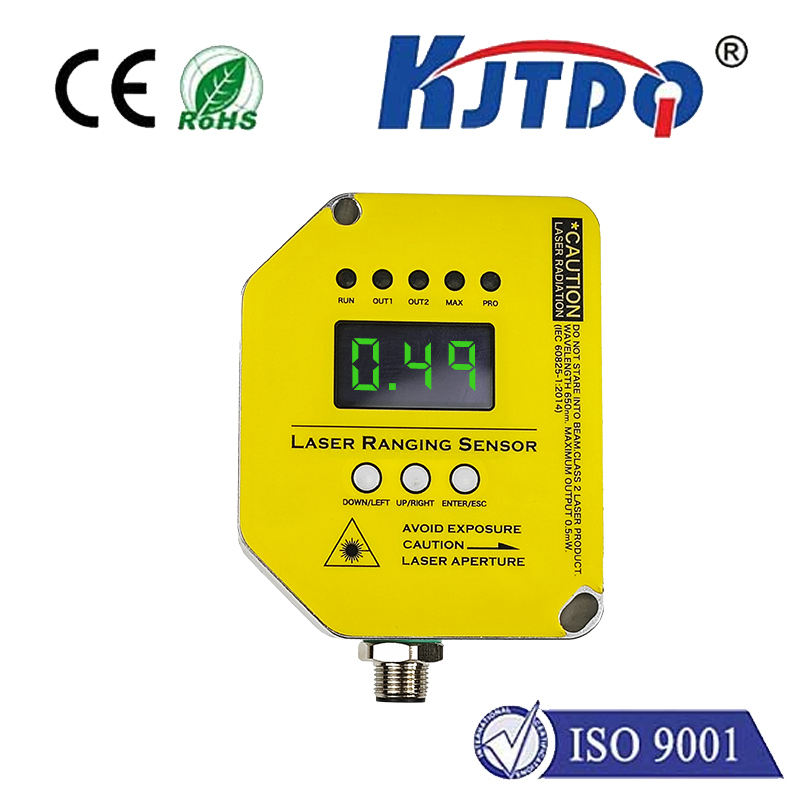
In conclusion, underwater laser sensor ranging {KJTDQ} stands as a pivotal innovation, piercing through the limitations of traditional methods to illuminate the depths with unprecedented clarity and precision. It is empowering industries to operate more safely and efficiently, enabling scientists to discover new facets of marine life, and providing the tools necessary to responsibly manage and explore the final frontier on our planet. The continued advancement of this technology promises to unlock further secrets of the deep, driving progress across multiple fields that depend on accurate subsea data.