check

check

check

check
check
check
check
check

check

check
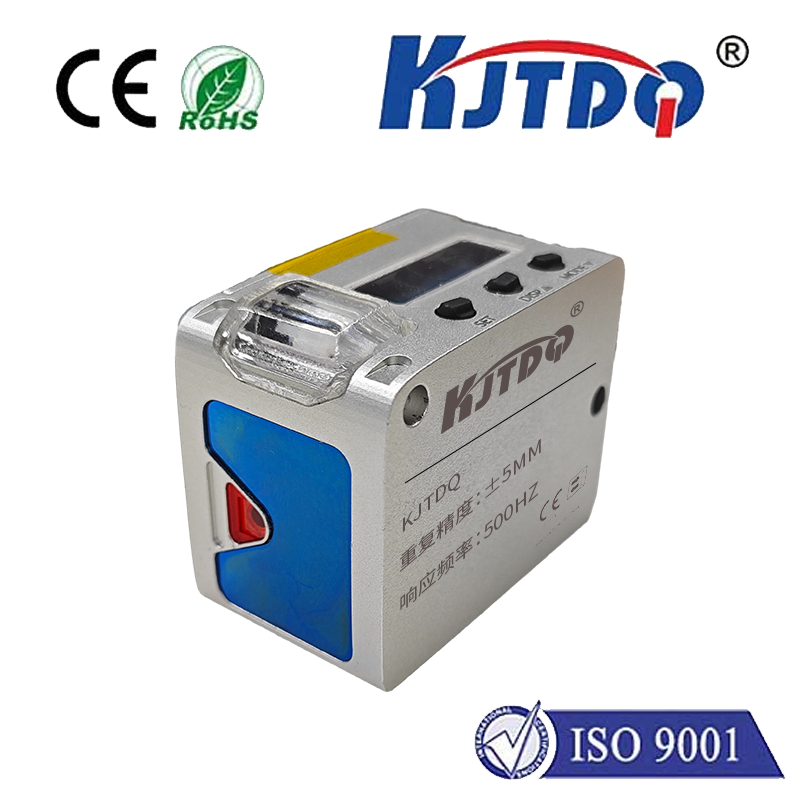
In the rapidly evolving landscape of automotive technology, a silent yet powerful component is driving a revolution in how vehicles perceive and interact with the world. The automotive laser rangefinder sensor, often operating behind the scenes, is becoming an indispensable cornerstone for advanced driver-assistance systems (ADAS) and the pathway to fully autonomous driving. Unlike conventional radar or ultrasonic sensors, this technology offers unparalleled precision, creating a detailed and real-time three-dimensional map of a vehicle's surroundings.
At its core, an automotive laser rangefinder, commonly referred to as LiDAR (Light Detection and Ranging), works by emitting rapid pulses of laser light. These pulses travel outward, strike objects—be it another car, a pedestrian, a curb, or debris on the road—and reflect back to the sensor. By meticulously calculating the time it takes for each pulse to return, the sensor determines the exact distance to every point with centimeter-level accuracy. This process is repeated millions of times per second, generating a dense, dynamic point cloud that software algorithms interpret to identify, classify, and track objects.
The advantages of integrating this sensor into modern vehicles are profound. First and foremost is safety. The sensor's exceptional long-range detection capability and high angular resolution allow it to spot potential hazards far earlier than human drivers or other sensor types. It can accurately distinguish between a stationary lamppost and a child about to step onto the road, even in low-light conditions where cameras may struggle. This capability is critical for functions like automatic emergency braking (AEB), adaptive cruise control (ACC), and pedestrian detection systems, significantly reducing the likelihood of collisions.
Furthermore, for the development of autonomous vehicles, the automotive laser rangefinder sensor is non-negotiable. It provides the primary source of high-fidelity environmental data necessary for a vehicle's "brain" to make safe navigation decisions. While cameras offer rich color and texture information and radar provides robust velocity data, laser rangefinders deliver the precise geometric understanding of space. This sensor fusion—combining LiDAR with radar and cameras—creates a redundant and robust perception system, ensuring reliability even if one sensor modality is temporarily compromised by fog, glare, or heavy rain.
Beyond collision avoidance and self-driving, these sensors are enabling new levels of convenience and functionality. They are integral to precise parking assistance systems, capable of maneuvering a vehicle into tight spaces with minimal driver input. In logistics and commercial fleets, they facilitate automated docking and cargo handling. The data they collect is also invaluable for creating and updating high-definition maps, which are essential for autonomous vehicle navigation on a global scale.
Manufacturers are continuously innovating to make these sensors more viable for mass-market adoption. Challenges such as cost, size, and durability under harsh automotive conditions are being aggressively addressed. Solid-state LiDAR designs, which have no moving parts, promise greater reliability, smaller form factors, and lower production costs. Advances in semiconductor lasers and photodetectors are also enhancing performance while reducing power consumption.
The road ahead is clear. As regulatory bodies push for higher safety standards and consumer demand for intelligent features grows, the penetration of automotive laser rangefinder sensors will only accelerate. They are transitioning from exclusive equipment in premium vehicles and research prototypes to essential components in mainstream models. This shift marks a fundamental change in vehicle architecture, from mechanical transport to intelligent, perceptive platforms.
In conclusion, the automotive laser rangefinder sensor is far more than just another piece of hardware. It is the critical enabler for a future with dramatically fewer road accidents and a new era of mobility. By providing machines with a precise, reliable, and instantaneous understanding of their environment, this technology is not only enhancing vehicle safety today but is also laying the foundational layer for the autonomous transportation ecosystems of tomorrow. Its role is pivotal, transforming the very nature of driving and setting a new benchmark for what is possible on the road.