check

check

check

check
check
check
check
check

check

check
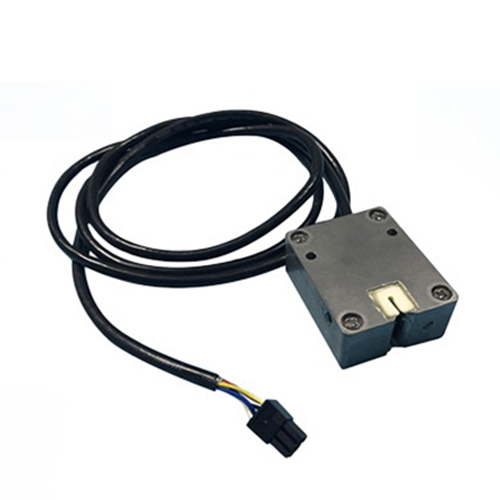
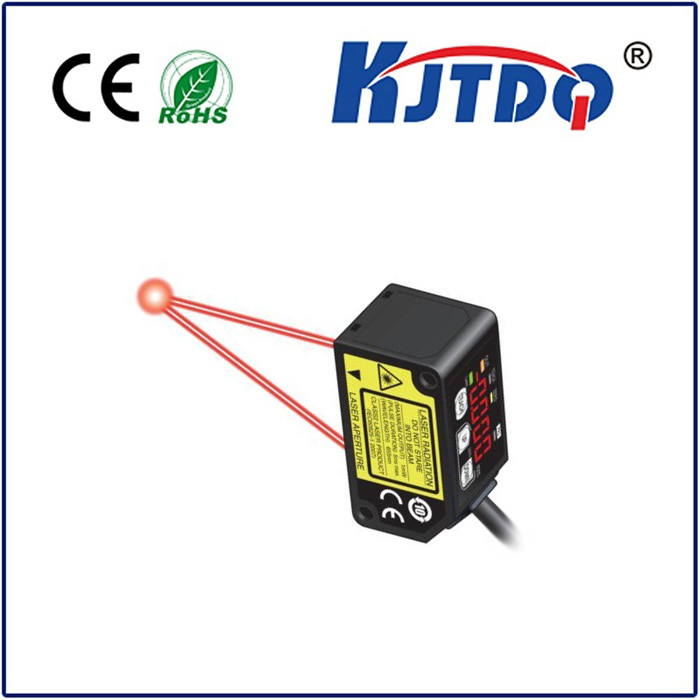
In the realm of precision measurement and spatial awareness, a silent revolution is underway, driven by the capabilities of the automatic laser rangefinder sensor. This sophisticated device, far from being a simple tool, represents a convergence of optics, electronics, and intelligent software, delivering accuracy and efficiency previously unattainable in many fields. Unlike manual or older ultrasonic methods, these sensors operate by emitting a focused laser beam towards a target. The time it takes for the light pulse to reflect back to the sensor is meticulously calculated, providing an instantaneous and highly accurate distance measurement, all without any human intervention after the initial setup.
The core advantage of an automatic laser rangefinder sensor lies in its seamless integration and autonomous operation. Once configured, it can continuously monitor distances, trigger actions based on predefined thresholds, and feed real-time data into larger control systems. This automation is pivotal in industrial automation. On manufacturing floors, these sensors ensure robotic arms maintain precise positioning, verify component dimensions on assembly lines with micron-level precision, and manage inventory by monitoring stockpile volumes in warehouses. The reliability and speed of laser measurement eliminate human error and significantly boost throughput.
Beyond the factory walls, the impact is equally profound. In the construction and civil engineering sectors, automatic laser rangefinders are indispensable for land surveying, building information modeling (BIM), and monitoring structural deformations. They enable surveyors to capture complex topographies quickly and safely, reducing field time and enhancing data fidelity. Modern forestry management employs these sensors to estimate tree height and stand density, facilitating sustainable harvesting plans. Even in everyday technology, they are the eyes of advanced driver-assistance systems (ADAS), helping vehicles judge distances to obstacles for features like adaptive cruise control and automated parking.
The technological heart of these devices is constantly evolving. Modern automatic laser rangefinder sensors incorporate features like Bluetooth or Wi-Fi connectivity for wireless data transmission, robust housings with high Ingress Protection (IP) ratings for durability in harsh environments, and sophisticated algorithms that can filter out background noise or irrelevant reflections. Some advanced models offer scanning capabilities, creating detailed 3D point clouds of an environment. This evolution is making them smaller, more energy-efficient, and more affordable, thereby opening doors to new applications in robotics, drone navigation, smart agriculture for crop monitoring, and even consumer electronics.
Selecting the right automatic laser rangefinder sensor requires careful consideration of several parameters. The required measuring range, from a few centimeters to several hundred meters, is a primary factor. Accuracy and resolution specifications are critical; while most offer millimeter-level accuracy, high-precision applications may demand more. The response time, or how quickly a measurement is taken and output, is vital for dynamic, high-speed processes. Environmental conditions such as dust, rain, fog, or extreme temperatures must be matched with the sensor’s operational specifications and protective housing. Finally, the output interface—whether analog voltage, digital serial communication, or switched output—must be compatible with the host controller or data logger.
As we look to the future, the trajectory for automatic laser rangefinder sensors points towards even greater intelligence and integration. The fusion of lidar data with artificial intelligence and machine vision will enable systems not only to measure distance but also to identify objects, classify materials, and predict movements. This will be foundational for the next generation of autonomous robots, smart city infrastructure, and immersive augmented reality experiences. The automatic laser rangefinder sensor, a key component in the Internet of Things (IoT) ecosystem, is set to continue its role as a fundamental enabler of precision, safety, and automation across an ever-expanding horizon of human endeavor.