check

check

check
check
check
check
check
check

check

check
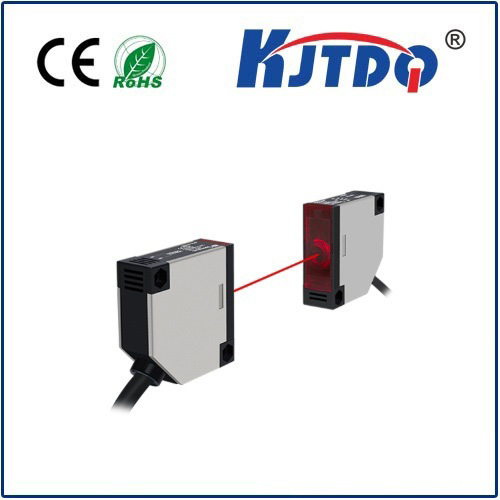
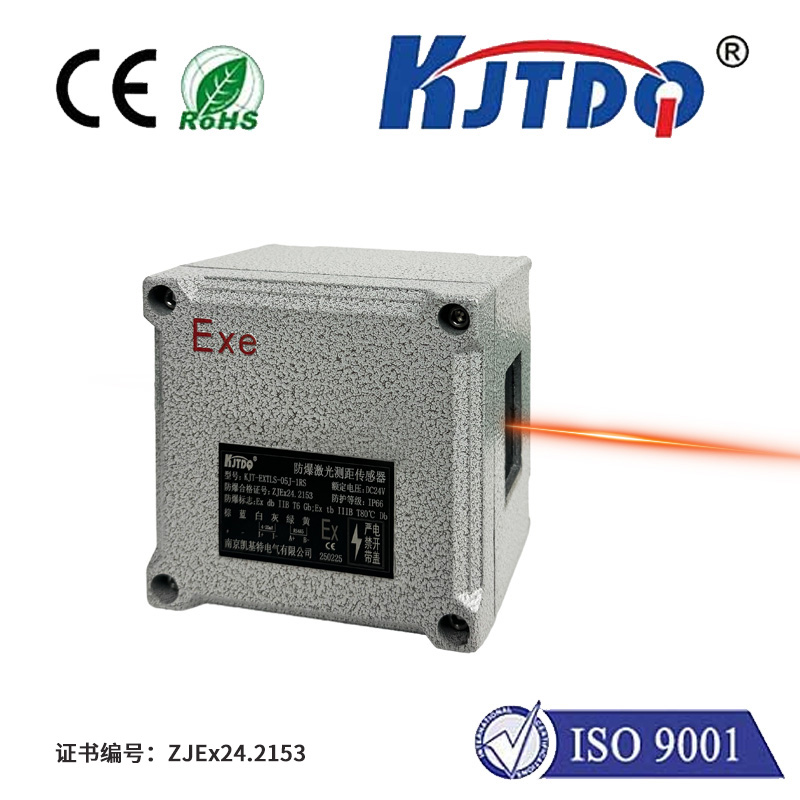
In the rapidly evolving landscape of industrial automation, robotics, and smart devices, the demand for accurate, reliable, and fast distance measurement solutions has never been greater. Enter the ToF series laser sensor, a technological marvel that is setting new benchmarks across diverse applications. Unlike traditional ultrasonic or infrared sensors, Time-of-Flight (ToF) laser sensors operate on a straightforward yet powerful principle: they emit a modulated laser beam towards a target and precisely calculate the distance by measuring the time it takes for the light to reflect back to the sensor. This method enables exceptional accuracy, often within millimeter ranges, even over considerable distances.
The core advantage of the ToF series lies in its unparalleled combination of speed and precision. These sensors can perform thousands of measurements per second, making them indispensable for dynamic environments where real-time data is critical. For instance, in automated guided vehicles (AGVs) and mobile robots, ToF laser sensors provide instantaneous feedback on obstacle location and distance, enabling smooth navigation and collision avoidance in complex, unstructured spaces. Their high-speed operation ensures that the system can react promptly to changes, enhancing both safety and operational efficiency.
Another significant application is in logistics and warehouse automation. ToF sensors are integral to volume measurement systems, palletizing robots, and automated storage and retrieval systems (AS/RS). They can quickly and accurately scan the dimensions of packages or detect the presence and position of items on conveyor belts, streamlining sorting processes and optimizing storage space utilization. The robustness of laser technology allows these sensors to perform consistently in challenging conditions, such as varying ambient light or dusty environments, where other optical methods might fail.
Beyond industrial settings, the ToF series is making waves in consumer electronics and building automation. In smartphones and tablets, miniature ToF sensors enable advanced features like augmented reality (AR) applications, improved portrait mode photography with accurate depth sensing, and gesture recognition. For smart buildings, these sensors contribute to energy management systems by monitoring room occupancy for intelligent lighting and climate control, thereby promoting sustainability and reducing operational costs.
The design and integration of modern ToF series laser sensors also focus on user-friendliness and versatility. Many models come with intuitive configuration software, allowing engineers to easily set measurement windows, output formats, and filtering parameters without deep programming knowledge. They offer various output options, including analog voltage/current, digital interfaces like IO-Link or RS-485, and discrete switching signals, ensuring seamless compatibility with PLCs, microcontrollers, and other control systems. This flexibility simplifies integration into existing production lines or new product designs.
When selecting a ToF series laser sensor for a specific project, several key parameters require careful consideration. The measuring range, which can vary from a few centimeters to several meters, must match the application's needs. Resolution and repeatability determine the sensor's precision, while the response time dictates how quickly it can update measurements. Environmental factors like the target's color, reflectivity, and surface texture can influence performance; however, advanced ToF models often incorporate algorithms to compensate for these variables, ensuring reliable readings on diverse materials.
Looking ahead, the trajectory for ToF laser sensor technology points toward even greater miniaturization, lower power consumption, and enhanced intelligence. Integration with artificial intelligence and edge computing is poised to unlock new capabilities, such as object classification and predictive maintenance analytics directly at the sensor level. As industries continue to push the boundaries of automation and interactivity, the ToF series laser sensor stands as a critical enabler, providing the precise, high-speed spatial awareness necessary for the next generation of innovative applications. Its role in bridging the physical and digital worlds will only expand, solidifying its position as a cornerstone technology in the toolkit of engineers and developers worldwide.