check

check

check

check
check
check
check
check

check

check
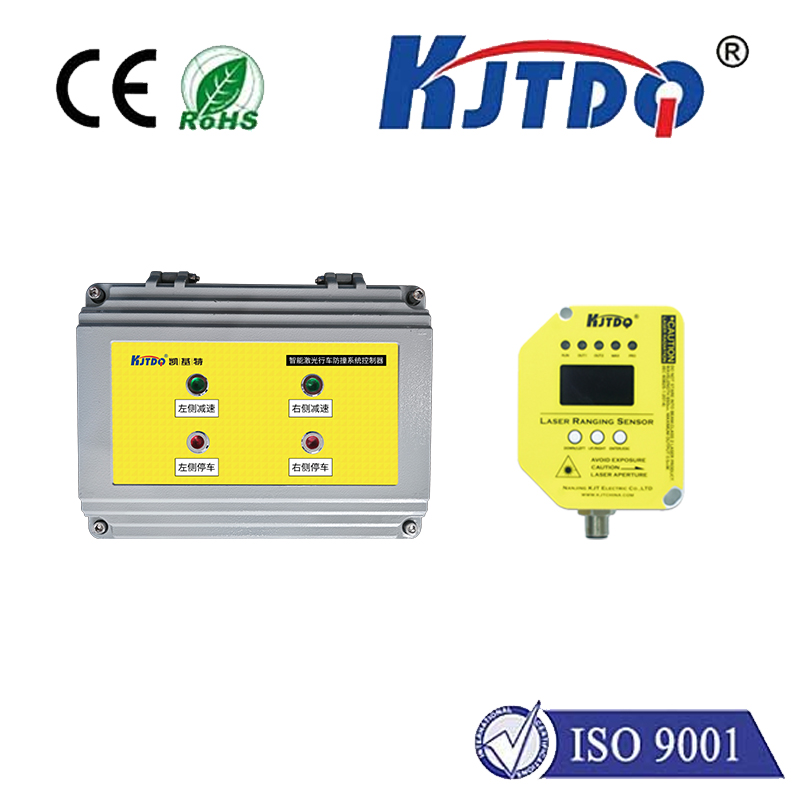
In an era where automation and smart technology are rapidly evolving, the demand for accurate, reliable, and fast distance sensing has never been greater. Enter the TOF Ranging Module, a sophisticated piece of hardware that is quietly revolutionizing industries from robotics and drones to automotive safety and consumer electronics. Unlike traditional ultrasonic or infrared sensors, Time-of-Flight (TOF) technology offers a leap forward in performance, providing millimeter-level accuracy even in challenging environments.
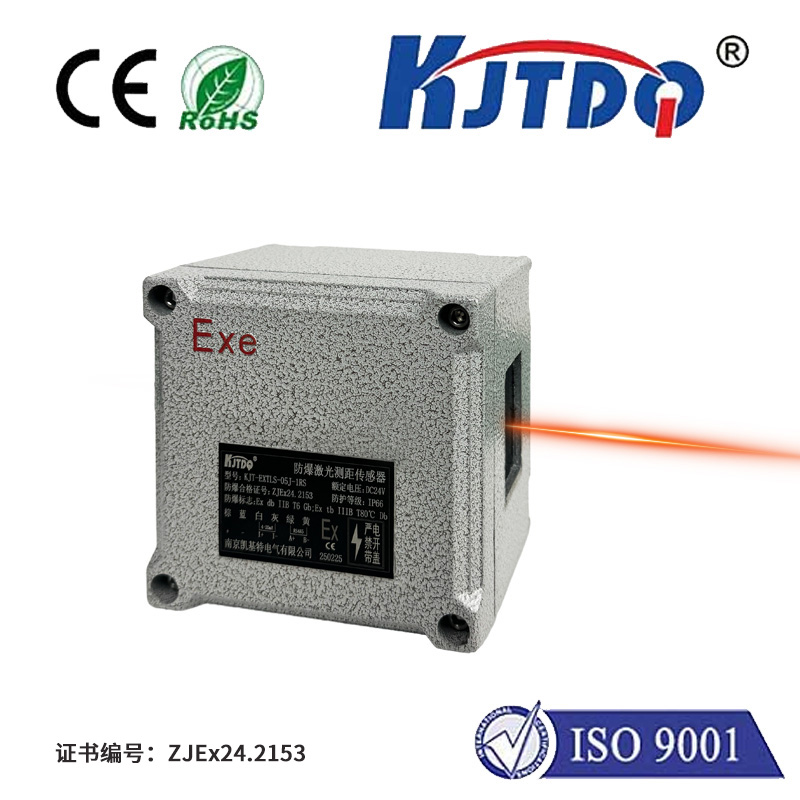
At its core, a TOF Ranging Module works on a simple yet powerful principle: it emits a modulated light signal, typically from a laser or an LED, towards a target. The module then precisely measures the time it takes for the reflected light to return to the sensor. Since the speed of light is a known constant, the distance to the object can be calculated with exceptional accuracy. This direct time measurement makes TOF systems inherently robust against interference from ambient light and varying surface colors or textures, a common pitfall for other optical methods.
The applications for this technology are vast and growing. In the realm of mobile devices, TOF modules enable advanced features like instant autofocus for cameras, creating stunning portrait mode effects with accurate depth mapping. They are also the key component behind gesture recognition systems, allowing users to interact with their devices through simple hand movements. In robotics, these modules provide the essential "eyes" for navigation, obstacle avoidance, and spatial mapping, allowing autonomous machines to understand and interact with their surroundings in real time. The automotive sector leverages TOF for in-cabin monitoring to detect driver drowsiness or for precise parking assistance systems.
One of the most significant advantages of modern TOF Ranging Modules is their compact size and low power consumption. Manufacturers have successfully integrated complex photon detection arrays and processing circuits into tiny surface-mount packages. This miniaturization, coupled with decreasing costs, has unlocked mass-market adoption. Developers can now easily incorporate high-precision ranging into their products without sacrificing valuable space or battery life.
When selecting a TOF module for a project, engineers consider several critical parameters. Range is obviously fundamental, with modules available for short-range (a few centimeters) to long-range (several meters or more) applications. Field of view (FOV), the angular extent of the scene that the module can measure, is another key specification. A narrow FOV is ideal for precise spot measurement, while a wide FOV is necessary for mapping larger areas. Data output rate, often measured in frames per second (FPS), determines how quickly the module can update distance information, which is crucial for high-speed applications.
Integration is typically straightforward. Most modern TOF modules communicate via standard digital interfaces like I2C or UART, providing easy-to-parse data packets containing distance, signal strength, and sometimes even a full depth map. This plug-and-play nature significantly reduces development time, allowing teams to focus on application-specific software rather than low-level hardware debugging.
Looking ahead, the future of TOF Ranging Modules is intertwined with the advancement of 3D sensing and artificial intelligence. As algorithms become more sophisticated, the raw distance data from these modules can be fused with camera imagery to create rich, three-dimensional understandings of environments. This will fuel the next generation of augmented reality experiences, advanced biometric security through facial recognition, and smarter industrial automation where machines can handle objects with human-like dexterity.
In conclusion, the TOF Ranging Module is far more than just a sensor; it is a foundational technology enabling a smarter, more interactive world. Its unparalleled combination of accuracy, speed, and robustness makes it the preferred choice for engineers and designers who are building the future. As the technology continues to mature and become even more accessible, we can expect to see its transformative impact in an ever-widening array of products and solutions, seamlessly integrating precise spatial awareness into the fabric of our daily lives.