check

check

check

check
check
check
check
check

check

check
In an era defined by precision and automation, a silent yet powerful technology is at work behind the scenes. From the smartphone in your pocket to the autonomous vehicle navigating city streets, accurate distance measurement is a fundamental requirement. This is where laser ranging steps in, not as a futuristic concept, but as a mature, reliable, and indispensable tool driving innovation across countless industries.
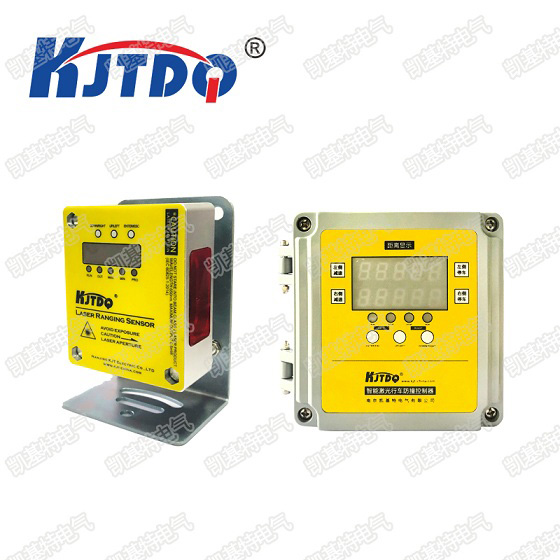
At its core, laser ranging is elegantly simple. It measures the distance to a target by calculating the time it takes for a pulse of laser light to travel to the object and back. This principle, known as Time-of-Flight (ToF), allows for measurements with astonishing accuracy, often down to the millimeter or even sub-millimeter level. Unlike traditional measuring tapes or ultrasonic sensors, laser beams are highly collimated, meaning they travel in a very straight line with minimal dispersion. This allows for precise targeting over long distances, even in challenging environmental conditions.
The applications of this technology are vast and transformative. In the realm of construction and civil engineering, laser rangefinders are ubiquitous. Surveyors use them to map terrain and establish boundaries with speed and accuracy previously unimaginable. On construction sites, they ensure structural components are level, plumb, and perfectly aligned, reducing material waste and rework. The recent push for Building Information Modeling (BIM) relies heavily on laser scanning to create detailed digital twins of existing structures, facilitating renovation and maintenance.
Beyond the built environment, laser ranging is a cornerstone of modern manufacturing. In robotics, ToF sensors provide machines with real-time spatial awareness, enabling them to safely navigate factory floors, pick and place objects with delicate precision, and collaborate seamlessly with human workers. Quality control processes employ laser scanners to inspect parts for microscopic deviations from design specifications, ensuring every component meets rigorous standards.
Perhaps one of the most visible applications is in the consumer electronics sector. The facial recognition system that unlocks many smartphones utilizes a miniature laser ranging system—often a structured light or ToF sensor—to create a precise 3D map of the user's face. This map is far more secure than a 2D photograph, making the technology both convenient and robust. Similarly, new camera systems use laser-assisted autofocus to achieve near-instantaneous focus, even in low-light conditions, capturing crisp, clear images every time.
The transportation sector is undergoing a revolution fueled by laser ranging. Light Detection and Ranging (LiDAR) systems, which are essentially advanced, multi-point laser rangefinders, are the "eyes" of autonomous vehicles. By emitting thousands of laser pulses per second and measuring their return, LiDAR creates a high-resolution, real-time 3D map of the vehicle's surroundings. This allows the vehicle's computer to identify pedestrians, cyclists, other vehicles, and road boundaries with extreme precision, forming the critical perception layer for safe navigation.
Looking to the skies and beyond, laser ranging's role is equally critical. In aerospace, it is used for docking spacecraft, inspecting aircraft surfaces for damage, and guiding drones for precision deliveries. On a planetary scale, scientists use satellite laser ranging to measure the distance between Earth and orbiting satellites with millimeter accuracy, tracking tectonic plate movement, monitoring sea-level rise, and testing fundamental physics theories.
The future of laser ranging is pointed toward even greater integration, miniaturization, and intelligence. Sensors are becoming smaller, more energy-efficient, and less expensive, paving the way for their incorporation into everyday Internet of Things (IoT) devices. Advances in solid-state LiDAR are removing mechanical moving parts, leading to more durable and compact systems suitable for mass-market automotive applications. Furthermore, the fusion of laser ranging data with other sensor inputs like cameras and radar, processed through sophisticated artificial intelligence algorithms, will create perception systems of unprecedented reliability and contextual understanding.
From ensuring the safety of our buildings and the quality of our products to enabling the next generation of smart devices and self-driving cars, laser ranging operates as the invisible hand guiding progress. It is a testament to how a fundamental understanding of light and time can be harnessed to build a more measured, efficient, and intelligent world. As the technology continues to evolve, its silent pulses will undoubtedly illuminate the path to further innovations we have yet to imagine.