check

check

check

check
check
check
check
check

check

check
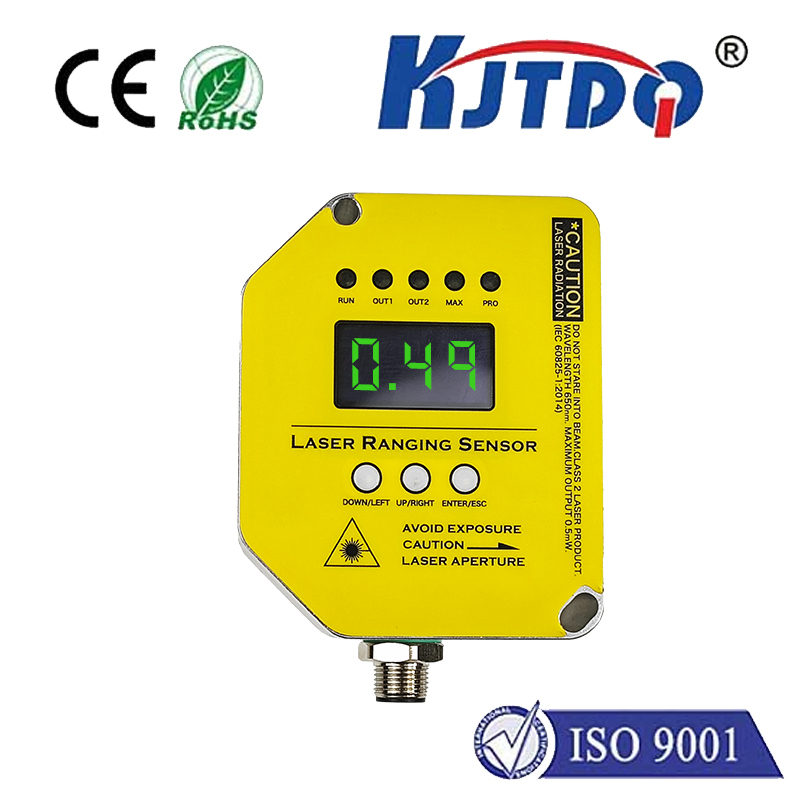
In the world of industrial automation, quality control, and precision engineering, the demand for accurate, reliable, and non-contact measurement is paramount. This is where the High-Precision Laser Displacement Sensor steps into the spotlight, becoming an indispensable tool for engineers and technicians across countless sectors. Unlike traditional contact methods that can cause wear, distortion, or damage to delicate surfaces, laser displacement sensors offer a fast, clean, and exceptionally accurate solution.
At its core, a High-Precision Laser Displacement Sensor operates on the principle of optical triangulation or time-of-flight measurement. A focused laser beam is projected onto the target surface. The reflected light is then captured by a high-resolution receiving element, such as a CCD or PSD. By calculating the position of the reflected light spot, the sensor's internal processor determines the exact distance to the target with micron-level resolution. This process happens thousands of times per second, enabling real-time monitoring and control.
The term "high-precision" is not merely a marketing label. It signifies a class of sensors capable of achieving sub-micron resolution and repeatability. Key performance indicators include linearity, stability, and sampling speed. Superior sensors maintain their accuracy even under challenging conditions like varying surface colors, materials, or ambient light interference, thanks to advanced algorithms and optical design. For instance, models with automatic exposure control can adapt to shiny metallic surfaces or dark, absorbent materials without compromising measurement integrity.
The applications for these sensors are vast and transformative. In the automotive industry, they are used to measure critical gaps and flushness between body panels, ensuring perfect fit and finish. In electronics manufacturing, they verify the coplanarity of BGA solder balls and the thickness of wafer substrates. Robotics rely on them for precise positioning and guidance, while in pharmaceutical packaging, they check fill levels in vials and blister packs with non-invasive certainty. Furthermore, in R&D laboratories, they facilitate deformation analysis, vibration measurement, and 3D profile scanning.
Selecting the right High-Precision Laser Displacement Sensor requires careful consideration of several factors. The measurement range, spot size, and stand-off distance must match the physical constraints of the application. A smaller spot size allows for measuring finer details or edges. The required resolution and repeatability will dictate the sensor's grade. Environmental factors such as temperature fluctuations, dust, or coolant mist necessitate sensors with appropriate IP ratings and robust housings. Finally, the output interface—whether analog voltage, digital communication like Ethernet/IP, or serial data—must integrate seamlessly with the existing control system.
Integration and proper setup are crucial for achieving the advertised precision. Correct mounting, alignment, and calibration against a known reference are essential first steps. The sensor must be positioned to avoid specular reflection from glossy surfaces, which can be mitigated by using a diffuse reflection model or mounting the sensor at an angle. Regular maintenance, such as keeping the lens clean, ensures long-term stability and prevents drift in measurements.
Looking ahead, the evolution of High-Precision Laser Displacement Sensors continues. Trends include miniaturization for integration into tighter spaces, enhanced multi-point and profile measurement capabilities, and smarter sensors with built-in IoT connectivity for predictive maintenance and data analytics. These advancements promise to push the boundaries of what is measurable, driving further improvements in product quality, manufacturing efficiency, and automated process control.
In conclusion, the High-Precision Laser Displacement Sensor is far more than just a measuring device; it is a foundational technology enabling modern precision manufacturing and quality assurance. By providing fast, non-contact, and exceptionally accurate distance data, it empowers industries to produce better, more consistent products while optimizing their processes. Understanding its principles, capabilities, and application considerations is key to leveraging its full potential for any task demanding the utmost in dimensional accuracy.