check

check

check

check
check
check
check
check

check

check
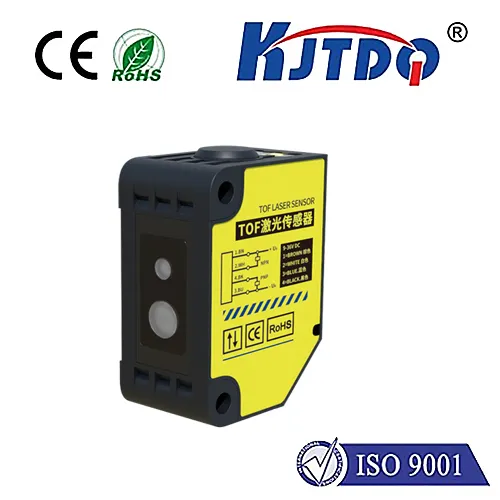
In the realm of precision measurement, accuracy is not just a requirement; it's the foundation of innovation. The 1mm laser rangefinder sensor represents a significant leap forward in non-contact measurement technology, offering unparalleled precision for a wide array of industrial, commercial, and research applications. This advanced device utilizes a focused laser beam to calculate distances with millimeter-level accuracy, providing reliable data critical for quality control, automation, and safety systems.
The core technology behind a 1mm laser rangefinder sensor typically involves time-of-flight (ToF) or phase-shift measurement principles. The sensor emits a short pulse of laser light towards a target. A high-speed detector then captures the reflected light. By precisely calculating the time difference between emission and reception, or by analyzing the phase shift of a modulated laser beam, the sensor determines the distance to the target. Modern signal processing algorithms filter out ambient noise and interference, ensuring stable and repeatable measurements even in challenging environments. This capability makes it indispensable for applications where traditional measuring tapes or ultrasonic sensors fall short.
One of the primary advantages of this sensor is its application versatility. In industrial automation, these sensors are integrated into robotic arms for precise positioning and object handling, ensuring assembly lines operate with maximum efficiency and minimal error. They are crucial for dimensional inspection, verifying the size and shape of manufactured components against strict tolerances. In the construction and civil engineering sectors, professionals rely on them for accurate distance measurements, alignment checks, and volume calculations, streamlining surveying tasks and improving project planning.
The logistics and warehouse management industry has also embraced this technology. Laser rangefinder sensors enable automated guided vehicles (AGVs) and autonomous mobile robots (AMRs) to navigate complex warehouse layouts safely, avoiding obstacles and optimizing storage space by precisely measuring bin heights and aisle widths. Furthermore, in the burgeoning field of augmented reality (AR) and virtual reality (VR), such high-precision sensors help in mapping physical spaces to create immersive and interactive digital environments.
When selecting a 1mm laser rangefinder sensor, several technical specifications demand attention. The measuring range defines the minimum and maximum distances the device can accurately cover. Measurement speed, often given in Hertz (Hz), indicates how many distance readings it can take per second, which is vital for dynamic applications. The laser's wavelength and class are important for safety and performance under different lighting conditions. Environmental ratings like IP (Ingress Protection) codes determine its resilience to dust and water, ensuring reliable operation in factories or outdoor settings. Interface options, such as USB, Ethernet, or various industrial fieldbuses, facilitate seamless integration into existing control systems.
Beyond specifications, real-world performance hinges on factors like target surface properties. Highly reflective or dark, absorbent surfaces can sometimes challenge the sensor, though advanced models incorporate algorithms to compensate for varying reflectivity. Temperature fluctuations can also affect electronic components, making models with built-in temperature stabilization preferable for critical outdoor or industrial uses.
Looking ahead, the evolution of the 1mm laser rangefinder sensor is intertwined with trends in miniaturization, power efficiency, and smart connectivity. Future iterations will likely be smaller, consume less power, and feature integrated IoT capabilities for predictive maintenance and data analytics. As industries increasingly adopt Industry 4.0 standards, the demand for such precise, reliable, and connected sensing solutions will only grow, solidifying the laser rangefinder's role as a cornerstone of modern measurement and automation.