check

check

check

check
check
check
check
check

check

check
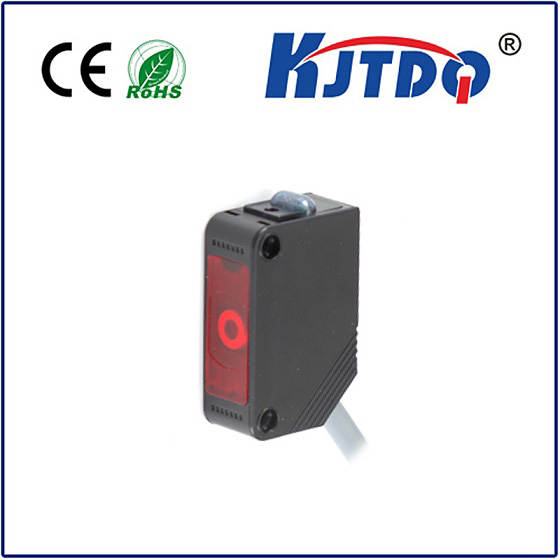
In the realm of industrial automation and precision measurement, the through-beam laser sensor stands as a cornerstone technology. Unlike diffuse reflection or retro-reflective models, this sensor operates on a fundamental principle: a separate transmitter emits a laser beam that is received by a distinct receiver unit. Any object passing through this beam interrupts the signal, triggering an immediate and highly reliable detection event. This straightforward yet powerful mechanism is the key to its exceptional performance in demanding environments.
The primary advantage of the through-beam laser sensor lies in its unparalleled sensing distance and stability. Because the receiver detects the direct beam from the transmitter, it is less susceptible to interference from the target object's surface color, reflectivity, or texture. Whether detecting a glossy metal component, a dark plastic part, or a transparent glass bottle, the sensor provides consistent and dependable results. This makes it an indispensable tool on high-speed production lines where miss-detections are not an option. Its long-range capability, often extending several meters, allows for flexible installation in large-scale machinery and safety curtain applications.
Precision is another hallmark. The focused laser beam enables the detection of extremely small objects or precise edges with high positional accuracy. This is critical in applications like wafer handling in semiconductor manufacturing, precise part placement in assembly robots, or verifying the presence of miniature electronic components. The response time of these sensors is exceptionally fast, capable of detecting objects moving at very high velocities, thereby ensuring no bottleneck in ultra-fast automated processes.
Durability in harsh industrial settings is a non-negotiable requirement. High-quality through-beam laser sensors are built with robust housings, often rated IP67 or higher, providing resistance against dust, water jets, and oil splashes. Advanced models feature built-in diagnostics like alignment indicators and stability monitors, which signal if the beam is misaligned or if lens contamination is affecting performance, enabling proactive maintenance and minimizing costly downtime.
When selecting a through-beam laser sensor, several technical specifications demand careful consideration. The operating range must suit the application's physical layout. The spot size determines the minimum detectable object size. The choice of laser class (typically Class 1 or 2, which are safe under normal use) is important for workplace safety. Furthermore, the output type (PNP/NPN, analog, or IO-Link) must be compatible with the existing control system, such as a PLC. For challenging environments with airborne particulates or light interference, models with modulated laser light offer superior noise immunity compared to constant light sources.
Real-world applications are vast and varied. In material handling, they count boxes on conveyors or detect oversized parcels. In packaging, they ensure correct fill levels in bottles by detecting the cap or liquid surface. In automotive assembly, they verify the presence of pistons, springs, or other critical parts. They also form the basis of sophisticated safety light curtains that protect workers from moving machinery. The evolution towards Industry 4.0 sees these sensors integrating smart features, providing not just a simple on/off signal but also diagnostic data for predictive analytics and overall equipment effectiveness (OEE) calculations.
In conclusion, the through-beam laser sensor is more than just a switch; it is a critical enabler of reliability, speed, and precision in modern automation. Its simple principle of operation belies its sophisticated engineering and vital role in ensuring quality control, operational efficiency, and worker safety across countless industries. For engineers and system integrators, understanding its capabilities and proper implementation is key to building resilient and high-performing automated systems.