check

check

check

check
check
check
check
check

check

check
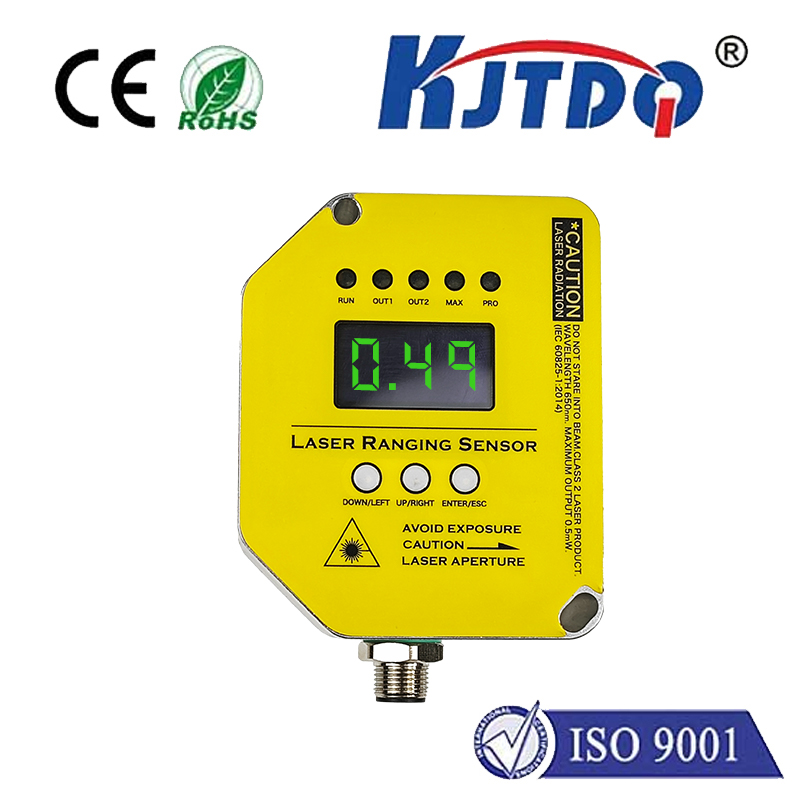
In the realm of precision measurement and remote sensing, the demand for reliable, long-distance data acquisition is paramount. Traditional methods often falter when faced with environmental challenges like atmospheric distortion, dust, or competing light sources. This is where advanced long-distance anti-interference long-range rangefinding laser systems are revolutionizing the field. These sophisticated devices are engineered not just for extreme distance but for unwavering accuracy in the most demanding conditions.
The core principle of this technology lies in its sophisticated emission and signal processing capabilities. Unlike basic laser rangefinders, these systems utilize highly focused, modulated laser beams. The modulation itself is a key to overcoming interference. By encoding the laser pulse with a specific signature, the system's receiver can distinguish the true return signal from ambient noise, scattered light, or even deliberate jamming attempts. This allows for precise distance calculation—often with millimeter-level accuracy over several kilometers—by measuring the time-of-flight of the laser pulse. The laser's wavelength is carefully selected, often in the eye-safe infrared spectrum, to penetrate atmospheric haze more effectively than visible light while ensuring operational safety.
The "anti-interference" capability is a multi-layered achievement. It involves advanced optical filters that block out unwanted wavelengths, coupled with adaptive algorithms that can dynamically adjust to changing environmental conditions. For instance, in fog or light rain, the system can increase signal power or alter its filtering parameters to maintain a lock on the target. This resilience makes it indispensable for critical applications. In topographic surveying and construction, it enables accurate mapping of vast, inaccessible terrains. For forestry and environmental monitoring, it provides precise data on canopy height and biomass without physical intrusion. In the security and defense sectors, it forms the backbone of perimeter surveillance and target acquisition systems, where reliability cannot be compromised.
Furthermore, the integration of these rangefinders with other technologies like GPS, inertial measurement units (IMUs), and high-resolution cameras creates powerful multi-sensor platforms. This synergy allows for not just measuring distance, but for creating detailed 3D point clouds and models of distant objects or landscapes. The data integrity is preserved over long ranges because the core laser measurement remains robust against interference that might degrade other sensor data.
The development of long-distance anti-interference lasers represents a significant leap forward. It moves beyond simply reaching far to delivering trustworthy, precise data every time, regardless of the operational environment. This reliability unlocks new possibilities in automation, robotics, and autonomous systems, where machines depend on accurate spatial awareness to navigate and interact with the world. As the technology continues to evolve, becoming more compact and energy-efficient, its adoption across industrial, scientific, and commercial sectors is poised for substantial growth, setting a new standard for what is possible in remote measurement and sensing.