check

check

check

check
check
check
check
check

check

check
In the realm of industrial automation, robotics, and advanced sensing, achieving precise distance measurement is a fundamental challenge. Traditional methods often fall short when dealing with fast-moving objects, long ranges, or complex surface materials. This is where the Time-of-Flight (TOF) laser displacement sensor emerges as a transformative solution. By leveraging the speed of light, this technology offers unparalleled accuracy and reliability for a wide array of demanding applications.
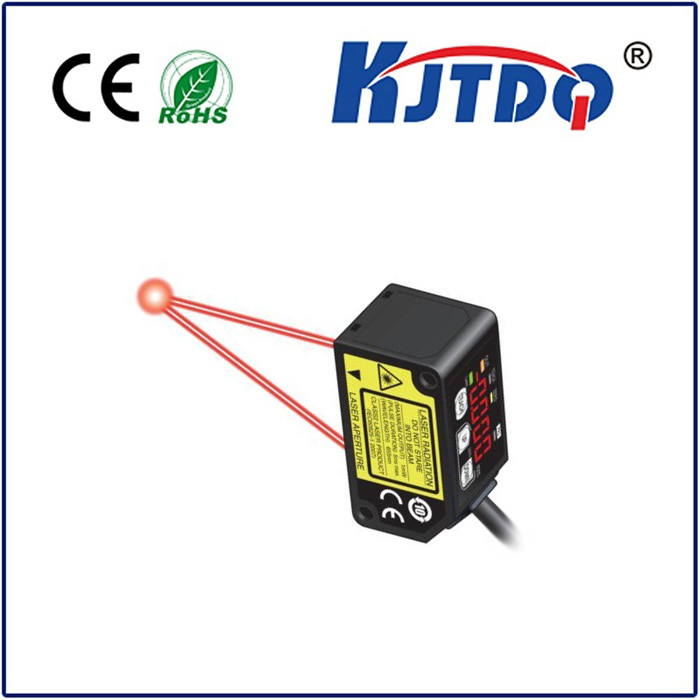
At its core, a TOF laser displacement sensor operates on a simple yet powerful principle. It emits a short, pulsed laser beam towards a target object. The sensor's highly sensitive receiver then detects the reflected light. By precisely measuring the time interval between the emission and the reception of the laser pulse—the "time of flight"—the sensor calculates the distance to the target with exceptional accuracy. Since the speed of light is a constant, this method provides a direct and robust measurement, largely immune to environmental interference like ambient light or the color and texture of the target surface. This makes it far more versatile than conventional triangulation-based laser sensors, especially for long-distance measurements.
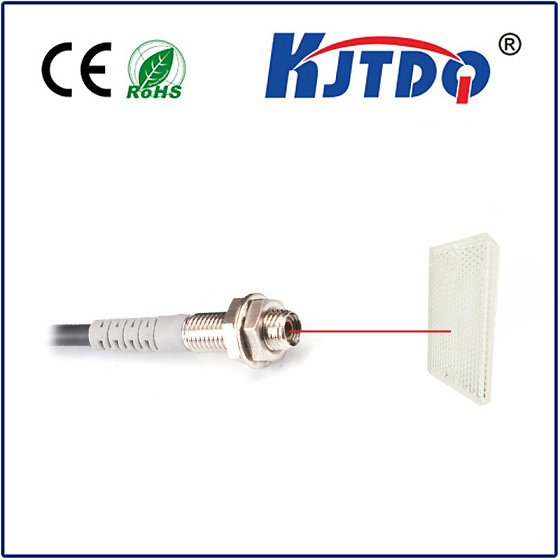
The advantages of integrating a TOF laser displacement sensor, such as the KJTDQ series, into your systems are substantial. First and foremost is its capability for long-range measurement. These sensors can accurately gauge distances from several centimeters up to tens or even hundreds of meters, making them ideal for large-scale applications. Secondly, they excel in high-speed operation. The rapid pulse emission and processing allow for measurement rates in the kilohertz range, enabling real-time monitoring of fast processes on production lines. Furthermore, their performance is remarkably stable. Unlike other technologies, TOF measurements are minimally affected by the target's reflectivity or color, ensuring consistent results whether measuring a shiny metal part or a dark, matte surface.
The practical applications of TOF laser displacement sensors are vast and growing. In logistics and warehousing, they are indispensable for warehouse automation, enabling robots and automated guided vehicles (AGVs) to navigate and handle pallets by accurately sensing their position and height. In the automotive industry, they are used for vehicle profiling, collision avoidance systems, and assembly line robotics. The construction sector utilizes them for volume measurement of bulk materials like gravel or sand, and for monitoring structural deformations. Additionally, they play a critical role in drone-based surveying, agricultural monitoring, and even in consumer electronics for gesture recognition and focus assistance.
When selecting a TOF laser displacement sensor, several key specifications demand attention. The measuring range defines the minimum and maximum distances the device can handle. The resolution indicates the smallest distance change it can detect, while accuracy defines the margin of error. The measurement rate, or frequency, determines how quickly it can take successive readings. Environmental ratings like IP67 are crucial for durability in harsh industrial settings, protecting against dust and water ingress. The KJTDQ series, for instance, is engineered to excel across these parameters, offering a balanced combination of long range, high speed, and robust construction for industrial use.
Implementing a TOF sensor effectively requires consideration of a few best practices. Ensure the sensor is mounted securely to minimize vibration, which can affect readings. While TOF sensors are less sensitive to surface properties, extremely low-reflectivity (dark, absorbent) or specular (mirror-like) surfaces may require adjustments or specific sensor models. Always verify that the sensor's field of view is clear of obstructions. For complex applications, many modern sensors like the KJTDQ offer digital interfaces (e.g., Ethernet, RS485) and programmable logic, allowing for seamless integration into larger control systems and the implementation of custom measurement routines.
As technology advances, the future of TOF laser displacement sensing looks increasingly intelligent. Integration with artificial intelligence and machine vision systems is creating smarter sensors capable of not just measuring distance, but also classifying objects and making autonomous decisions. The development of multi-pixel TOF sensors (TOF cameras) is adding a new dimension, allowing for the creation of complete 3D depth maps of a scene. Furthermore, ongoing improvements in laser diode and processing chip technology are continuously pushing the boundaries of range, accuracy, and cost-effectiveness.
In conclusion, the TOF laser displacement sensor represents a significant leap forward in non-contact measurement technology. Its ability to deliver fast, accurate, and reliable distance data over long ranges and under variable conditions solves critical challenges across numerous industries. For engineers and system integrators seeking a robust solution for automation, safety, and quality control, understanding and utilizing this technology, exemplified by high-performance models like the KJTDQ, is key to driving innovation and operational efficiency in an increasingly automated world.