check

check

check

check

check

check
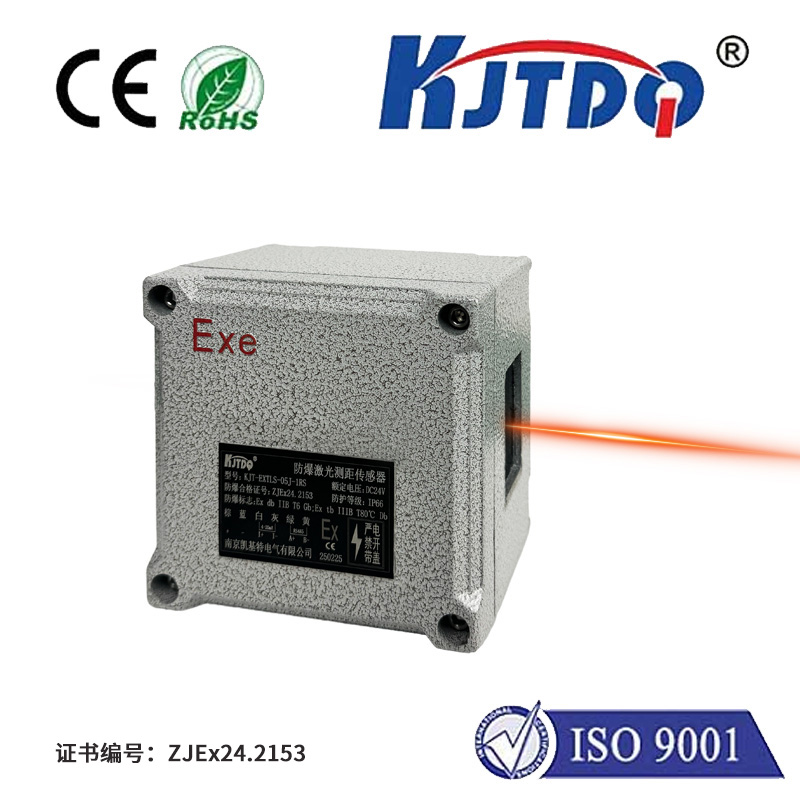
In the landscape of modern industrial automation and quality control, the demand for non-contact, high-precision measurement tools is paramount. Among these, the laser rangefinder displacement sensor stands out as a critical technology, enabling accurate distance and position measurements with remarkable speed and reliability. This article delves into the core principles, diverse applications, and key advantages of this sophisticated instrument, illustrating why it has become indispensable across various sectors.
At its heart, a laser rangefinder displacement sensor operates on the principle of optical triangulation or time-of-flight measurement. In a common configuration, a focused laser beam is projected onto the target surface. The reflected light is then captured by a receiving lens and focused onto a position-sensitive detector. Any change in the distance to the target causes a shift in the position of the light spot on the detector. This displacement is electronically processed to calculate the exact distance with micron-level precision. This non-contact method eliminates the risk of damaging delicate surfaces and allows for measurements on hot, moving, or inaccessible objects where traditional tactile probes would fail.
The versatility of laser displacement sensors is demonstrated by their widespread adoption. In the automotive industry, they are used to inspect panel gaps, measure tire tread depth, and verify the dimensions of engine components with unwavering consistency. Within electronics manufacturing, these sensors ensure the precise placement of microchips on circuit boards and measure the thickness of coatings and films. The aerospace sector relies on them for profiling turbine blades and inspecting composite materials. Furthermore, in civil engineering and construction, they facilitate monitoring structural deformations, checking rail alignments, and controlling excavation depths. The ability to provide real-time, high-frequency data makes them ideal for integration into automated production lines and robotic guidance systems.
Several compelling advantages drive the preference for laser rangefinder displacement sensors. First and foremost is their exceptional accuracy and resolution, capable of detecting minute changes imperceptible to the human eye. Their high sampling speed allows for the inspection of fast-moving production lines without compromising data quality. The non-contact nature not only protects the sensor and the target but also eliminates errors caused by mechanical wear or applied force. Modern sensors are designed to be robust, often featuring compact housings resistant to dust, moisture, and vibration, ensuring stable performance in harsh industrial environments. Additionally, many models offer user-friendly interfaces and software for easy setup, data logging, and seamless integration with PLCs and other control systems.
When selecting a laser displacement sensor for a specific application, several factors require careful consideration. The measuring range, resolution, and linearity must align with the task's requirements. The type of target surface—be it shiny, dark, transparent, or textured—can significantly affect the reflected signal, necessitating sensors with advanced algorithms or specialized models for challenging surfaces. Environmental conditions like ambient light, temperature fluctuations, and potential contaminants must also be accounted for in the selection process. Consulting with technical specialists and conducting on-site trials are recommended steps to ensure optimal sensor performance.
Looking ahead, ongoing advancements in laser technology, detector sensitivity, and data processing algorithms continue to push the boundaries of what is possible. The integration of laser sensors with IoT platforms and AI-driven analytics is paving the way for predictive maintenance and smarter, more adaptive manufacturing processes. As industries strive for greater efficiency, quality, and automation, the role of the laser rangefinder displacement sensor as a cornerstone of precision measurement will only become more pronounced. Its ability to deliver trustworthy data forms the foundation for innovation and continuous improvement in an increasingly demanding technological world.