check

check

check

check

check

check
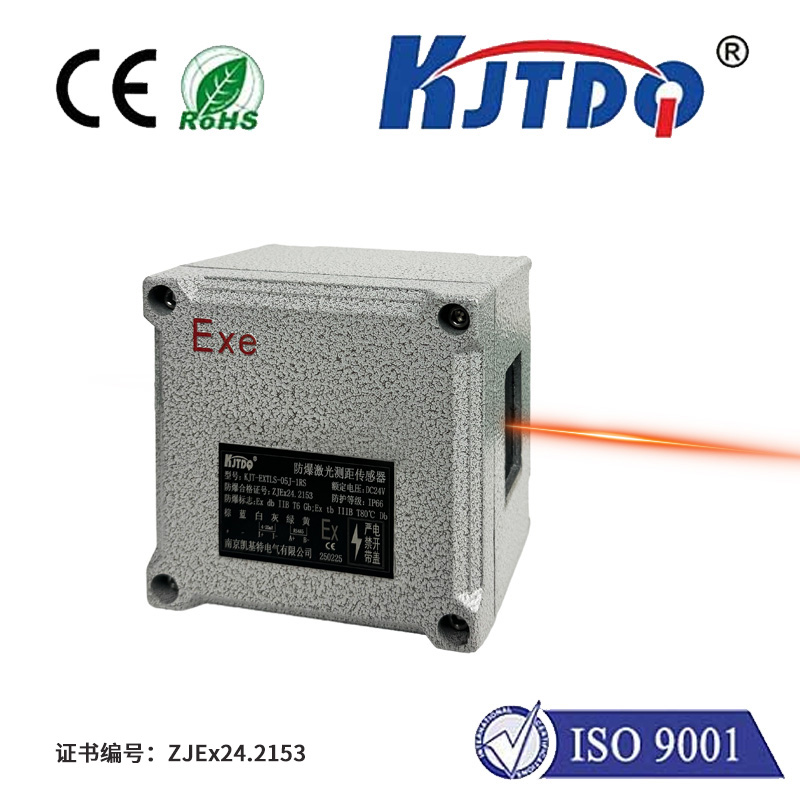
In the world of industrial automation, robotics, and advanced surveying, the ability to measure distance with pinpoint accuracy is not just a convenience—it's a fundamental requirement. This is where the Range Laser Ranging Sensor steps into the spotlight. Unlike traditional measurement tools, this sophisticated device harnesses the power of laser technology to deliver non-contact, high-speed, and incredibly precise distance data, revolutionizing how machines perceive and interact with their environment.
At its core, a Range Laser Ranging Sensor operates on the principle of Time-of-Flight (ToF) or phase-shift measurement. It emits a focused beam of laser light towards a target. The sensor then precisely calculates the time it takes for the light to reflect back to its receiver. Since the speed of light is a constant, this time measurement is directly and accurately converted into a distance value. This method allows for measurements over considerable distances, from a few centimeters to several hundred meters, with resolutions often down to the millimeter level.
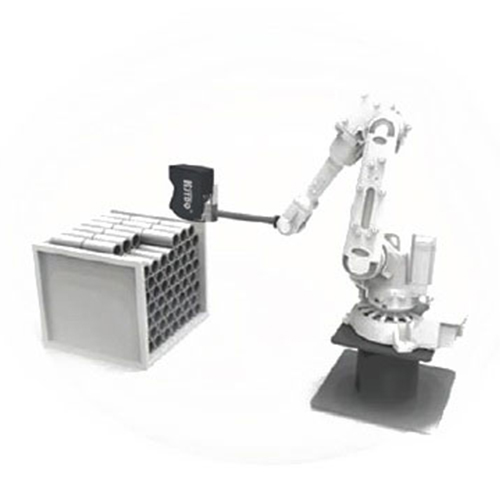
The applications for this technology are vast and transformative. In industrial settings, Range Laser Ranging Sensors are indispensable for tasks like precise positioning of robotic arms on assembly lines, monitoring the thickness of materials during production, or ensuring consistent fill levels in tanks and silos. Their non-contact nature means they can measure delicate, hot, or moving objects without any risk of damage or wear. In the realm of autonomous vehicles and drones, these sensors act as critical eyes, helping to map surroundings, avoid obstacles, and navigate complex terrains safely. Furthermore, in construction and archaeology, they enable rapid and accurate 3D scanning of structures and sites, creating detailed digital models for planning and preservation.
What truly sets a high-quality Range Laser Ranging Sensor apart are its key performance characteristics. Measurement range and accuracy are paramount, but advanced models also boast exceptional repeatability, meaning they deliver consistent results under identical conditions. Robust housing is essential to withstand harsh industrial environments, resisting dust, moisture, and vibrations. Modern sensors offer versatile output signals—such as analog voltage, current (4-20mA), or digital interfaces like RS-232, Ethernet, or IO-Link—ensuring seamless integration into any control system. Features like programmable measurement windows, multi-echo processing (to ignore foreground interference like dust or glass), and intuitive configuration software further enhance their utility and ease of use.
When selecting a Range Laser Ranging Sensor for your project, several factors demand careful consideration. First, clearly define the required measurement range and the desired accuracy. The properties of the target surface are crucial; dark, matte, or highly reflective surfaces can affect performance, though many sensors now have algorithms to compensate. The operating environment's temperature, potential exposure to contaminants, and the need for specific safety certifications (like laser class) must also be evaluated. Finally, consider the integration aspect: the physical size of the sensor, mounting options, and the compatibility of its output with your existing PLC or data acquisition system.
Looking ahead, the evolution of Range Laser Ranging Sensors is geared towards even greater miniaturization, lower power consumption, and enhanced intelligence. Integration with AI and machine learning algorithms will allow sensors not only to measure distance but also to classify objects and predict movements, opening new frontiers in smart automation and the Internet of Things (IoT). As these devices become more affordable and capable, their adoption will continue to expand, driving efficiency and innovation across countless sectors.
In conclusion, the Range Laser Ranging Sensor is far more than a simple measuring tool. It is a cornerstone of modern precision engineering, enabling a level of automation, safety, and data-driven decision-making that was previously unimaginable. By providing reliable, contactless distance data in real-time, it empowers systems to operate with greater intelligence, autonomy, and efficiency. For engineers, integrators, and innovators seeking to push the boundaries of what's possible, understanding and leveraging this powerful technology is an essential step forward.