check

check

check

check

check

check
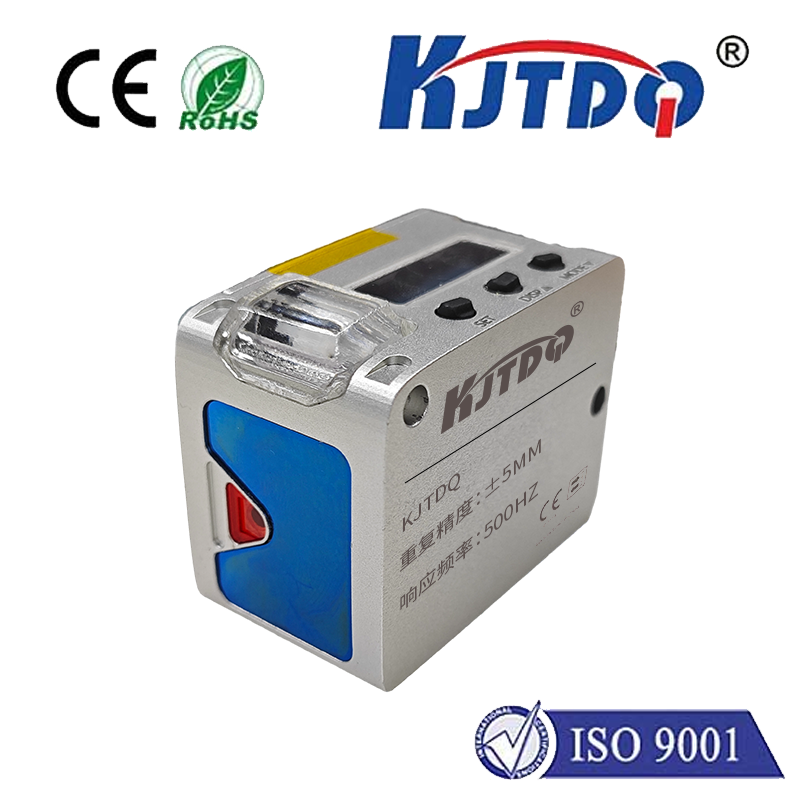
In the intricate world of industrial automation, precision and reliability are non-negotiable. Among the myriad of sensing technologies available, the laser diffuse reflection photoelectric sensor stands out as a cornerstone for countless applications. Unlike through-beam or retro-reflective sensors, this type operates on a simple yet powerful principle: it emits a focused laser beam towards a target, and a receiver, housed in the same unit, detects the light diffusely reflected back from the target's surface. This self-contained design makes it exceptionally versatile and easy to install, eliminating the need for a separate reflector or receiver unit.
The core advantage of the laser diffuse reflection photoelectric sensor lies in its precision. The use of a laser light source, as opposed to standard LED light, results in a highly visible, extremely focused beam. This allows for precise detection of very small objects and enables accurate positioning. The small, intense spot size minimizes background interference, allowing the sensor to reliably detect targets even in environments with complex backgrounds or varying surface colors and textures. Modern sensors are equipped with advanced background suppression technology or adaptive threshold algorithms, which intelligently distinguish the target signal from the background reflection, further enhancing reliability.
When selecting a laser diffuse reflection photoelectric sensor for your application, several key specifications demand attention. Sensing range is paramount; while diffuse reflection sensors typically have shorter ranges than through-beam types, laser models offer superior range-to-spot-size ratios. The response time, often in the microsecond range, is critical for high-speed production lines. Environmental robustness is another crucial factor. Look for sensors with high Ingress Protection (IP) ratings (e.g., IP67, IP69K) to withstand dust, water jets, and washdowns common in food & beverage or pharmaceutical settings. Resistance to electrical noise and vibration is equally important for stable operation in harsh industrial environments.
The applications for these sensors are vast and varied. In packaging machinery, they are indispensable for precise label detection, cap presence verification on bottles, and counting stacked items. In electronics assembly, they ensure miniature components are present and correctly positioned on PCBs. Robotic guidance systems utilize them for precise object positioning for pick-and-place operations. Furthermore, they play a vital role in warehouse automation, controlling the height of stacks on pallets and detecting the presence of goods on conveyor belts. Their ability to work with challenging materials like transparent glass, shiny metals, or dark plastics—often through specialized models with adjustable sensitivity—makes them a universal tool.
Integration into modern industrial networks is seamless. Many laser diffuse reflection photoelectric sensors now come with IO-Link capability. This smart communication protocol goes beyond simple on/off switching, enabling the digital exchange of detailed parameter data, real-time process values like received light intensity, and diagnostic information. This facilitates predictive maintenance, remote configuration, and seamless integration into Industry 4.0 and IoT frameworks, transforming a simple sensor into a intelligent data point.
Proper installation and alignment are key to optimal performance. While easier to set up than dual-unit systems, attention must be paid to the angle of incidence and the distance to the target. The sensor should be mounted securely to prevent misalignment from vibration. Regular maintenance, primarily keeping the lens clean from dust, oil, or debris, ensures long-term, consistent operation. Understanding the reflectivity of your target material is essential for choosing the right sensor model and setting the sensitivity correctly during commissioning.
In conclusion, the laser diffuse reflection photoelectric sensor is a fundamental, high-precision component that drives efficiency, quality, and intelligence in automated systems. Its blend of compact design, precise laser-based detection, and adaptability to tough conditions and smart networks makes it an invaluable asset. For engineers and system integrators aiming to optimize detection tasks—from the simplest presence check to the most complex positioning challenge—investing in the right laser diffuse reflection sensor is a decisive step toward building a more reliable, productive, and data-driven operation.