check

check

check

check

check

check
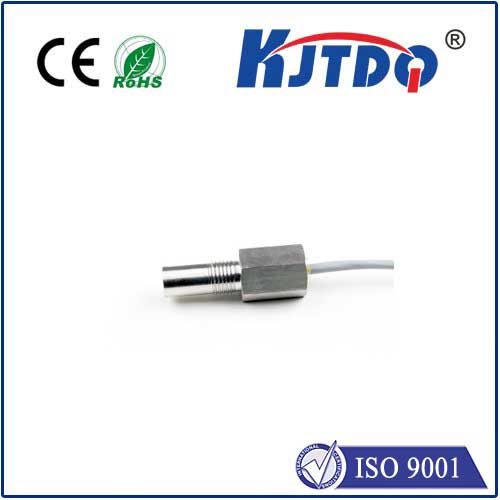
In the demanding world of industrial automation, metallurgy, and energy production, the ability to perform accurate distance measurements under extreme thermal conditions is not just an advantage—it's a necessity. Standard laser rangefinder sensors often falter when ambient temperatures soar, leading to measurement drift, reduced accuracy, and premature component failure. This is where the high-temperature resistant laser rangefinder sensor, specifically engineered for harsh environments, becomes a critical technological solution. The KJTDQ series represents a significant leap forward in this specialized field, offering unparalleled reliability where others cannot operate.
The core challenge in high-temperature applications lies in protecting sensitive electronic and optical components from thermal degradation. Conventional sensors use materials and designs suited for standard industrial ranges, typically up to 40-50°C (104-122°F). Beyond this point, laser diodes can experience wavelength shift, lenses may warp, and electronic circuits can become unstable. The high-temperature resistant laser rangefinder sensor overcomes these hurdles through a multi-faceted engineering approach. It incorporates advanced thermal management systems, such as integrated heat sinks, passive cooling channels, and strategic thermal isolation barriers that separate the sensitive laser emission and reception modules from external heat sources. Furthermore, critical components are constructed from specialized alloys and ceramics with low thermal expansion coefficients, ensuring dimensional stability and optical alignment integrity even during rapid temperature fluctuations.
The operational principle remains based on the time-of-flight (ToF) or phase-shift measurement method, where a laser pulse is emitted towards a target, and the sensor calculates the distance by measuring the time taken for the reflection to return. However, in a high-temperature resistant model like the KJTDQ, sophisticated signal processing algorithms are employed to compensate for any minor thermal-induced signal variations. This ensures that the measurement output—whether in millimeters, centimeters, or meters—remains consistent and accurate. The housing is typically crafted from robust, heat-reflective stainless steel or coated aluminum, providing an IP67 or higher ingress protection rating against dust and moisture, which often accompanies high-heat industrial settings.
The practical applications for such resilient sensors are vast and critical. In metal casting and forging plants, these sensors monitor molten metal levels in furnaces or the positioning of red-hot ingots, enabling automated handling and process control while keeping personnel at a safe distance. Within glass manufacturing, they precisely measure the thickness and position of glass sheets as they travel through high-temperature annealing lehrs. The energy sector relies on them for monitoring refractory linings in boilers, measuring coal pile levels in hot zones, and assisting in the maintenance of geothermal wellheads. In aerospace component testing, they provide non-contact measurement of parts subjected to extreme thermal stress in environmental chambers.
Selecting the right high-temperature resistant laser rangefinder sensor requires careful consideration of several key parameters beyond just the maximum ambient temperature specification. The KJTDQ series, for instance, is characterized by its extended operational range, often from -20°C to +150°C or higher, maintaining a specified accuracy like ±1mm throughout. The sensing range, response time, and the type of laser (typically Class 1 or Class 2 for eye safety) are crucial. Interface options, such as analog outputs (4-20mA), digital protocols (RS485, Ethernet/IP, PROFINET), and discrete switching outputs, ensure seamless integration into existing control systems. Robustness against electromagnetic interference (EMI) in electrically noisy industrial environments is another vital feature.
Implementing these sensors also demands attention to installation and maintenance. While built for toughness, optimal performance is achieved by mounting them with adequate clearance from direct radiant heat sources when possible, using provided mounting brackets that may act as additional heat sinks. Regular cleaning of the optical window with appropriate methods is essential to prevent the buildup of dust or fumes, which can be baked on by the high ambient heat and attenuate the laser signal. Modern versions often include diagnostic LED indicators or software-based health monitoring features to alert users to potential issues like window contamination or internal temperature thresholds.
The evolution of the high-temperature resistant laser rangefinder sensor, exemplified by the KJTDQ series, is a direct response to the increasing automation of the world's most challenging industrial processes. It transforms environments once considered too hostile for precise electro-optical measurement into domains of data-driven control. By delivering reliable, non-contact distance data under thermal stress, these sensors enhance safety, improve product quality, reduce material waste, and optimize energy usage. They are not merely instruments but enabling technologies that push the boundaries of what is measurable, allowing industries to operate with greater intelligence, efficiency, and safety at the very edge of thermal extremes. Their continued development will be pivotal for next-generation smart manufacturing and heavy industry, where precision must persist regardless of environmental adversity.