check

check

check

check

check

check
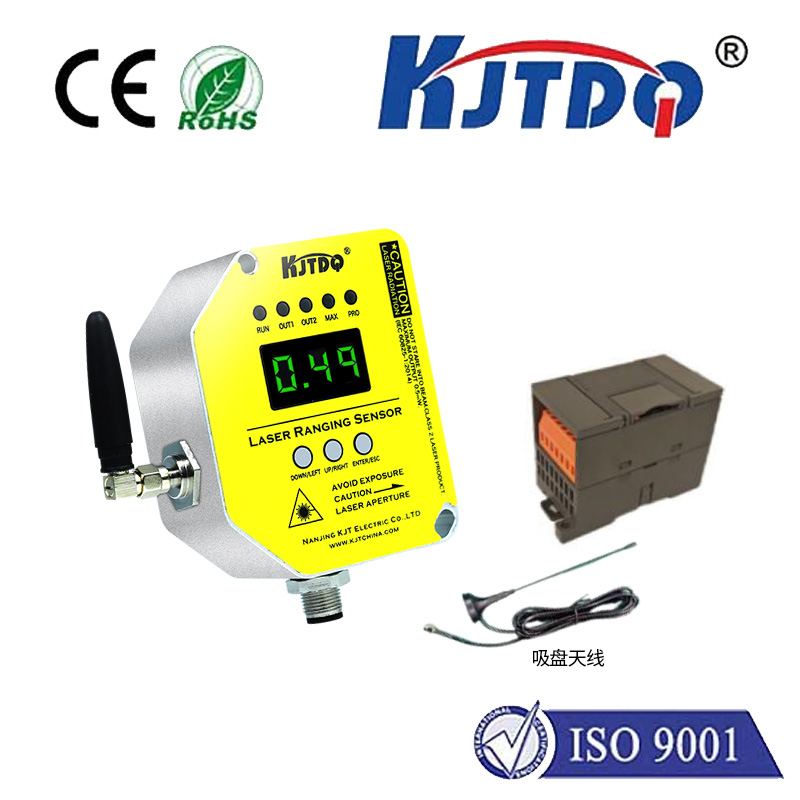
In the rapidly evolving landscape of precision technology, the demand for faster, more accurate distance measurement has never been greater. Enter the high-speed rangefinder sensor, a pivotal innovation that is setting new benchmarks across multiple industries. This advanced sensor technology operates on the principle of time-of-flight or phase-shift measurement, emitting a laser or optical signal and calculating distance based on the time it takes for the signal to return. What sets the latest generation apart is its unprecedented speed, capable of taking thousands, even millions, of measurements per second with sub-millimeter accuracy. This capability is not merely an incremental improvement; it represents a fundamental shift in how machines perceive and interact with their spatial environment.
The applications for this high-speed sensing technology are vast and transformative. In industrial automation and robotics, these sensors enable real-time, dynamic object detection and positioning. Robotic arms equipped with such sensors can perform complex pick-and-place operations with incredible speed and precision, adapting to moving conveyor belts or variable part sizes without missing a beat. This drastically reduces cycle times and minimizes errors in manufacturing lines. Similarly, in the realm of autonomous vehicles and drones, high-speed rangefinders are critical components of LiDAR systems. They provide the instantaneous, high-resolution 3D mapping necessary for safe navigation, allowing vehicles to detect and react to obstacles, pedestrians, and other vehicles in a fraction of a second. The sensor's ability to perform reliably in diverse lighting and weather conditions further enhances its utility in outdoor applications.
Beyond mobility and manufacturing, the impact extends to fields like augmented reality (AR), virtual reality (VR), and smart devices. For AR headsets or smartphones, a high-speed rangefinder sensor enables instant and accurate depth sensing. This allows for more realistic object placement in virtual environments, improved portrait mode photography with precise background blur, and enhanced gesture control interfaces. The speed ensures that these interactions feel seamless and natural to the user, without perceptible lag. In logistics and warehouse management, these sensors facilitate ultra-fast volume scanning and parcel dimensioning, streamlining sorting processes and optimizing storage space.
The engineering behind achieving such high speed without compromising accuracy is formidable. It involves sophisticated signal processing algorithms, high-quality optical components to maintain signal integrity, and advanced noise reduction techniques to filter out environmental interference. Manufacturers are continuously pushing the limits, developing sensors with wider field-of-view, longer range, and lower power consumption. The integration of these sensors with other data streams, such as inertial measurement units (IMUs) and visual cameras, through sensor fusion, creates even more robust and intelligent systems.
However, the adoption of high-speed rangefinder technology also presents challenges. System integrators must consider factors like data throughput, processing power requirements, and environmental robustness. The large volume of data generated requires efficient handling and real-time analysis to be truly useful. Furthermore, cost considerations remain important for mass-market applications, though economies of scale are steadily making the technology more accessible.
Looking ahead, the trajectory for high-speed rangefinder sensors points toward even greater miniaturization, intelligence, and integration. As core components of the Internet of Things (IoT) and Industry 4.0, they will form the sensory backbone of smart factories, cities, and homes. Their role in enabling machines to see, understand, and navigate the world with human-like speed and precision is undeniable. For engineers, developers, and innovators, mastering this technology is key to unlocking the next wave of automated and intelligent solutions, driving efficiency, safety, and new capabilities across the global technological ecosystem.