check

check

check

check

check

check
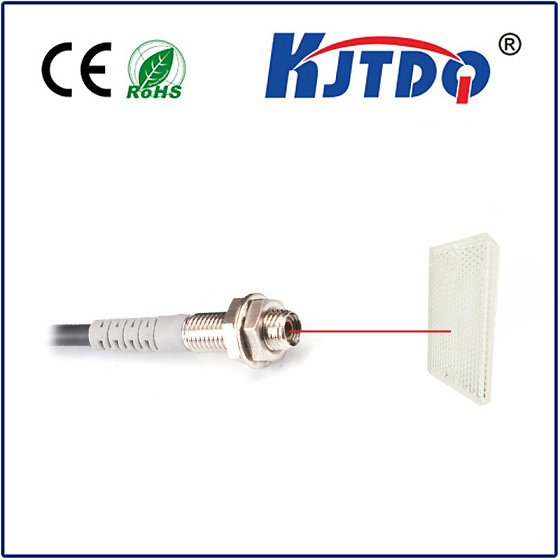
In the realm of precise measurement and spatial awareness, the 2m laser rangefinder sensor stands as a pivotal tool, bridging the gap between theoretical accuracy and practical application. This compact yet powerful device utilizes laser technology to deliver non-contact distance measurements with exceptional precision, typically within millimeter-level accuracy over its operational range. The core principle involves emitting a focused laser beam towards a target and calculating the distance by measuring the time it takes for the light to reflect back to the sensor, a method known as time-of-flight (ToF). This technology, once confined to specialized industrial or surveying equipment, has now been miniaturized and optimized into accessible sensor modules like the KJTDQ series, opening doors to innovation across countless fields.
The utility of a 2m range laser sensor is defined by its perfect balance of range, size, and performance. A two-meter operational distance is ideal for a vast array of mid-range applications where close-proximity sensors fall short and long-range units are overkill and costly. Industries such as robotics and automation heavily rely on these sensors for object detection, collision avoidance, and precise positioning of robotic arms on assembly lines. In logistics and warehouse management, they are integral to automated guided vehicles (AGVs) for navigation and pallet height measurement, ensuring efficient and safe material handling. Furthermore, the consumer electronics sector incorporates similar technology in devices for gesture recognition, augmented reality experiences, and as a component in smartphone cameras for fast autofocus.
A key advantage of modern modules like the KJTDQ is their integration-friendly design. They often come with digital interfaces such as I2C, UART, or PWM, allowing for seamless communication with microcontrollers like Arduino, Raspberry Pi, or industrial PLCs. This plug-and-play capability significantly reduces development time for engineers and hobbyists alike. Developers can focus on creating application logic—whether it's programming a drone to maintain a specific altitude, designing a smart trash bin that opens at a set distance, or building a DIY laser tape measure—without delving into the complexities of the underlying laser physics. The sensor handles the intricate measurement process and provides a simple, reliable digital distance reading.
Beyond industrial automation, the 2m laser rangefinder sensor finds creative applications in the world of the Internet of Things (IoT) and smart devices. Imagine a smart parking system that uses an array of these sensors to detect vehicle presence in individual parking spots, relaying real-time availability data to a central server. In smart agriculture, they can monitor the growth height of plants or the fill level of silos. For security systems, they can act as precise tripwires or monitor perimeter intrusions with far greater accuracy than traditional infrared sensors. The non-contact nature of the measurement also makes it perfect for applications involving delicate materials or hazardous environments where physical contact is undesirable or impossible.
When selecting a 2m laser rangefinder sensor, several performance parameters are crucial. Accuracy and resolution are paramount, defining how close the reading is to the true distance and the smallest detectable change. Measurement speed, or the update rate, determines how quickly the sensor can provide new data, which is vital for dynamic applications like robotics. Environmental robustness is another critical factor; a good sensor should maintain performance under varying light conditions and be resistant to ambient optical interference. The KJTDQ series, for instance, is often engineered with filters and algorithms to compensate for such factors, ensuring stable readings indoors and in controlled outdoor settings.
The evolution of laser rangefinder sensors towards smaller, more accurate, and more affordable units like the 2m KJTDQ module is a testament to the advancement of photonics and semiconductor technology. It democratizes high-precision measurement, putting capabilities once reserved for large corporations into the hands of startups, researchers, and DIY enthusiasts. As the demand for automation, data collection, and intelligent systems grows, the role of these precise optical sensors will only become more central. They are not just measuring distance; they are providing the fundamental spatial data that allows machines to perceive, understand, and interact with the physical world intelligently and autonomously, paving the way for smarter technology integration in our daily lives and industrial processes.