check

check

check

check

check

check
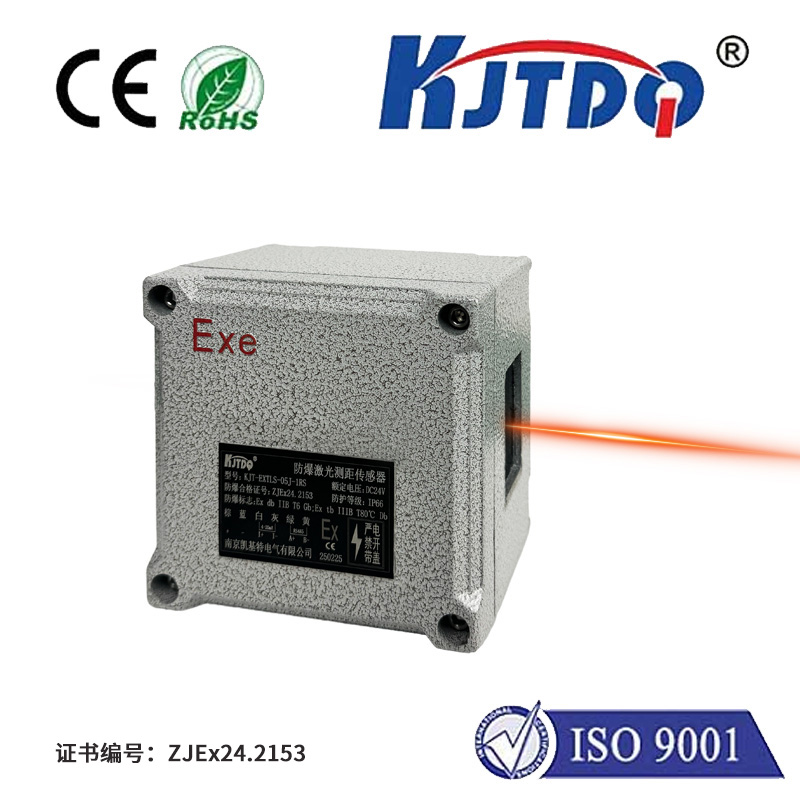
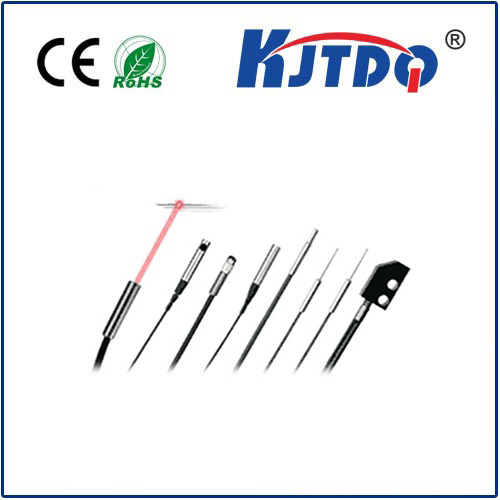
In the relentless pursuit of miniaturization and enhanced performance across industries, a groundbreaking advancement has emerged: the smallest laser rangefinder sensor. This technological marvel is not merely a smaller version of its predecessors; it represents a paradigm shift in how distance, position, and dimension are measured with extreme accuracy in space-constrained environments. The core of this innovation lies in sophisticated micro-optics and advanced signal processing algorithms packed into a footprint previously thought impossible for such high-precision functionality.
The driving force behind the development of the world's smallest laser rangefinder sensor is the increasing demand from sectors where size, weight, and power (SWaP) are critical constraints. Consumer electronics, such as next-generation smartphones and augmented reality (AR) glasses, require tiny, low-power sensors for autofocus, gesture recognition, and 3D mapping. In robotics, especially for collaborative robots (cobots) and micro-drones, these miniature sensors enable precise navigation, object avoidance, and manipulation in tight spaces. The medical device industry leverages them for portable diagnostic equipment and minimally invasive surgical tools, where millimeter-level accuracy in a tiny package can significantly improve outcomes.
The engineering challenges overcome to create this sensor are formidable. Traditional laser rangefinders rely on components like laser diodes, lenses, and photodetectors that occupy considerable volume. The breakthrough involves integrating Vertical-Cavity Surface-Emitting Lasers (VCSELs), which are highly efficient and can be fabricated in compact arrays, with micro-electromechanical systems (MEMS) mirrors for beam steering. Furthermore, the adoption of single-photon avalanche diode (SPAD) arrays as receivers allows for the detection of very weak reflected signals, enhancing range and reliability even with a low-power, eye-safe laser source. All these components are seamlessly integrated into a single, miniaturized system-on-chip (SoC) or system-in-package (SiP) solution.
The operational principle remains based on time-of-flight (ToF) measurement, where the sensor calculates distance by measuring the time it takes for a laser pulse to travel to a target and back. However, the miniaturization forces innovations in how the light is emitted, directed, and captured. The ultra-compact design utilizes innovative optical waveguides and micro-lenses to shape and direct the laser beam with high efficiency. Advanced digital signal processors (DSP) embedded within the sensor filter out noise and environmental interference, ensuring stable readings even in challenging conditions like varying ambient light or on partially reflective surfaces.
The practical applications are vast and transformative. In industrial automation, these sensors can be embedded directly into production line components for real-time, in-line quality control, measuring part dimensions or verifying assembly positions without halting the process. For logistics and inventory management, handheld scanners and autonomous mobile robots equipped with these sensors achieve faster and more accurate parcel dimensioning and pallet profiling. In the realm of smart infrastructure, they enable compact devices for monitoring structural deformations, settlement, or vibration in bridges and buildings with unprecedented spatial density.
The benefits extend beyond mere size reduction. The smallest laser rangefinder sensors typically consume less power, generate less heat, and can be produced at scale with semiconductor manufacturing techniques, leading to lower costs over time. Their robustness and reliability make them suitable for harsh environments, from factory floors to outdoor agricultural monitoring systems. This democratization of high-precision ranging technology opens doors for innovators and startups to develop new products and solutions that were previously technologically or economically unfeasible.
Looking ahead, the trajectory points toward even greater integration and intelligence. Future iterations will likely incorporate artificial intelligence directly at the sensor edge, allowing for immediate data interpretation and decision-making. We can anticipate their fusion with other sensing modalities like inertial measurement units (IMUs) and cameras to provide comprehensive spatial awareness for autonomous systems. As the technology matures, standards for performance, safety, and interoperability will solidify, further accelerating adoption across global markets.
The advent of the smallest laser rangefinder sensor marks a pivotal moment. It shrinks a powerful capability into a form factor that seamlessly integrates into our devices, machines, and environments. By delivering laboratory-grade precision in a miniature package, it empowers engineers and designers to reimagine the possibilities for automation, mobility, and interaction, setting a new benchmark for what is achievable in the world of precision measurement.