check

check

check

check

check

check
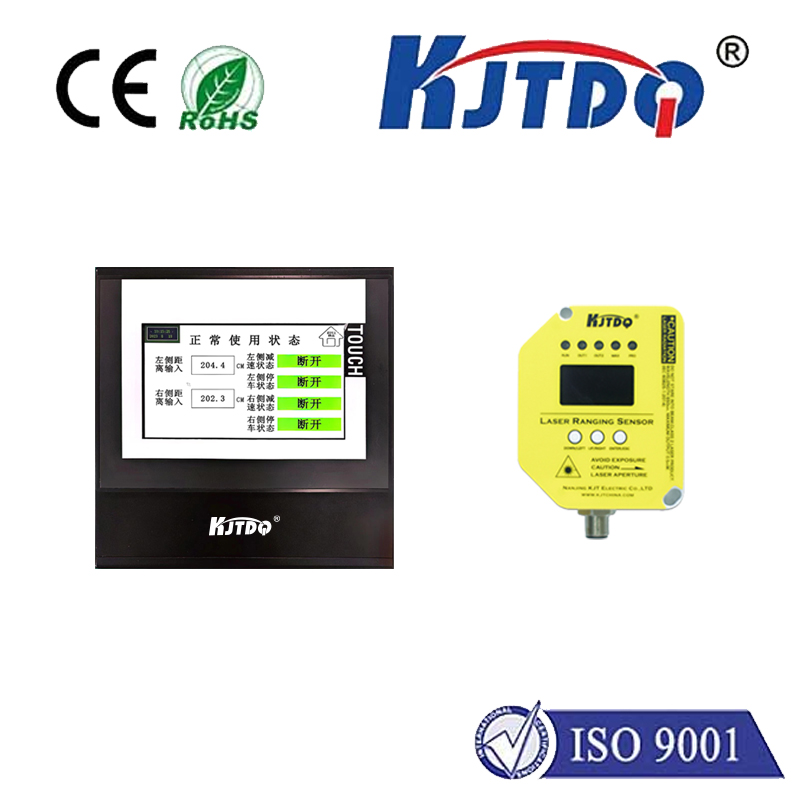
In the ever-evolving landscape of technology, the demand for smaller, more efficient, and highly accurate measurement tools is at an all-time high. Enter the miniature laser rangefinder sensor, a compact device that is revolutionizing how industries measure distance with unprecedented precision. This tiny powerhouse is no longer confined to the realms of science fiction or bulky industrial equipment; it is now a critical component in a myriad of applications, from consumer electronics to advanced robotics.
At its core, a miniature laser rangefinder sensor operates on the principle of Time-of-Flight (ToF). It emits a focused laser beam towards a target. The sensor then precisely measures the time it takes for the light pulse to reflect back to the receiver. Given the constant speed of light, this time measurement is converted into an exact distance calculation. The miniaturization of this technology involves sophisticated engineering to shrink the laser diodes, photodetectors, and processing circuitry into a package that is often no larger than a fingertip, all while maintaining high performance and low power consumption.
The applications for these sensors are vast and growing. In the consumer space, they are integral to the facial recognition and autofocus systems in modern smartphones, enabling faster and more secure user experiences. In photography, they assist cameras in achieving instant and accurate focus, even in low-light conditions. The automotive industry relies on them for advanced driver-assistance systems (ADAS), such as adaptive cruise control and collision avoidance, where split-second distance measurements are crucial for safety.
Beyond everyday gadgets, miniature laser rangefinders are driving innovation in professional fields. In robotics and drones, they provide essential data for navigation, obstacle avoidance, and environmental mapping, allowing autonomous machines to operate safely and intelligently in complex environments. Industrial automation utilizes them for precise positioning, quality control on assembly lines, and inventory management in smart warehouses. Even in healthcare, they find use in portable diagnostic equipment and assistive devices, enhancing both medical procedures and patient care.
The advantages of adopting a miniature laser rangefinder sensor are clear. Their small form factor allows for seamless integration into products where space is at a premium. Despite their size, they offer high accuracy, often within a few millimeters, and can operate effectively over ranges from a few centimeters to several tens of meters, depending on the model. Modern versions are also designed for low power operation, making them ideal for battery-powered devices. Furthermore, they are robust, resistant to ambient light interference, and provide rapid data output, enabling real-time decision-making.
When selecting a miniature laser rangefinder sensor for a project, several key specifications must be considered. The measurement range, accuracy, and update rate are fundamental. The operating voltage and current consumption are critical for power-sensitive designs. Physical characteristics like size, weight, and interface options (such as I2C, UART, or PWM) determine how easily the sensor can be incorporated into an existing system. Environmental durability, including performance under varying temperatures and humidity, is also a vital factor for outdoor or industrial applications.
Looking ahead, the future of miniature laser rangefinder sensors is incredibly promising. As research continues, we can expect even smaller sensors with longer ranges, higher accuracy, and lower costs. Integration with other sensing modalities like inertial measurement units (IMUs) and cameras will create more sophisticated perception systems for augmented reality (AR), virtual reality (VR), and the next generation of autonomous machines. The ongoing trend towards the Internet of Things (IoT) will further propel their adoption, embedding precise spatial awareness into countless connected devices.
In conclusion, the miniature laser rangefinder sensor stands as a testament to the power of technological miniaturization. It packs the complex capability of precise distance measurement into a tiny, reliable, and energy-efficient package. From enhancing the smart devices in our pockets to enabling the autonomous systems of tomorrow, this sensor is a foundational technology quietly powering a more precise and intelligent world. For engineers, designers, and innovators, understanding and leveraging this technology is key to developing the next wave of cutting-edge products.