check

check

check

check
check
check
check
check

check

check
In the world of industrial automation, robotics, and advanced manufacturing, achieving unparalleled precision in distance measurement is not just a goal—it's a fundamental requirement. This is where the Micro-Range Laser Ranging Sensor emerges as a critical component, redefining the boundaries of accuracy for short-distance applications. Unlike conventional sensors that may struggle with minute measurements, this specialized technology delivers exceptional performance where it matters most.
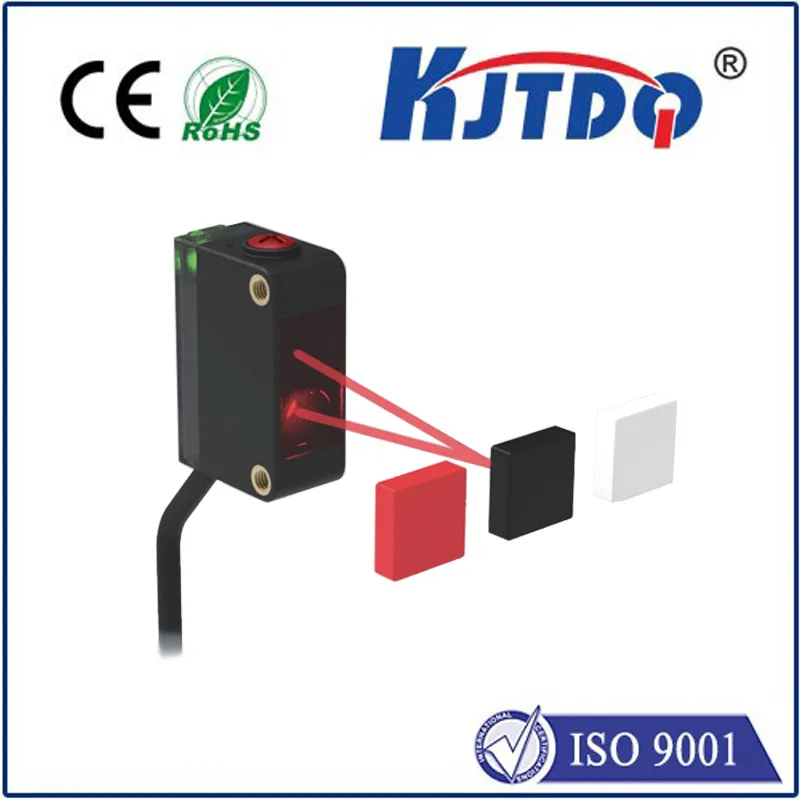
A Micro-Range Laser Ranging Sensor operates on the principle of laser triangulation or time-of-flight measurement, optimized for extremely close distances, typically from a few millimeters up to several centimeters. It emits a focused laser beam towards a target. The reflected light is then captured by a high-resolution receiver. By calculating the displacement of the reflected beam spot or the minute time difference for the light to return, the sensor computes the exact distance with micron-level precision. This non-contact method eliminates mechanical wear and allows for high-speed, repeated measurements on delicate or moving surfaces.
The applications for this sensor are vast and transformative. In electronics assembly, it ensures precise placement of microchips and components on circuit boards. In precision machining, it provides real-time feedback for tool positioning and surface profiling, guaranteeing tolerances are met. The automotive industry relies on it for gap and flush measurement between body panels. Furthermore, it plays a pivotal role in semiconductor wafer inspection, medical device manufacturing, and even in consumer electronics for features like autofocus enhancement and gesture recognition. Its ability to function reliably in challenging environments with varying surface colors and materials adds to its versatility.
Several key advantages set the Micro-Range Laser Ranging Sensor apart. The foremost is its extraordinary accuracy and resolution, capable of detecting changes as small as a single micron. It offers high-speed response, enabling real-time process control in fast-paced production lines. The non-contact nature prevents damage to both the sensor and the target object. Modern sensors are also compact, robust, and designed for easy integration into existing systems, often featuring digital interfaces for seamless communication with PLCs and computers.
When selecting a Micro-Range Laser Ranging Sensor, engineers must consider specific parameters. The measuring range defines the minimum and maximum distances the sensor can handle effectively. Resolution indicates the smallest distance change it can detect. Repeatability ensures consistent results under identical conditions. The type of laser (usually a safe, visible red laser or a Class 1 infrared laser) and its spot size are crucial for targeting small features. Environmental factors like ambient light, temperature fluctuations, and the target's surface texture (glossy, matte, transparent) also significantly influence sensor selection and performance.
Looking ahead, the evolution of Micro-Range Laser Ranging Sensors is geared towards even greater miniaturization, higher speeds, and enhanced intelligence. Integration with AI and machine learning algorithms will allow for adaptive calibration and advanced defect detection. The development of multi-point sensors and array configurations will enable 3D profiling at a microscopic scale. As Industry 4.0 and smart factories become the standard, these sensors will form the essential sensory layer for cyber-physical systems, driving efficiency, quality, and innovation.
In conclusion, the Micro-Range Laser Ranging Sensor is far more than a simple measuring device; it is an enabler of precision in the modern industrial landscape. By providing reliable, high-accuracy data at close quarters, it empowers engineers and machines to perform tasks that were once deemed impossible. For any application demanding exacting distance control on a small scale, implementing this advanced sensor technology is a definitive step towards achieving operational excellence and maintaining a competitive edge in a market driven by quality and innovation.