check

check

check

check

check

check
In the rapidly evolving landscape of industrial automation, quality control, and scientific research, the demand for accurate and reliable measurement has never been greater. At the heart of this precision-driven revolution lies a critical component: the high-precision laser sensor. This technology, often abbreviated in specific industrial contexts, represents a pinnacle of non-contact measurement, offering unparalleled accuracy, speed, and stability for a myriad of demanding applications.
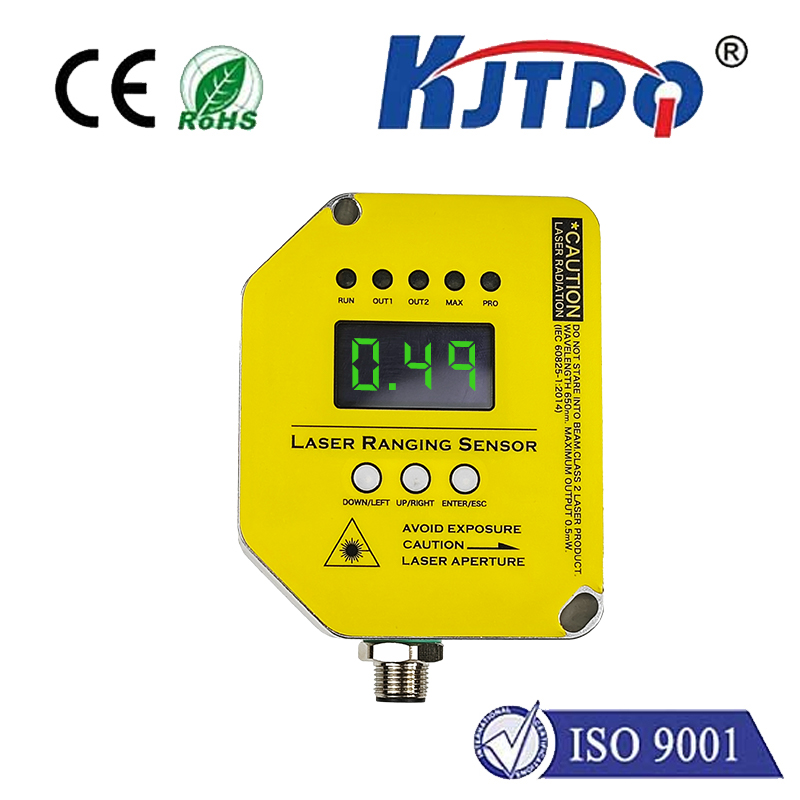
Unlike conventional sensing methods, high-precision laser sensors operate on the principle of emitting a focused, coherent beam of light towards a target. The sensor then meticulously analyzes the properties of the reflected or scattered light, such as its time-of-flight, triangulation displacement, or spectral shift. This data is processed in real-time to calculate exact parameters like distance, position, thickness, vibration, or surface profile. The "high-precision" designation is earned through advanced optical components, sophisticated signal processing algorithms, and robust environmental compensation mechanisms that filter out noise and interference, ensuring measurements are consistently reliable down to the micron or even sub-micron level.
The advantages of integrating such sensors into operational systems are profound. First and foremost is their non-contact nature, which eliminates the risk of damaging delicate surfaces or influencing the measurement of soft, hot, or fast-moving objects. This makes them indispensable on high-speed production lines where physical probes would fail. Secondly, their exceptional speed allows for 100% inline inspection, enabling real-time process control and immediate feedback for adjustments, drastically reducing waste and improving overall yield. Furthermore, their robustness and immunity to many environmental factors—when properly housed—ensure consistent performance in challenging conditions, from dusty factory floors to clean rooms.
The application spectrum for high-precision laser sensors is vast and continuously expanding. In the manufacturing sector, they are the eyes of robotic arms, guiding precise assembly and welding. They perform critical roles in measuring the thickness of materials like paper, metal sheets, and glass, ensuring product uniformity. In the electronics industry, they verify the coplanarity of chip leads and the placement of microscopic components on circuit boards. Automotive manufacturers rely on them for body-in-white gap and flush measurement, paint thickness inspection, and brake disc runout testing. Beyond industry, they facilitate cutting-edge research in fields like metrology, aerospace (for component alignment and vibration analysis), and even medical device manufacturing.
When selecting a high-precision laser sensor for a specific task, several key specifications must be considered. Resolution, the smallest detectable change in measurement, is paramount for ultra-fine tasks. Repeatability, the sensor's ability to produce the same result under unchanged conditions, defines its reliability. Linearity indicates how consistently the sensor's output corresponds to the actual distance across its entire measuring range. The measuring range itself must suit the application, as must the spot size of the laser, which affects the ability to measure small features or uneven surfaces. Finally, factors like data output interface, response time, and housing for ingress protection (IP rating) are crucial for seamless system integration.
Looking ahead, the trajectory for high-precision laser sensor technology points toward even greater miniaturization, higher speeds, and enhanced intelligence. The integration of AI and machine learning for predictive analysis and adaptive calibration is on the horizon. Multi-sensor fusion, combining laser data with other sensing modalities like vision, will create more comprehensive inspection solutions. As the backbone of Industry 4.0 and smart factory initiatives, these sensors will continue to push the boundaries of what is measurable, driving efficiency, quality, and innovation across all sectors of technology and industry.