check

check

check

check

check

check
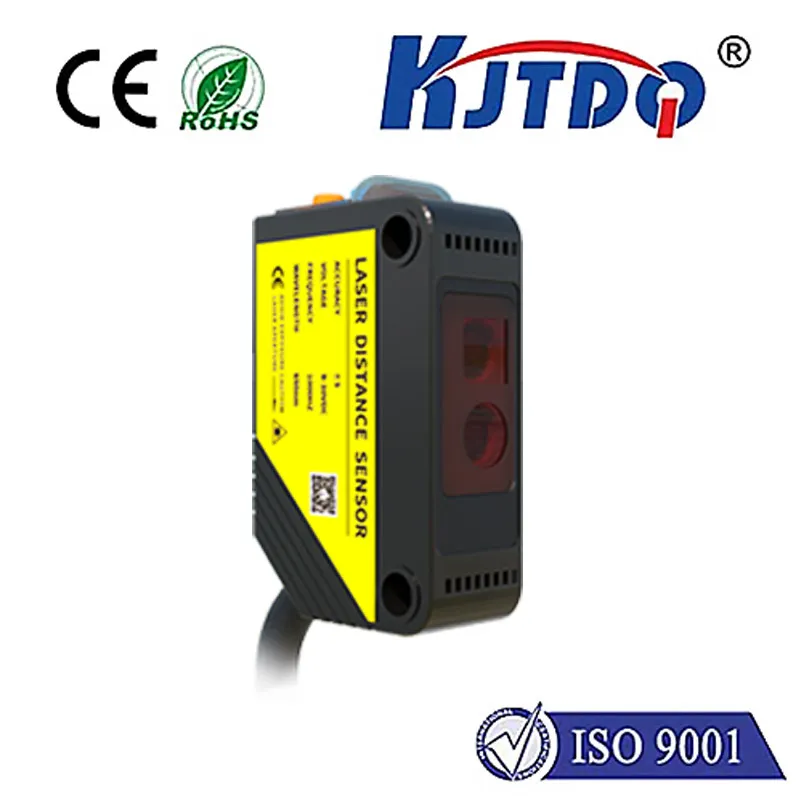
In the realm of precision measurement and spatial data acquisition, few technologies have revolutionized the field as profoundly as the laser scanning rangefinder sensor. This sophisticated device, often the cornerstone of modern surveying, robotics, and industrial automation, operates on principles that blend physics, optics, and advanced electronics to deliver unparalleled accuracy. At its core, the sensor emits a focused laser beam towards a target. The time it takes for the beam to reflect back to the sensor is meticulously calculated. Since the speed of light is a known constant, this time-of-flight measurement is converted into an exact distance with remarkable precision. Modern iterations of these sensors incorporate scanning mechanisms—often using rotating mirrors or galvanometers—that allow the laser beam to sweep across a scene rapidly. This scanning capability transforms a single-point distance measurement into a rich, multidimensional point cloud, capturing the exact contours and geometry of objects or environments in stunning detail.
The applications for laser scanning rangefinder sensors are vast and continually expanding. In construction and civil engineering, they are indispensable for creating as-built documentation, monitoring structural deformations, and planning renovations with millimeter-level accuracy. Autonomous vehicles rely heavily on these sensors, typically in the form of LiDAR (Light Detection and Ranging), to generate real-time, high-resolution 3D maps of their surroundings, enabling safe navigation and obstacle avoidance. Archaeologists and cultural heritage professionals use them for non-invasive digital preservation of historical sites, capturing intricate details that would be impossible to record manually. Furthermore, in manufacturing, these sensors facilitate precise quality control, robotic guidance, and reverse engineering processes, ensuring products meet stringent specifications.
When selecting a laser scanning rangefinder sensor for a specific project, several critical technical parameters demand consideration. The effective range, or the maximum and minimum distances the sensor can reliably measure, is paramount. Angular resolution, which determines the density of points in the scan, dictates the level of detail captured. Measurement speed, often expressed in points per second, influences how quickly an area can be scanned, which is crucial for dynamic applications or large-scale surveys. Environmental robustness is another key factor; sensors designed for outdoor use must be rated for ingress protection against dust and water and be capable of compensating for varying ambient light conditions. The wavelength of the laser itself also plays a role, affecting performance in different materials and atmospheric conditions.
The integration of laser scanning data into a usable workflow is facilitated by powerful software platforms. These systems process the raw point cloud data, filtering noise, aligning multiple scans, and converting the millions of data points into actionable models, such as CAD drawings, BIM (Building Information Modeling) objects, or simulation-ready meshes. This seamless pipeline from physical measurement to digital twin is what unlocks the true value of the technology, enabling analysis, planning, and decision-making based on a perfectly accurate digital representation of reality.
Looking ahead, the evolution of laser scanning rangefinder sensors points towards even greater miniaturization, increased measurement speeds, and enhanced data fusion. The integration with other sensing modalities like cameras and inertial measurement units (IMUs) is creating more robust and intelligent systems. As the cost of core components continues to decrease, these powerful tools are becoming accessible to a broader range of industries and applications, democratizing high-precision measurement. From shaping the smart cities of the future to ensuring the safety of next-generation robotics, the laser scanning rangefinder sensor remains a pivotal technology, continuously pushing the boundaries of what we can perceive, measure, and build.