check

check

check

check

check

check
In the rapidly evolving landscape of smart technology, precise and reliable distance measurement is no longer a luxury but a fundamental requirement. From the autonomous robots navigating warehouses to the gesture-controlled interfaces in consumer electronics, the ability to perceive depth and space accurately is paramount. At the heart of this sensing revolution lies a powerful technology: the Time-of-Flight (TOF) Ranging Module. This compact yet sophisticated component is quietly becoming the indispensable core engine for a new wave of intelligent applications.
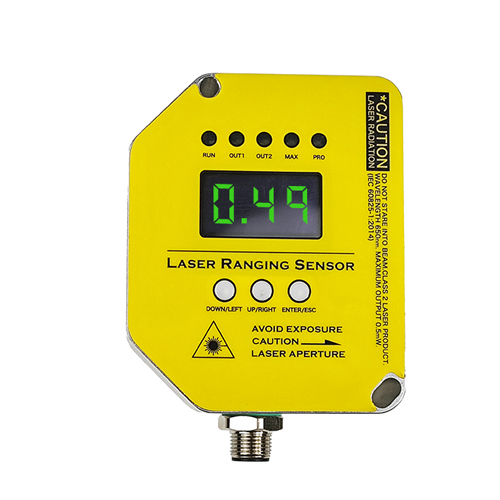
Unlike traditional ultrasonic or infrared sensors, a TOF Ranging Module operates on a elegantly simple principle: it measures the time it takes for a light signal, typically from a modulated laser or LED source, to travel to a target and back to the sensor. This direct time measurement, coupled with the constant speed of light, allows for the calculation of distance with remarkable precision and speed. Modern modules integrate the light emitter, the sensor (often a specialized CMOS sensor), and sophisticated processing logic into a single, miniaturized unit. This integration is key to its widespread adoption, offering a plug-and-play solution that delivers high-performance depth data without complex system calibration.
The advantages of integrating a KJTDQ-grade TOF Ranging Module into product design are substantial and multifaceted. First and foremost is its exceptional accuracy and resolution. Capable of millimeter-level precision even at several meters of range, it enables applications where detail matters, such as in volume scanning or object profiling. Speed is another critical benefit. With measurement times in the microsecond range, it facilitates real-time interaction, which is crucial for robotics, augmented reality, and advanced driver-assistance systems (ADAS) where latency is unacceptable.
Furthermore, TOF technology is largely immune to ambient light interference and target surface characteristics like color or texture, which often plague other optical methods. This robustness ensures consistent performance in diverse and challenging environments, from brightly lit outdoor spaces to industrial settings with varying reflectivity. The ability to generate not just a single point of distance but often a small array of depth points or a basic point cloud adds a layer of spatial intelligence, enabling more nuanced applications like people counting, obstacle detection, and touchless control.
The practical applications of TOF Ranging Modules are vast and growing. In industrial automation, they are used for precise positioning, bin picking, and conveyor belt monitoring, enhancing efficiency and safety. In consumer electronics, they enable features like camera autofocus, background blur in portrait mode photography, and immersive AR experiences on smartphones and tablets. The smart home sector utilizes them for presence detection, automatic door operation, and smart appliance activation that is more reliable than simple motion sensors. In the automotive realm, they contribute to interior occupancy monitoring, gesture control for infotainment systems, and short-range exterior obstacle detection for parking assistance.
When selecting a TOF Ranging Module for a project, several technical specifications demand careful consideration. The measurement range, field of view (FOV), and data output rate must align with the application's needs. Power consumption and form factor are critical for battery-powered or space-constrained devices. The interface, commonly I2C or UART, should be compatible with the host system. Perhaps most importantly, the module's performance under specific operational conditions—such as varying temperatures, different material surfaces, and high ambient light levels—must be thoroughly evaluated through testing with representative samples.
Looking ahead, the trajectory for TOF Ranging Module technology points toward even greater miniaturization, lower power consumption, and higher levels of on-chip data processing. Future modules will likely offer higher resolution depth maps at lower cost, further democratizing access to 3D sensing. Integration with other sensor types, like IMUs or RGB cameras, to create fused sensing solutions is another clear trend, promising richer environmental perception for smarter machines and devices.
In conclusion, the TOF Ranging Module represents a significant leap forward in sensing capability. By offering a unique combination of precision, speed, robustness, and compact integration, it solves fundamental challenges in machine perception. As the demand for smarter, more interactive, and autonomous systems continues to surge across every industry, the role of the TOF module as a foundational enabling technology will only become more pronounced. For engineers and product developers aiming to build the next generation of intelligent products, understanding and leveraging the power of a high-quality TOF Ranging Module is not just an option—it is a strategic imperative for success in an increasingly spatial-aware digital world.