check

check

check

check

check

check
In the realm of modern technology, where accuracy is paramount, the Sensor Laser Rangefinder Sensor stands as a cornerstone of precision measurement. This sophisticated device, often simply referred to as a laser rangefinder sensor, is far more than a simple distance-measuring tool. It is a complex integration of optics, electronics, and advanced signal processing, designed to deliver reliable, high-precision data across a multitude of applications. From the bustling floors of automated factories to the quiet precision of scientific laboratories, this sensor is silently enabling a new era of efficiency and accuracy.
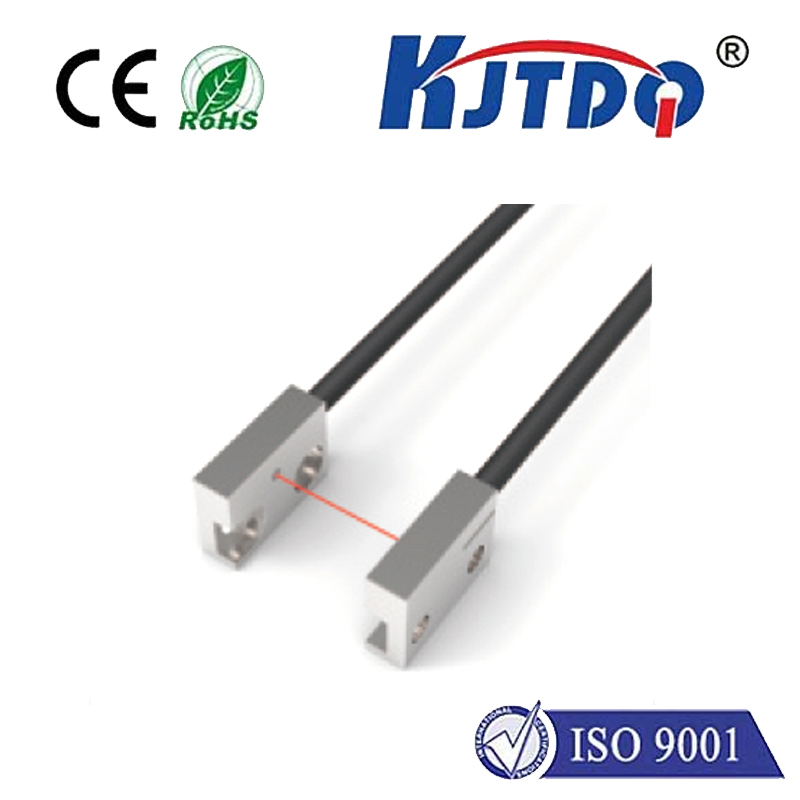
At its heart, the technology operates on the principle of Time-of-Flight (ToF). The sensor emits a focused pulse of laser light towards a target. This light travels at a constant, known speed—the speed of light. A highly sensitive receiver within the sensor then detects the reflection of this pulse. By precisely calculating the time interval between the emission and the reception of the laser pulse, the sensor's internal processor can determine the distance to the target with exceptional accuracy. Modern iterations of the Sensor Laser Rangefinder Sensor employ advanced algorithms to filter out ambient noise and interference, ensuring stable readings even in challenging environments with varying light conditions or reflective surfaces.
The applications for this technology are vast and continually expanding. In industrial automation, these sensors are indispensable. They are deployed for precise positioning of robotic arms, ensuring components are placed with micron-level accuracy on assembly lines. They monitor the thickness of materials in rolling mills, control the level of liquids in tanks, and guide automated guided vehicles (AGVs) through complex warehouse layouts, preventing collisions and optimizing paths. The non-contact nature of laser measurement means there is no wear and tear on the sensor from touching objects, leading to lower maintenance and higher long-term reliability.
Beyond the factory walls, the Sensor Laser Rangefinder Sensor plays a critical role in construction and surveying. Professionals use handheld or mounted units to quickly and accurately measure distances, calculate areas and volumes, and assist in site layout. This eliminates manual tape measurement errors and significantly speeds up project planning. In the burgeoning field of autonomous systems, such as drones and self-driving vehicles, these sensors form a vital part of the perception system. They help create real-time 3D maps of the surroundings, detect obstacles, and measure clearances, which is essential for safe navigation and operation.
The development of the Sensor Laser Rangefinder Sensor has also seen significant miniaturization and integration. Today, these sensors can be incredibly compact, allowing them to be embedded into consumer electronics, smart home devices, and even smartphones for augmented reality applications. This democratization of precise ranging technology opens doors to innovative user experiences and new product functionalities. Furthermore, enhancements in power efficiency and data output interfaces (like I2C, UART, or analog) make them easier than ever to integrate into existing electronic systems and IoT platforms.
Choosing the right Sensor Laser Rangefinder Sensor requires careful consideration of several key parameters. The required measuring range, from a few centimeters to several hundred meters, dictates the laser class and power. Accuracy and resolution determine how fine the measurements can be. The response time, or how quickly the sensor can take and output a measurement, is crucial for high-speed applications. Environmental ratings for dust and water resistance (IP ratings) are vital for use outdoors or in harsh industrial settings. Finally, the type of output signal must be compatible with the host controller or data acquisition system.
As industries push towards greater automation, smarter cities, and more interconnected systems, the demand for reliable, precise, and robust sensing solutions will only grow. The Sensor Laser Rangefinder Sensor, with its proven technology and evolving capabilities, is perfectly positioned to meet this demand. It is not merely a component but an enabler—a fundamental piece of technology that transforms abstract distances into actionable digital data, driving progress and innovation across countless fields. Its continued evolution promises even greater integration, intelligence, and accessibility, solidifying its role as the core of precision measurement for years to come.