check

check

check

check

check

check
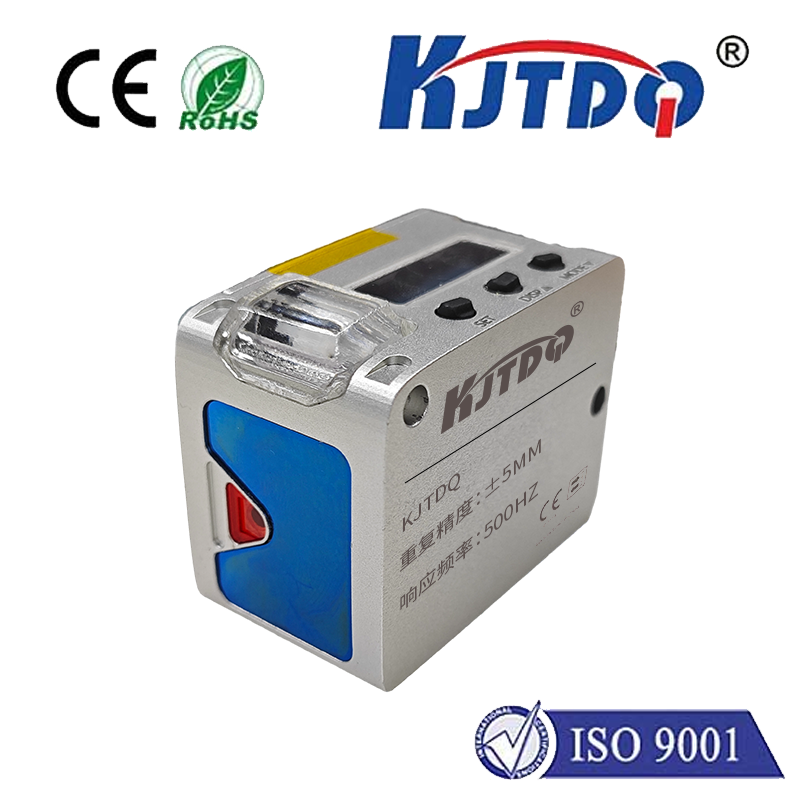
In the realm of measurement and detection, achieving pinpoint accuracy is often the difference between success and failure. This is where the high-precision rangefinder laser sensor emerges as a transformative technology. Far surpassing the capabilities of traditional ultrasonic or infrared sensors, these advanced devices utilize focused laser beams to deliver exceptional accuracy, reliability, and speed for a vast array of industrial, commercial, and scientific applications.
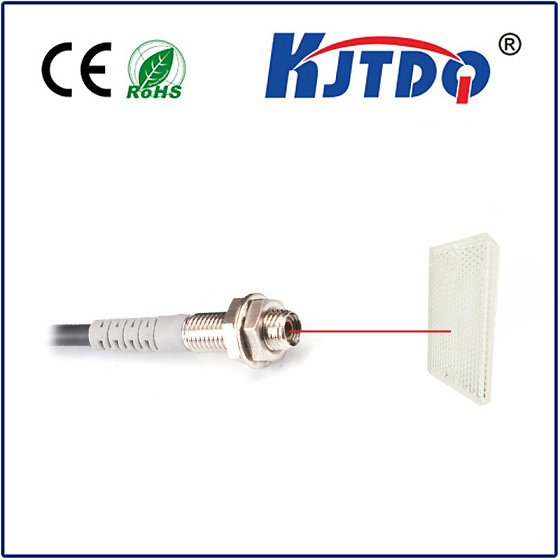
At its core, a high-precision rangefinder laser sensor operates on the principle of time-of-flight or phase-shift measurement. It emits a modulated laser pulse towards a target. The sensor then precisely calculates the time it takes for the reflected light to return or analyzes the phase shift of the modulated signal. This data is processed to determine the exact distance to the object with remarkable precision, often down to millimeter or even sub-millimeter levels. This non-contact measurement method is ideal for delicate surfaces, fast-moving objects, or environments where physical contact is impossible or undesirable.
The defining characteristic of these sensors is their unparalleled accuracy. Factors such as advanced signal processing algorithms, high-quality optical components, and stable laser diodes minimize errors caused by ambient light, surface color, or texture variations. This consistency ensures reliable data collection critical for quality control. Furthermore, their high measurement speed allows for real-time monitoring and feedback in dynamic processes, such as robotic guidance or production line automation.
The applications for high-precision laser rangefinders are extensive and growing. In industrial automation, they are indispensable for precise positioning, dimensional gauging, and fill-level monitoring in tanks and silos. They guide robotic arms in assembly lines, ensuring components are placed with exact tolerances. In the construction and surveying sectors, these sensors facilitate land surveying, volume calculations, and building information modeling (BIM) with incredible detail. Emerging fields like autonomous vehicles rely on them as a key component of LiDAR systems for environmental perception and obstacle detection. Even in forestry and agriculture, they are used for canopy height measurement and yield estimation.
Selecting the right high-precision rangefinder laser sensor requires careful consideration of several parameters. Key specifications include measuring range, resolution, repeatability, and response time. The required measurement range dictates the laser class and power. Resolution refers to the smallest distance change the sensor can detect, while repeatability indicates its consistency in returning the same value for a static target. Environmental factors like operating temperature, dust, and moisture are crucial, necessitating sensors with appropriate ingress protection (IP) ratings. Connectivity options, such as analog outputs, digital interfaces (RS232, RS485), or industrial Ethernet protocols, must align with the existing control system.
Modern high-precision sensors often come integrated with smart features. These include programmable measurement windows to ignore background objects, temperature compensation for stable performance in varying conditions, and onboard data logging capabilities. The integration of IoT connectivity allows for remote monitoring, predictive maintenance, and seamless data integration into larger industrial IoT ecosystems, enhancing overall operational intelligence.
Implementing these sensors effectively involves proper mounting, alignment, and configuration. Ensuring a clear line of sight to the target and minimizing environmental interference like heavy dust or steam are vital for optimal performance. Regular maintenance, primarily keeping the lens clean, preserves long-term accuracy. Understanding the specific reflection properties of the target material can also help in fine-tuning the sensor settings for the best results.
As technology advances, we can expect high-precision rangefinder laser sensors to become even more compact, energy-efficient, and cost-effective. Integration with artificial intelligence for advanced data interpretation and multi-sensor fusion will unlock new levels of autonomous operation and complex environmental mapping. From smart factories to autonomous drones and next-generation scientific instruments, the demand for reliable, micron-level distance measurement will continue to drive innovation in this field.
In conclusion, the high-precision rangefinder laser sensor is more than just a measuring tool; it is a fundamental enabler of accuracy, automation, and efficiency across diverse sectors. By providing reliable, non-contact distance data with exceptional precision, it empowers engineers, scientists, and developers to push the boundaries of what is possible in design, manufacturing, and exploration.