check

check

check

check

check

check
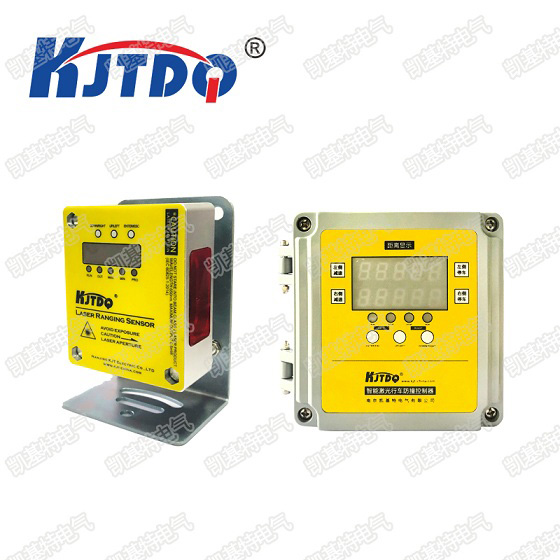
In the rapidly evolving landscape of industrial automation and quality control, the demand for accurate, reliable, and non-contact measurement solutions has never been greater. Among the array of technologies available, the domestic laser displacement sensor stands out as a cornerstone of modern precision engineering. This sophisticated device, developed with cutting-edge domestic expertise, offers a powerful combination of high-speed performance, micron-level accuracy, and robust design tailored for challenging factory environments.
At its core, a domestic laser displacement sensor operates on the principle of optical triangulation. It projects a focused laser beam onto the target surface. The reflected light is then captured by a high-resolution receiving element, such as a CCD or PSD. By calculating the angle of the reflected beam, the sensor's internal processor determines the exact distance to the target with exceptional speed and precision. This non-contact method is crucial for measuring delicate, hot, fast-moving, or otherwise inaccessible objects without causing any wear or distortion.
The advantages of utilizing a high-quality domestic laser displacement sensor are manifold. Firstly, it delivers unparalleled measurement stability and repeatability, which are non-negotiable for applications like thickness gauging, vibration analysis, and part dimension verification on assembly lines. Industries such as automotive manufacturing rely on these sensors to ensure the precise gap and flushness between body panels. In electronics, they are indispensable for checking the coplanarity of chip leads or the warpage of circuit boards. Furthermore, the robust construction of domestic models ensures reliable operation amidst common industrial nuisances like ambient light interference, dust, oil mist, and temperature fluctuations.
Beyond traditional manufacturing, these sensors are finding new applications in emerging fields. In robotics, they provide critical feedback for precise positioning and object recognition, enabling more autonomous and flexible robotic arms. In renewable energy, they assist in the quality inspection of solar panels and wind turbine blades. The development of domestic sensors also signifies a stride toward technological self-reliance, reducing dependence on imported components and offering tailored support and customization for local industries. Engineers can often collaborate with domestic manufacturers to fine-tune parameters like laser spot size, sampling rate, and communication protocols (e.g., analog output, RS-485, Ethernet) to fit specific project needs.
When selecting a domestic laser displacement sensor, several key specifications warrant careful consideration. The measuring range defines the minimum and maximum distances the sensor can handle effectively. The resolution indicates the smallest detectable change in distance, often down to sub-micron levels. The linearity error reflects the deviation from a perfect straight-line output across the entire range. Sampling speed, sometimes reaching tens of kilohertz, determines how quickly the sensor can capture dynamic changes. Additionally, factors like the color and material of the target surface can affect performance, making it essential to choose a sensor with advanced algorithms that compensate for these variations.
Installation and integration are straightforward, with many models featuring compact housings, adjustable mounting brackets, and user-friendly configuration software. Regular maintenance primarily involves keeping the lens clean to ensure optimal laser transmission and reception. With proper care, a domestic laser displacement sensor offers a long service life, providing an excellent return on investment through reduced downtime, minimized waste, and consistently high product quality.
In conclusion, the domestic laser displacement sensor is far more than just a measuring tool; it is an enabler of innovation, quality, and efficiency in the industrial sector. By providing precise, real-time data without physical contact, it empowers engineers and technicians to push the boundaries of what is possible in automation and process control. As domestic technology continues to advance, these sensors will undoubtedly play an even more pivotal role in shaping the future of smart manufacturing and beyond, offering a reliable, high-performance solution rooted in local expertise and global standards.