check

check

check
check
check
check
check
check

check

check
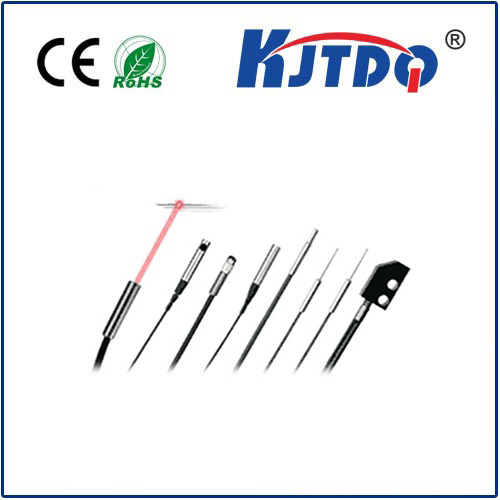
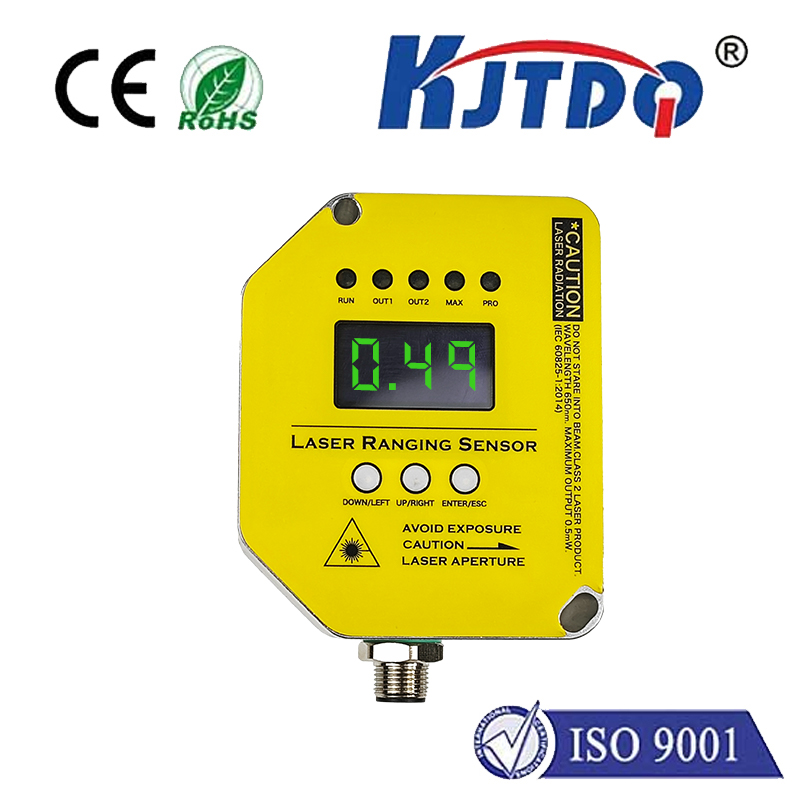
In the rapidly evolving landscape of industrial automation, robotics, and smart infrastructure, the demand for high-precision, reliable, and easy-to-integrate distance measurement solutions has never been greater. Enter the amplifier-integrated laser rangefinder sensor, a technological leap that is fundamentally changing how machines perceive and interact with their environment. This innovation consolidates the laser emitter, receiver, signal processor, and amplification circuitry into a single, compact housing, delivering unparalleled performance and simplicity.
Traditional laser distance measurement setups often involve separate components: a sensor head, an external amplifier unit, and complex wiring. This configuration, while functional, introduces points of failure, complicates installation, and increases the system's footprint. The amplifier-integrated design elegantly solves these challenges. By embedding the signal conditioning and processing electronics directly with the optical components, the sensor outputs a clean, stable, and immediately usable signal—whether analog voltage/current, digital IO, or serial data like RS-485. This direct integration minimizes electrical noise interference, a critical factor for achieving micron-level accuracy in demanding industrial settings.
The core advantage of this sensor lies in its exceptional accuracy and speed. Utilizing time-of-flight or phase-shift measurement principles with a focused laser beam, it can determine distances to a target with remarkable precision, often within a sub-millimeter range. The integrated amplifier ensures that even weak return signals from low-reflectivity surfaces are effectively boosted and filtered, maintaining consistent readings. This makes the amplifier-integrated laser rangefinder indispensable for applications such as precise workpiece positioning on CNC machines, robotic arm guidance and palletizing, continuous level monitoring in silos, and dimensional inspection in quality control.
Ease of integration is another cornerstone of its design. Engineers and system integrators no longer need to spend significant time matching separate amplifiers to sensor heads or calibrating complex signal chains. These sensors typically feature plug-and-play connectivity, intuitive parameter setting via teach-in buttons or software, and robust industrial communication protocols. This significantly reduces development time, lowers total cost of ownership, and accelerates time-to-market for OEM products. The compact, often ruggedized housing, with high IP ratings for dust and water resistance, allows for installation in space-constrained and harsh environments, from factory floors to outdoor construction sites.
Furthermore, the versatility of modern amplifier-integrated laser sensors is astounding. Models are available with varying ranges, from short-distance high-precision versions to long-range models capable of measuring hundreds of meters. Some offer advanced features like background suppression to ignore irrelevant objects, multiple programmable switching points, or even profile scanning capabilities. This adaptability opens doors across diverse sectors: in logistics for warehouse automation and vehicle guidance, in agriculture for terrain mapping, in civil engineering for deformation monitoring, and in emerging fields like autonomous mobile robots and drone-based surveying.
Reliability and maintenance are also enhanced. With fewer external connections and components, the system is less prone to wiring faults or connector corrosion. Advanced models include self-diagnostic functions that monitor laser health, lens cleanliness, and internal temperature, providing early warnings for preventative maintenance, thus maximizing uptime.
In conclusion, the amplifier-integrated laser rangefinder sensor represents more than just an incremental improvement; it is a paradigm shift in sensing technology. By merging high-performance optics with intelligent, onboard electronics, it delivers a solution that is accurate, fast, robust, and remarkably simple to deploy. As industries continue their push towards greater automation and data-driven operation, this integrated sensor stands as a critical enabler, providing the precise spatial awareness that intelligent systems require to operate safely, efficiently, and autonomously. Its adoption is set to grow, becoming a standard component in the toolkit for building the smart factories and infrastructures of the future.