check

check

check
check
check
check
check
check

check

check
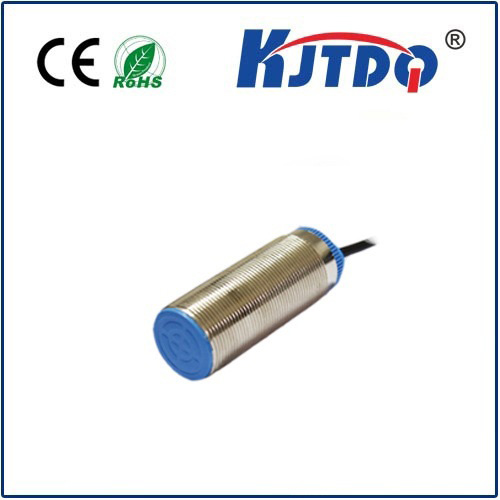
In the demanding world of industrial automation and process control, the reliability of every component is paramount. Among these critical components, proximity sensors play a vital role in detecting the presence or absence of objects without physical contact. When operations involve high-pressure environments—such as hydraulic systems, heavy machinery, die-casting, or offshore equipment—standard sensors often fall short. This is where specialized solutions like the DW-AS-503-P12-635 High Pressure Proximity Sensor become indispensable. Engineered to withstand extreme conditions, this sensor represents a significant leap in durability and precision for mission-critical applications.
The core challenge in high-pressure settings is the immense stress exerted on equipment. Fluctuating pressures, potential fluid ingress, and mechanical vibrations can quickly degrade or disable conventional inductive or capacitive sensors. The DW-AS-503-P12-635 is specifically designed to counter these forces. Its robust housing, typically constructed from high-grade stainless steel, provides exceptional resistance to corrosion and physical impact. The P12 designation often refers to a particular thread size and form, ensuring a secure and sealed installation directly into pressurized lines or chambers, preventing leaks that could lead to system failure or safety hazards. The "635" specification may relate to its electrical output type, sensing range, or voltage rating, making it adaptable to various control systems.
What truly sets this sensor apart is its performance under duress. It maintains consistent detection accuracy despite being subjected to pressures that would compromise lesser devices. This reliability is crucial for applications like monitoring piston position in hydraulic cylinders, ensuring robotic arms operate within safe parameters, or confirming the closure of high-pressure valves in chemical processing plants. A failure in any of these scenarios could result in costly downtime, product damage, or even pose serious safety risks to personnel. The DW-AS-503-P12-635 acts as a vigilant sentinel, providing continuous, real-time feedback to the programmable logic controller (PLC), enabling seamless and safe automation cycles.
Installation and integration of the DW-AS-503-P12-635 are streamlined for industrial efficiency. Its design prioritizes ease of mounting in confined or hard-to-reach spaces common in complex machinery. The sensor's output signal—whether it's a discrete NPN, PNP, or an analog 4-20mA current loop—is designed for immediate compatibility with standard industrial interfaces. This plug-and-play capability minimizes setup time and reduces the need for additional signal conditioning modules. Furthermore, its high immunity to electrical noise ensures that signals remain clean and accurate, even in electrically noisy environments filled with motors and variable frequency drives.
Beyond its immediate technical specifications, the value of this high-pressure proximity sensor is measured in operational longevity and total cost of ownership. By selecting a sensor built for the specific challenge of high pressure, maintenance teams can drastically reduce unscheduled stoppages. The robust construction means fewer replacements, lower inventory costs for spares, and less labor for change-outs. For plant managers and engineers, this translates into enhanced overall equipment effectiveness (OEE), predictable maintenance schedules, and a stronger bottom line. It is an investment in stability, transforming a potential point of failure into a cornerstone of reliable production.
In conclusion, the DW-AS-503-P12-635 is more than just a component; it is a specialized solution for a critical industrial need. Its deployment in high-pressure applications ensures that automation systems are not only intelligent but also resilient. For industries pushing the boundaries of performance and safety, from automotive manufacturing to energy production, leveraging such purpose-built technology is no longer an option but a necessity. It embodies the principle that true efficiency is achieved when every part of the system is engineered to perform flawlessly under its specific set of challenges, guaranteeing smooth, continuous, and safe operations.