check

check

check

check

check

check
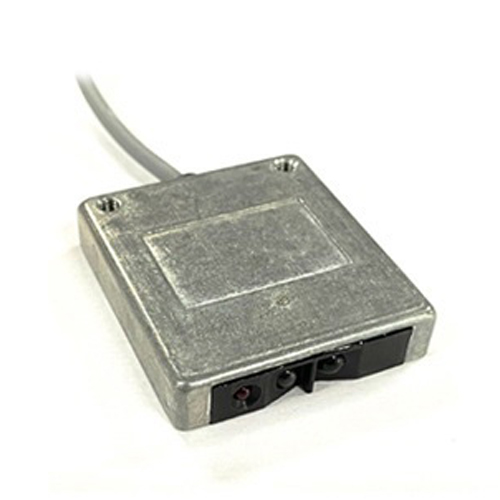
In the complex and often unforgiving world of industrial automation, the reliability of every single component is paramount. System failures are not merely inconveniences; they translate directly into costly downtime, production losses, and potential safety hazards. At the heart of many critical systems, from hydraulic presses and injection molding machines to heavy-duty robotics and offshore equipment, lies the need for precise, non-contact detection under extreme conditions. This is where the MGT201 High Pressure Proximity Sensor establishes itself as an indispensable engineering asset, designed to deliver unwavering performance where standard sensors falter.
The primary challenge in high-pressure environments is not just the pressure itself, but the combination of factors it brings. Intense mechanical stress, potential fluid ingress, severe vibrations, and wide temperature fluctuations can quickly degrade or disable conventional sensing equipment. The MGT201 is engineered from the ground up to confront these challenges. Its robust, all-metal housing, typically constructed from high-grade stainless steel, provides exceptional resistance to physical impact and corrosion. This durable shell is seamlessly integrated with advanced sealing technologies, often achieving ingress protection ratings like IP67, IP68, or IP69K, ensuring complete integrity even when subjected to high-pressure washdowns or submerged operations. This ruggedness guarantees that the sensor's internal electronics remain isolated from hostile external elements.
Beyond its physical fortitude, the core functionality of the MGT201 is what sets it apart. Utilizing a high-frequency oscillation principle, it detects the presence of metallic targets without any physical contact. This non-contact operation eliminates mechanical wear, a common failure point in limit switches, leading to a dramatically extended service life and minimal maintenance requirements. The sensing face is specially designed to be resistant to adhesion from cutting fluids, oils, or other contaminants commonly found in industrial settings, ensuring consistent signal accuracy. Furthermore, these sensors are characterized by their high switching frequency and repeat accuracy, enabling precise control over fast-moving machine parts or critical positioning tasks in automated lines.
A key technical advantage of the MGT201 series is its exceptional pressure rating. While specifications can vary by manufacturer and model, these sensors are specifically built to withstand ambient pressures far exceeding those in normal factory environments. They are routinely deployed in applications involving hydraulic systems operating at several hundred bar, within pressurized vessels, or in deep-sea applications. This capability makes them a preferred choice in industries such as oil and gas, marine engineering, die-casting, and plastic injection molding, where equipment must perform reliably under immense static or dynamic pressure loads.
Electrical integration is streamlined for efficiency. The MGT201 typically features a choice of DC or AC operating voltages and provides a clear PNP or NPN output signal, compatible with standard programmable logic controllers (PLCs) and industrial control systems. Many models incorporate status LEDs for immediate visual feedback on operational state and target detection, simplifying installation and troubleshooting. The design often includes short-circuit and reverse polarity protection, safeguarding both the sensor and the control circuitry from accidental wiring errors.
The practical applications of the MGT201 High Pressure Proximity Sensor are vast and critical. In a hydraulic press, it can reliably detect the end position of a ram under extreme force, preventing overtravel. On an injection molding machine, it monitors the position of the screw or mold closure under high clamping pressure. Within subsea equipment, it functions as a position feedback device for valves or actuators, enduring the profound pressures of the deep ocean. In food and beverage processing, its sealed design allows it to survive the high-pressure, high-temperature cleaning cycles essential for hygiene.
Selecting the right sensor involves careful consideration of several parameters: the required sensing distance, the specific pressure rating needed for the application, the target material (ferrous or non-ferrous metals), the operating temperature range, and the required electrical connection type. Consulting technical datasheets and, when necessary, engineering support is crucial to ensure optimal performance.
In conclusion, the MGT201 High Pressure Proximity Sensor represents a fusion of rugged durability and precise electronic sensing. It is not merely a component but a reliability solution engineered for the most demanding points in an industrial system. By providing accurate, non-contact detection where pressure, contamination, and stress are extreme, it enhances machine safety, maximizes uptime, and protects valuable capital equipment. For engineers and system integrators tasked with building resilient automation, specifying a sensor like the MGT201 is a strategic decision for long-term, trouble-free operation.