check

check

check

check

check

check
In the relentless world of industrial automation, where machinery operates under extreme pressures and within tight tolerances, the reliability of every component is non-negotiable. Sensor failure is not merely an inconvenience; it can lead to catastrophic downtime, costly repairs, and compromised safety. This is where precision-engineered components like the HR182-15-601.5E0 High Pressure Proximity Sensor step into the spotlight, offering a robust and dependable solution for the most challenging applications.
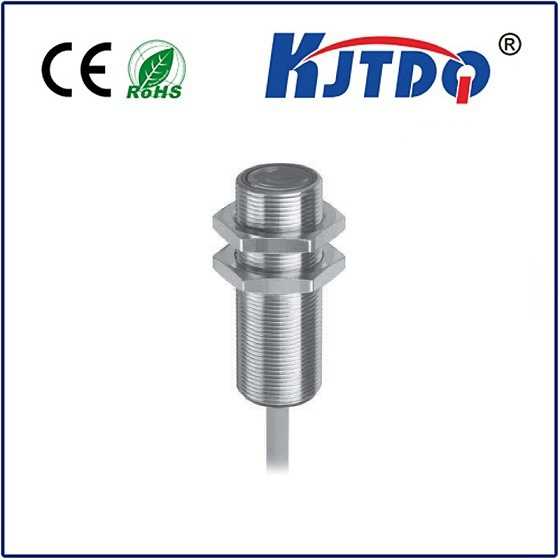
The HR182-15-601.5E0 is not a standard sensor. It is specifically designed to perform flawlessly in environments where high pressure is a constant factor. Traditional inductive proximity sensors can falter when subjected to the intense forces found in hydraulic systems, die-casting machines, high-pressure pumps, and heavy-duty press lines. The HR182-15-601.5E0 is built to withstand these conditions, featuring a hermetically sealed stainless-steel housing that protects its sensitive internal electronics from pressure surges, mechanical stress, and ingress from oils, coolants, and other harsh industrial fluids. This rugged construction ensures long-term stability and accuracy, even when mounted directly on equipment experiencing significant pressure fluctuations.
What sets this sensor apart is its exceptional performance under duress. It maintains a consistent sensing distance and provides a stable, repeatable switching signal, which is critical for precise position detection and control in automated processes. Whether it's monitoring the position of a piston in a hydraulic cylinder, confirming the closure of a high-pressure valve, or ensuring proper tooling alignment in a forging press, the HR182-15-601.5E0 delivers unwavering reliability. Its high-pressure rating means it can be installed closer to the action, reducing system complexity and improving response times without fear of premature failure.
The benefits of integrating the HR182-15-601.5E0 into your systems are multifaceted. First and foremost is enhanced operational uptime. By eliminating a common point of failure, maintenance intervals can be extended, and unplanned stoppages are significantly reduced. This directly translates to higher productivity and lower total cost of ownership. Secondly, it contributes to improved process quality. Consistent and accurate detection leads to more reliable machine cycles, reducing the risk of defects caused by positional errors. Finally, it bolsters safety. In high-pressure systems, knowing the exact status of components is paramount for preventing accidents. This sensor provides that critical data with confidence.
Installation and integration are straightforward, thanks to its standard M18 threaded barrel design and various output configurations (like the common PNP or NPN) to suit different control architectures. Engineers and maintenance technicians appreciate its plug-and-play compatibility with existing industrial networks and PLCs, minimizing retrofit time and effort. Its robust design also means it requires minimal calibration or adjustment after installation, maintaining its set performance over thousands of operating hours.
For industries such as metal forming, plastic injection molding, oil and gas, and heavy vehicle manufacturing, where pressure is an integral part of the process, choosing a sensor like the HR182-15-601.5E0 is a strategic decision. It moves beyond being a simple component to becoming a foundational element of a resilient and efficient automation strategy. It represents an investment in predictability, replacing the uncertainty of sensor performance under stress with guaranteed operation.
In conclusion, navigating the high-stakes environment of modern industry demands tools that match its intensity. The HR182-15-601.5E0 High Pressure Proximity Sensor from KJTDQ stands as a testament to engineering focused on solving real-world problems. It provides the durability, accuracy, and peace of mind needed to keep critical processes running smoothly, safeguarding both productivity and personnel. When your application pushes the limits of pressure, this sensor is engineered to not just meet the challenge but to define the new standard for reliability.