check

check

check
check
check
check
check
check

check

check
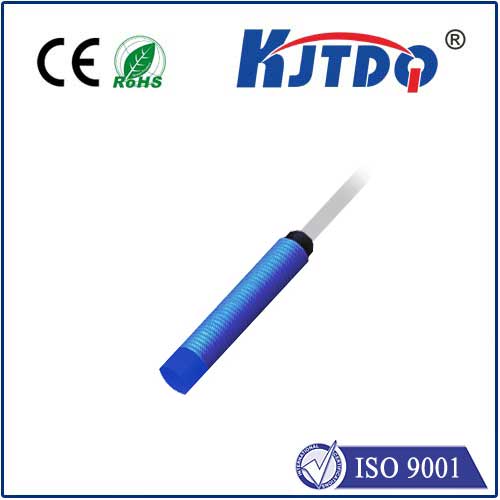
In the complex and often unforgiving world of industrial automation, the reliability of every component is paramount. A single sensor failure can lead to costly downtime, compromised safety, and production losses. For applications involving high-pressure environments, such as hydraulic systems, heavy machinery, and process control in oil and gas, selecting the right sensing technology is not just a choice—it's a critical necessity. The BES 516-300-S135-D-PU-05, also known by its order code BHS001F, stands out as a robust and precise solution engineered specifically for these demanding conditions.
This high-pressure proximity sensor belongs to a class of devices designed to operate flawlessly where others might falter. Its core function is to detect the presence or absence of a metallic target without any physical contact, using an inductive sensing principle. The "High Pressure" designation is key; it signifies that the sensor is constructed to withstand significant external pressure on its sensing face and housing. This is crucial in environments where equipment is submerged in hydraulic fluid or exposed to high-pressure washdowns. The robust stainless steel housing and a particularly resilient sensing face ensure that the sensor's performance remains stable and accurate, preventing false signals or complete failure due to mechanical stress.
The model number itself, BES 516-300-S135-D-PU-05, provides a detailed blueprint of its capabilities. Breaking it down, the '516' series indicates a specific form factor and performance family. The '300' typically refers to a sensing distance, in this case, 3mm, offering a precise and short-range detection ideal for tight mechanical tolerances. 'S135' denotes a stainless steel housing, providing excellent corrosion resistance and mechanical strength. The 'D' often specifies a DC 3-wire configuration, a common and reliable interface for PLCs and control systems. 'PU' signifies a polyurethane cable, known for its exceptional durability, flexibility, and resistance to oils, chemicals, and abrasion—a vital feature for dynamic industrial settings. Finally, '05' relates to specific electrical characteristics or output type, commonly a PNP normally open (NO) switching output.
The practical applications for the BES 516-300-S135-D-PU-05 are vast. It is perfectly suited for monitoring piston positions in high-pressure hydraulic cylinders, ensuring cylinders are fully retracted or extended before the next cycle begins. In plastic injection molding machines, it can reliably detect mold closure under immense tonnage. Within machine tools, it can serve as an end-position sensor for slides and spindles that are lubricated with high-pressure coolant. Its robust construction also makes it a candidate for food and beverage or pharmaceutical applications requiring frequent high-pressure, high-temperature cleaning cycles, thanks to its resistance to corrosive cleaning agents.
When integrating this sensor, engineers appreciate its consistent performance. The temperature stability is engineered to handle typical industrial ranges, and its high immunity to electrical interference (EMI) ensures signal integrity even in electrically noisy environments. The inclusion of a status LED provides immediate visual feedback for commissioning and troubleshooting, saving valuable time during installation and maintenance.
Choosing a sensor like the BES 516-300-S135-D-PU-05 (BHS001F) is an investment in system integrity. It goes beyond simple detection; it provides a layer of predictability and durability that high-pressure applications demand. For maintenance managers and design engineers, specifying this sensor translates to fewer unplanned stoppages, enhanced operational safety, and long-term cost savings by reducing replacement frequency. It represents a commitment to precision engineering where resilience and accuracy are non-negotiable. In essence, it is not merely a component but a guardian of process reliability, built to deliver unwavering performance under pressure.